Cupid and Psyche
Jacques-Louis David · 1817
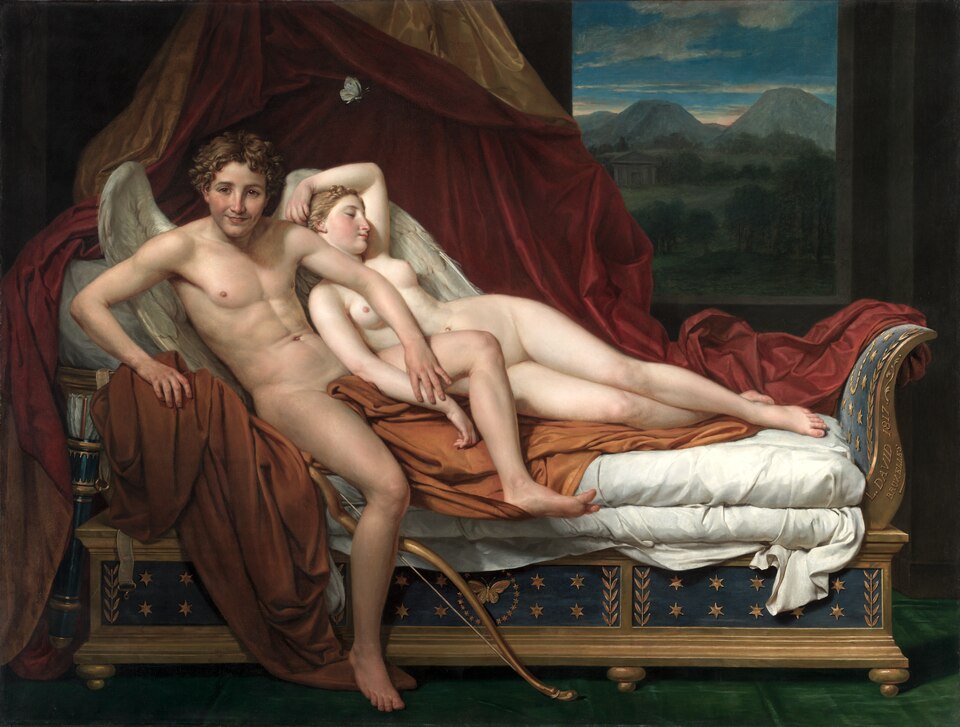
Cupid slips out of bed at dawn with a sly grin, while Psyche sleeps on unaware. David painted the god of love as a gawky teenager, and viewers in 1817 took it as proof the old master had lost his way in exile.
The story behind the painting
David began planning the picture in Paris in 1813 and finished it in Brussels in 1817, after Napoleon's fall. Louis XVIII had offered him a pardon for his role in the Revolution, but David chose exile instead, and this was the first painting he completed there. It was made for Gian Battista Sommariva, a collector who had grown rich quickly through dubious financial operations. David wrote that he wanted to give an overused theme a new twist through realism. James Gallatin, the 17-year-old son of an American diplomat, posed nude for Cupid, which may explain his awkward teenage look.
What to look for
The myth comes from Apuleius. Venus, jealous of the mortal Psyche's beauty, leaves her punishment to her son Cupid, who falls in love instead, visits Psyche every night and leaves before she wakes. David shows that morning departure. Cupid's body is hyper-real, his complexion muddied, his frame scrawny, his wings worn out and ugly. He looks straight at us. Psyche sleeps peacefully behind him. The cluttered Empire-style room and heavy canopy press in, while a landscape opens beyond. Above Psyche flies a small butterfly, read by Issa Lampe as a sign of both death and transcendence.
Meaning and intent
Earlier painters such as François Gérard in 1798 showed the couple as pure, idealised young love, and Picot painted the same moment of departure in 1817 in an idealised way. David's Cupid seems sinister and Psyche vulnerable, suggesting a slightly perverted relationship. Dorothy Johnson argues that his gaze makes viewers complicit and uncomfortable. Mary Vidal sees the painting engaging with the ambiguity and reversals in Apuleius's own text. David made large changes after the design was on canvas, which was unusual; the Empire décor may be a remembrance of Napoleon's time.
Legacy
Shown in Brussels, the realist Cupid surprised viewers, and when it appeared in Paris many saw it as a symbol of the harm exile had done to David, whose reputation rested on the idealised beauty Winckelmann had called the beau ideal. Critics generally took its unconventional style as proof of decline. Art historians now read it differently, as a deliberate break from the traditional way of showing mythological figures. David's early study shows he always meant to paint Cupid this way, even before exile. The painting now belongs to the Cleveland Museum of Art.
Lo sapevi?
- Planned in Paris in 1813, finished in Brussels in 1817.
- The first painting David completed in exile.
- A 17-year-old, James Gallatin, posed for Cupid.
- Now in the Cleveland Museum of Art.
L'artista
Jacques-Louis David (1748-1825)
mythological painting · nude · Neoclassicism · tree · mountain · Cupid · curtain · Cleveland Museum of Art
Altre opere di Jacques-Louis David
 The Oath of the Horatii - Jacques-Louis David (1784)
.jpg) The Intervention of the Sabine Women - Jacques-Louis David (1799)
The Intervention of the Sabine Women - Jacques-Louis David (1799) Mars Being Disarmed by Venus - Jacques-Louis David (1824)
 Portrait of Madame Récamier - Jacques-Louis David (1800)
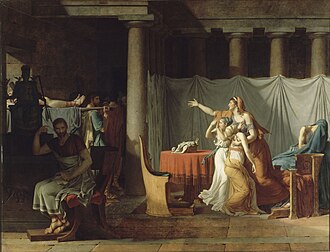 The Lictors Bring to Brutus the Bodies of His Sons - Jacques-Louis David (1789)
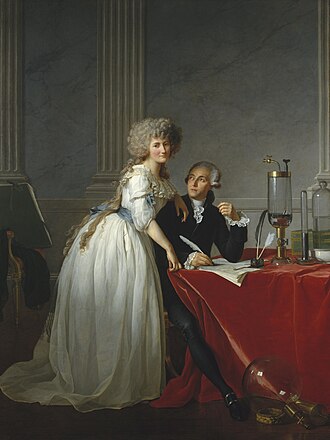 Portrait of Antoine-Laurent Lavoisier and his wife - Jacques-Louis David (1788)
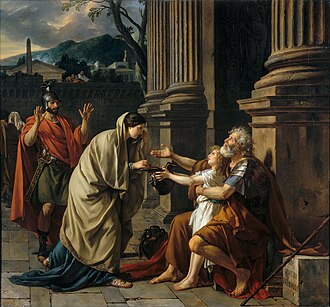 Belisarius Begging for Alms - Jacques-Louis David (1781)
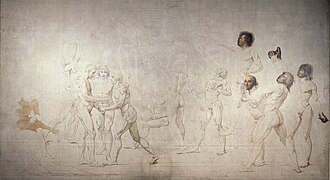 The Tennis Court Oath - Jacques-Louis David (1791)
Dipinti di artisti collegati
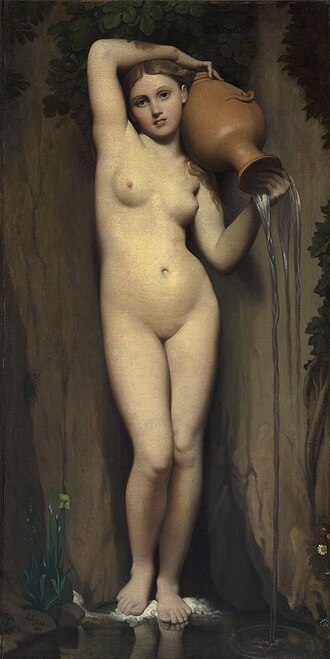 The Source - Jean-Auguste-Dominique Ingres (1856)
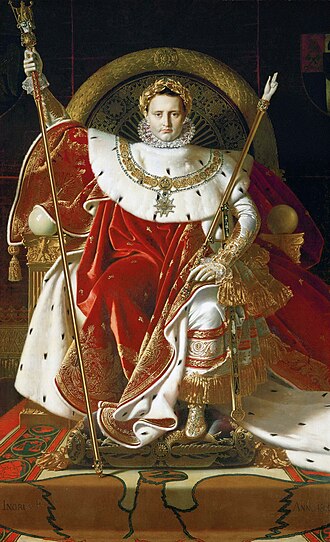 Napoleon I on his Imperial Throne - Jean-Auguste-Dominique Ingres (1806)
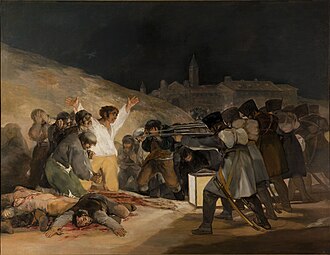 The Third of May 1808 - Francisco Goya (1814)
.jpg) La maja nuda - Francisco Goya (1800)
La maja nuda - Francisco Goya (1800)