Gustav Klimt
1862-1918
The son of a struggling gold engraver, Gustav Klimt grew up poor in Vienna and became the city's great painter of gold, pattern and desire. A founder of the Vienna Secession, he helped define Art Nouveau and gave the world The Kiss.
Origins
Gustav Klimt was born in Baumgarten, near Vienna, on 14 July 1862, the second of seven children. His mother, Anna, had once hoped to be a musical performer, and his father, Ernst Klimt the Elder, was a gold engraver from a peasant family in Bohemia. His father often struggled to find work, and between 1862 and 1884 the family moved at least five times in search of cheaper lodgings. All three sons showed artistic talent, and the siblings sometimes modelled for Gustav's early works. At fourteen he entered the Vienna Kunstgewerbeschule, a school of applied arts, where he studied architectural painting from 1876 to 1883. He admired the history painter Hans Makart and readily accepted a conservative, academic training.
Life and turning points
With his brother Ernst and their friend Franz von Matsch he formed the Company of Artists around 1880, painting murals and ceilings for theatres and public buildings. For the Burgtheater staircases, finished in 1888, Emperor Franz Joseph I awarded him the Gold Cross of Merit. In 1892 his father and Ernst both died, and Klimt took financial responsibility for both families and produced little for a few years. In 1897 he became a founder and president of the Vienna Secession, which he left in 1908. His ceiling paintings for the University of Vienna were attacked as pornographic around 1900 and never hung; it was the last public commission he accepted. On 11 January 1918 a stroke paralysed his right side, and he died in Vienna on 6 February of pneumonia, aged 55.
Style and technique
Klimt was a symbolist painter whose main subject was the female body, and his work is marked by a frank eroticism; life, love and death are its great themes. From 1900 he painted about one large portrait of a woman a year, using the flatness, decoration and gold leaf of Art Nouveau. His golden phase includes Judith I, Portrait of Adele Bloch-Bauer I, The Kiss and the Stoclet Frieze. Trips to Venice and Ravenna, famous for their mosaics, most likely inspired his gold technique and Byzantine imagery. Of all the Secession artists he was the most influenced by Japanese art. His landscapes, painted on summer holidays at the Attersee, flatten deep space into a single patterned plane, so much so that he is believed to have used a telescope.
Stories and anecdotes
At home Klimt usually wore sandals and a long robe, avoided cafe society and seldom mixed with other artists. The locals at the Attersee called him the forest demon in recognition of his intensity. His lifelong companion was the fashion designer Emilie Floge; their relationship was close but likely platonic, and many scholars see The Kiss as an image of them as lovers. He wrote little about himself, mostly postcards to Floge, and in one rare text said he had never painted a self-portrait, that there was nothing special about him, and that whoever wanted to know him should look carefully at his pictures. In 1902 he wanted to call a provocative painting To my critics, but friends talked him out of it.
Legacy
Klimt's work helped define Art Nouveau in Europe and was an important influence on his younger peer Egon Schiele. Death and Life won first prize at the world exhibition in Rome in 1911; he later reworked it, changing its background from gold to blue. Loss has marked his legacy: in May 1945 retreating German forces burned Schloss Immendorf, destroying his three University paintings and ten other works. The Beethoven Frieze, painted directly on the walls for a 1902 exhibition, survived and was shown again after restoration in 1986. The only monograph published in his lifetime, Das Werk von Gustav Klimt, appeared in 1918 with fifty reproductions he helped choose. His shimmering gold still feels like a door into another, richer world.
Lo sapevi?
- The face in his Beethoven Frieze resembled the composer and opera director Gustav Mahler.
- He painted a portrait of Margarete Wittgenstein, sister of Ludwig Wittgenstein, for her wedding.
- Many of his paintings were left unfinished at his death.
- The architect Frank Lloyd Wright owned a copy of his 1918 portfolio.
Vienna Secession · Art Nouveau · Symbolism
Dipinti di Gustav Klimt
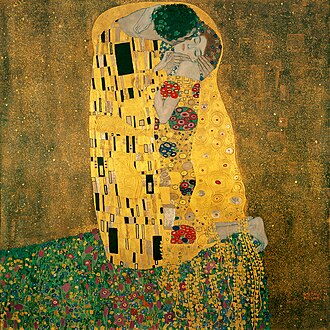 The Kiss - Gustav Klimt (1907-1908)
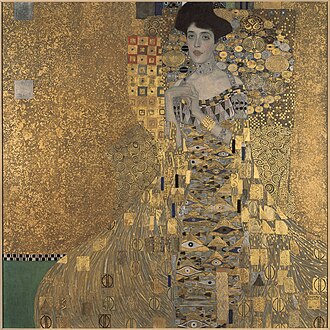 Portrait of Adele Bloch-Bauer I - Gustav Klimt (1907)
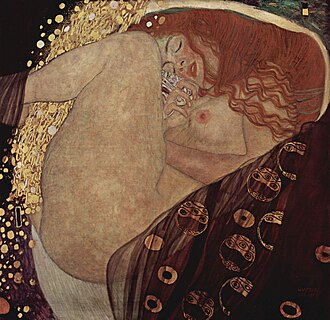 Danaë - Gustav Klimt (1907)
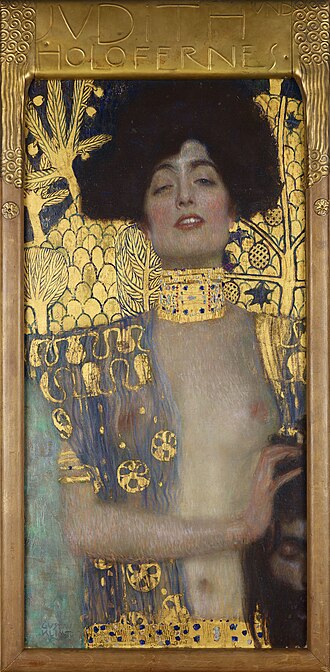 Judith I - Gustav Klimt (1901)
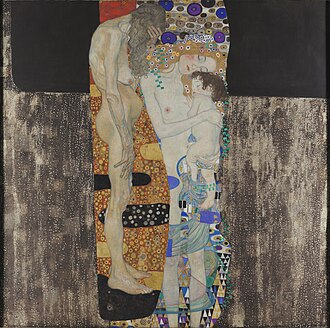 The Three Ages of Woman - Gustav Klimt (1905)
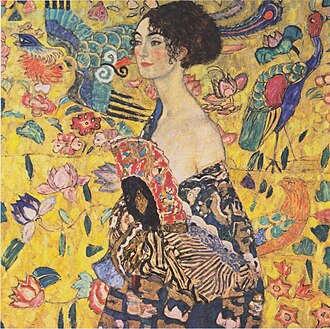 Woman With a Fan - Gustav Klimt (1917)
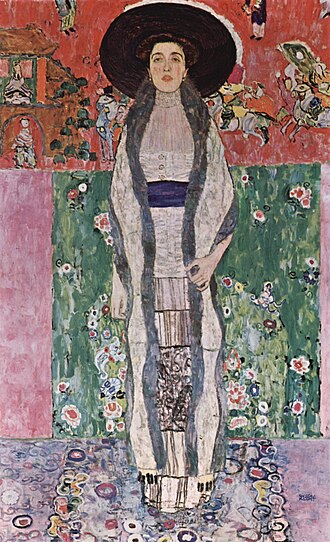 Adele Bloch-Bauer II - Gustav Klimt (1912)
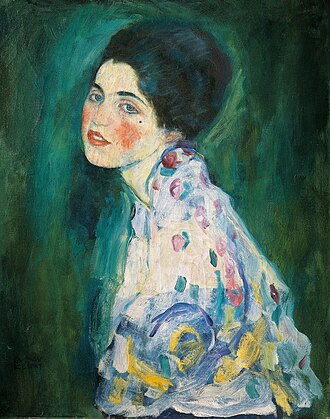 Portrait of a Lady - Gustav Klimt (1910s)
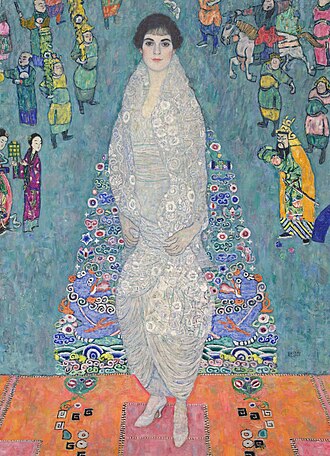 Portrait of Elisabeth Lederer - Gustav Klimt (1910s)
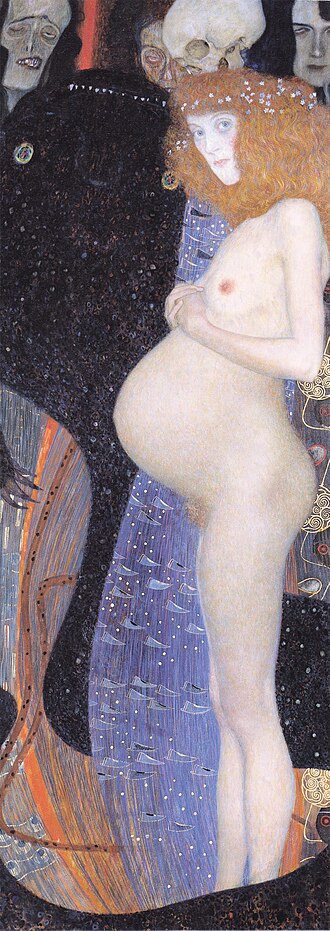 Hope I - Gustav Klimt (1903)
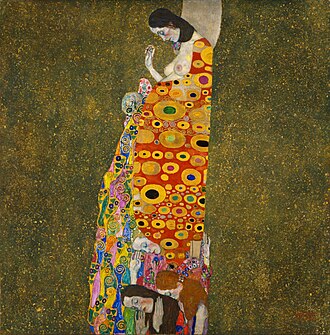 Hope II - Gustav Klimt (1907)
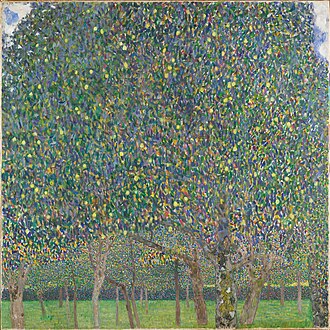 Pear Tree - Gustav Klimt (1903)
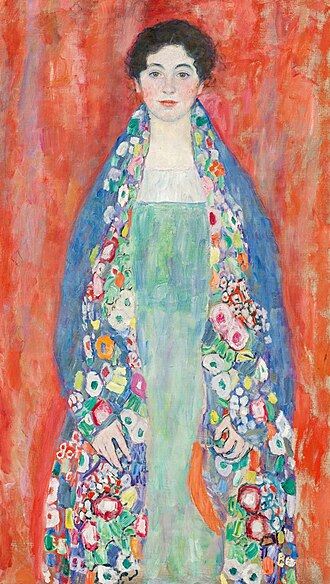 Portrait of Fräulein Lieser - Gustav Klimt (1917)
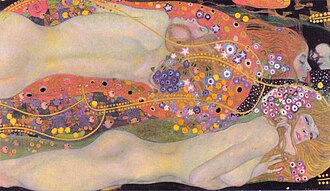 Water Serpents II - Gustav Klimt (1900s)
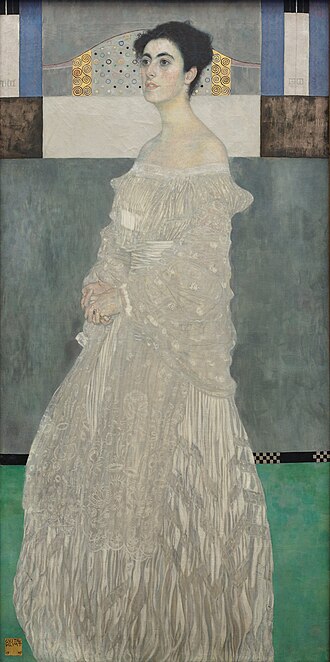 Portrait of Margaret Stonborough-Wittgenstein - Gustav Klimt (1905)
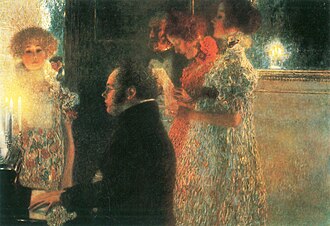 Schubert at the Piano II - Gustav Klimt (1899)
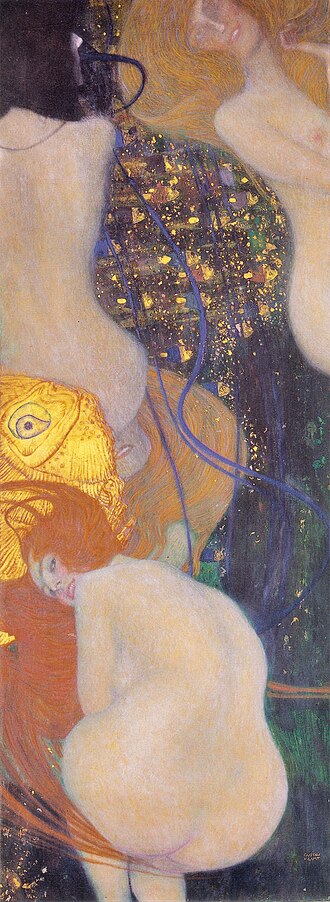 Goldfish - Gustav Klimt (1902)
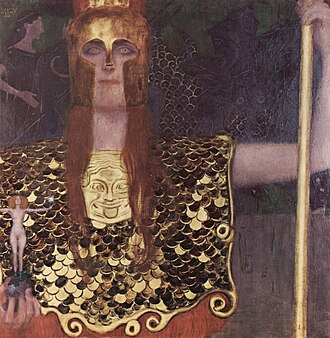 Pallas Athena - Gustav Klimt (1899)
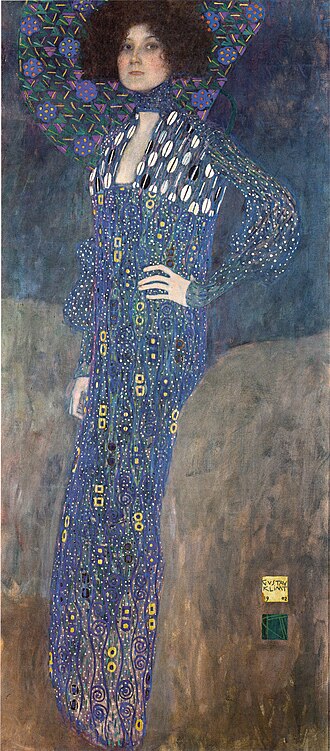 Portrait of Emilie Flöge - Gustav Klimt (1902)
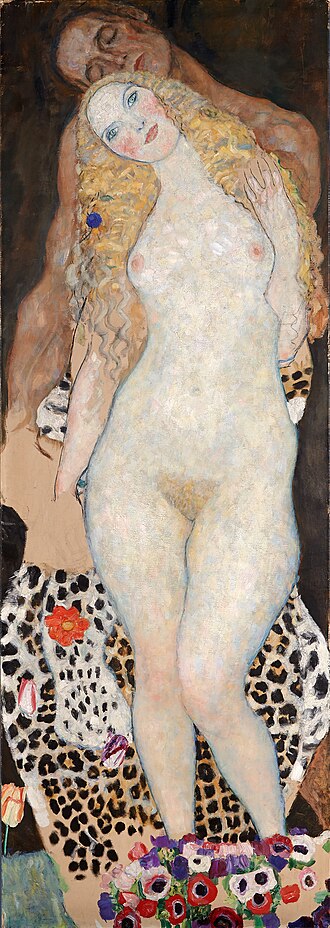 Adam and Eve - Gustav Klimt (1910s)
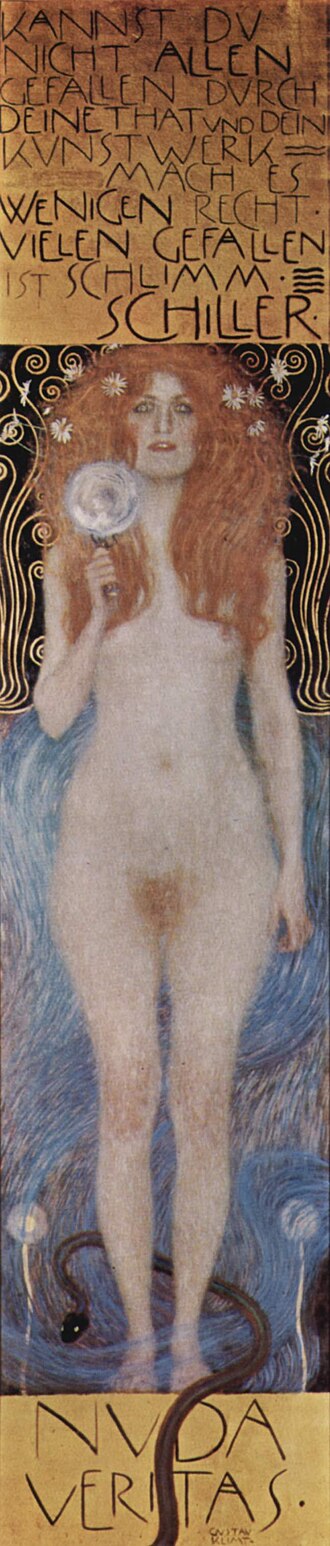 Nuda Veritas - Gustav Klimt (1899)
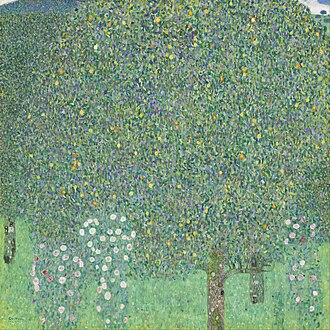 Rosebushes under the Trees - Gustav Klimt (1905)
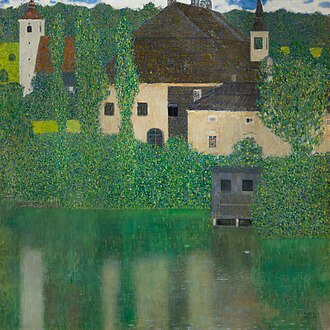 Water Castle - Gustav Klimt (1900s)
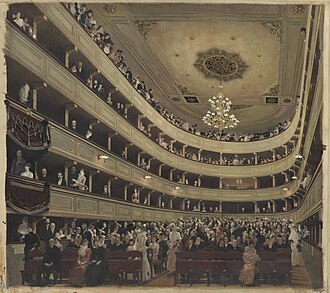 Auditorium of the old Burgtheater - Gustav Klimt (1888)
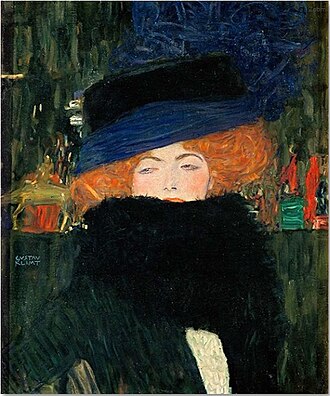 Dame mit Hut und Federboa - Gustav Klimt (1910)
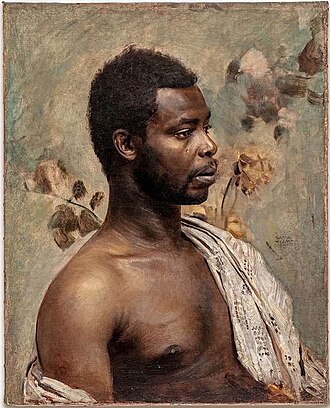 Prince William Nii Nortey Dowuona - Gustav Klimt (1890s)
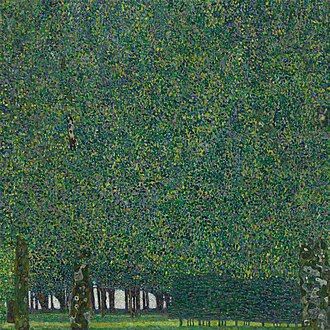 The Park - Gustav Klimt (1900s)
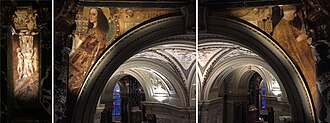 The Quattrocento in Rome and in Venice - Gustav Klimt
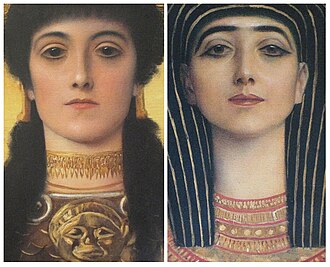 Ancient Greece and Ancient Egypt - Gustav Klimt
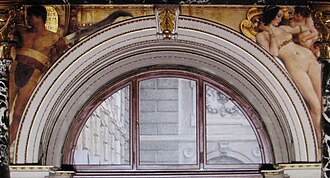 Florence of the Cinquecento and Quattrocento - Gustav Klimt
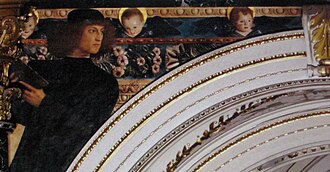 Old Italian Art - Gustav Klimt
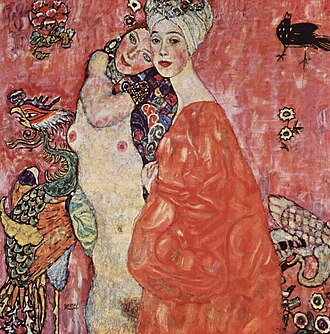 Women Friends - Gustav Klimt (1910s)
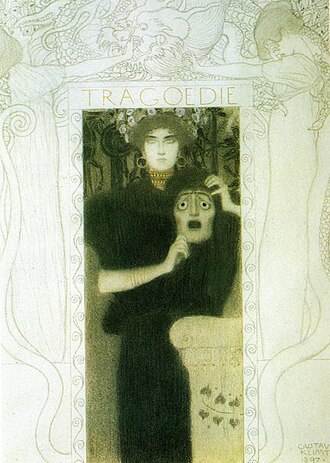 Tragedy - Gustav Klimt (1897)