La Conversion de saint Paul
Caravaggio · 1600s
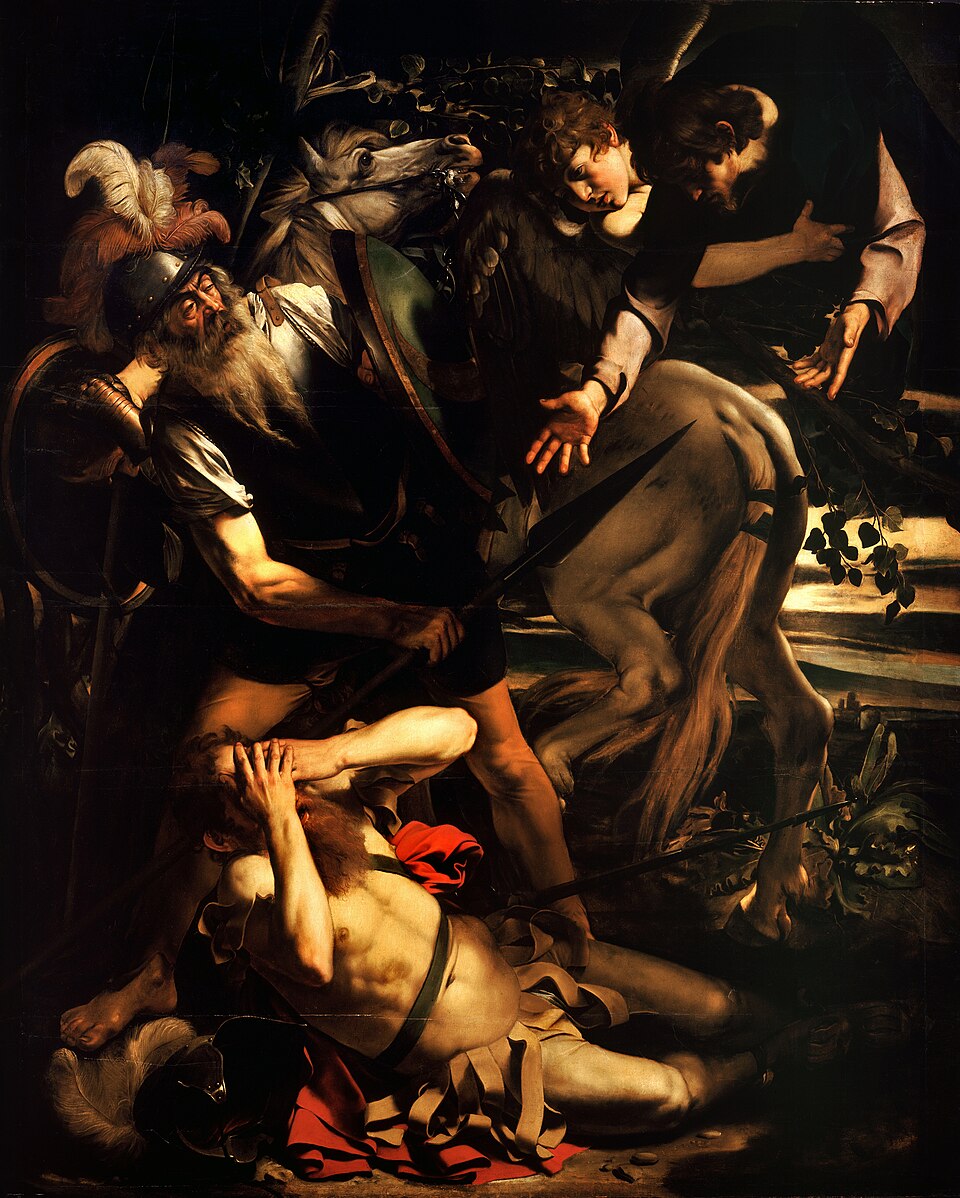
Saul lies thrown to the ground, struck blind by a light from heaven. Caravaggio's first version of the scene was apparently rejected, and it survives on cypress wood in a private collection in Rome.
The story behind the painting
In September 1600 Monsignor, later Cardinal, Tiberio Cerasi, Treasurer-General to Pope Clement VIII, commissioned two paintings from Caravaggio: this Conversion and a Crucifixion of Saint Peter. According to the early biographer Giovanni Baglione, Cerasi rejected both, and they were replaced by the second versions that hang in the Cerasi Chapel of Santa Maria del Popolo today. The dates are fixed by Cerasi's death in May 1601. Baglione says Cardinal Giacomo Sannessio took the first versions, while Giulio Mancini claims Sannessio's paintings were copies. Most scholars accept this work as the first Conversion.
What to look for
The panel, 237 by 189 cm, is painted in oil on cypress wood and dated 1600 to 1601. It shows the moment on the road to Damascus, told in Acts 22, when Saul, going to destroy the Christian community, is struck blind by a brilliant light and hears the voice of Christ asking why he persecutes him. Helen Langdon calls the style an odd blend of Raphael and clumsy rustic realism. Look at the jagged shapes and the irrational light, which picks out details for dramatic effect.
Meaning and intent
For Langdon, this composition creates a sense of crisis and dislocation in which Christ disrupts the mundane world. The subject matters because Paul elsewhere says he saw Christ in a vision, and on that basis claimed to be an Apostle, asking in First Corinthians whether he had not seen Jesus Christ the Lord. The painting is one of at least two Caravaggio made of the Conversion, and it lets us compare his first idea with the later chapel picture.
Legacy
Modern writers such as John Gash and Peter Robb have questioned whether the rejection was as simple as the record suggests. They speculate that Sannessio may have used Cerasi's unexpected death on 3 May 1601 to, in effect, seize the paintings. There is no obvious reason for a rejection, and if this surviving Conversion is a guide, the replacements were far more unconventional than the first versions. The first Crucifixion of Peter has disappeared, so this panel is the one witness left. It is housed in the Odescalchi Balbi collection in Rome.
Le saviez-vous ?
- Painted in oil on cypress wood, 1600-1601.
- Commissioned by Tiberio Cerasi in September 1600.
- The first of at least two Caravaggio versions of the subject.
- Kept in the Odescalchi Balbi private collection, Rome.
À propos de l'artiste
Caravaggio (1571-1610)
art religieux · conversion de Paul
Autres œuvres de Caravaggio
 Le Souper à Emmaüs - Caravaggio (1601)
 La Vocation de saint Matthieu - Caravaggio (1609)
 La Décollation de saint Jean-Baptiste - Caravaggio (1608)
 Le Souper à Emmaüs - Caravaggio (1601)
 Méduse - Caravaggio (1597)
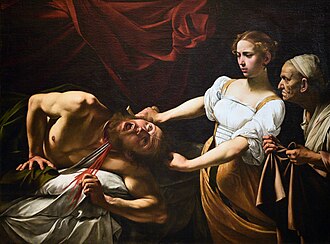 Judith décapitant Holopherne - Caravaggio (1598)
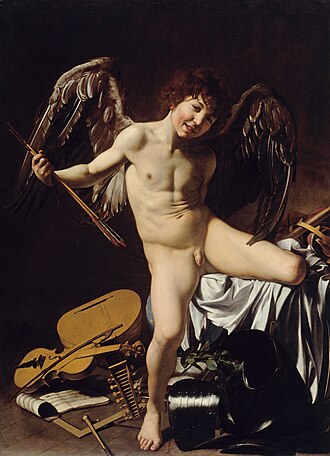 L'Amour victorieux - Caravaggio (1600s)
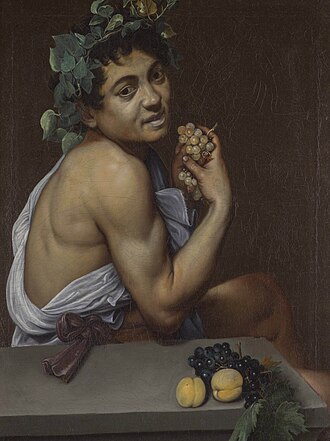 Le Petit Bacchus malade - Caravaggio (1595)
Œuvres d'artistes liés
 Les Ménines - Diego Velázquez (1656)
 La Reddition de Bréda - Diego Velázquez (1635)
 Saint Francis in Meditation - Francisco de Zurbarán (1639)
 The Immaculate Conception - Francisco de Zurbarán (1661)
 Triple portrait de Charles Ier - Anthony van Dyck (1635)
 Charles Ier à cheval avec Monsieur de Saint Antoine - Anthony van Dyck (1636)
 L'Érection de la croix - Peter Paul Rubens (1609)
 L'Enlèvement des filles de Leucippe - Peter Paul Rubens (1618)
 La Ronde de nuit - Rembrandt van Rijn (1642)
 Autoportrait - Rembrandt van Rijn (1659)
 Le Joyeux Buveur - Frans Hals (1620s)
 Le Cavalier riant - Frans Hals (1624)