Le Joyeux Buveur
Frans Hals · 1620s
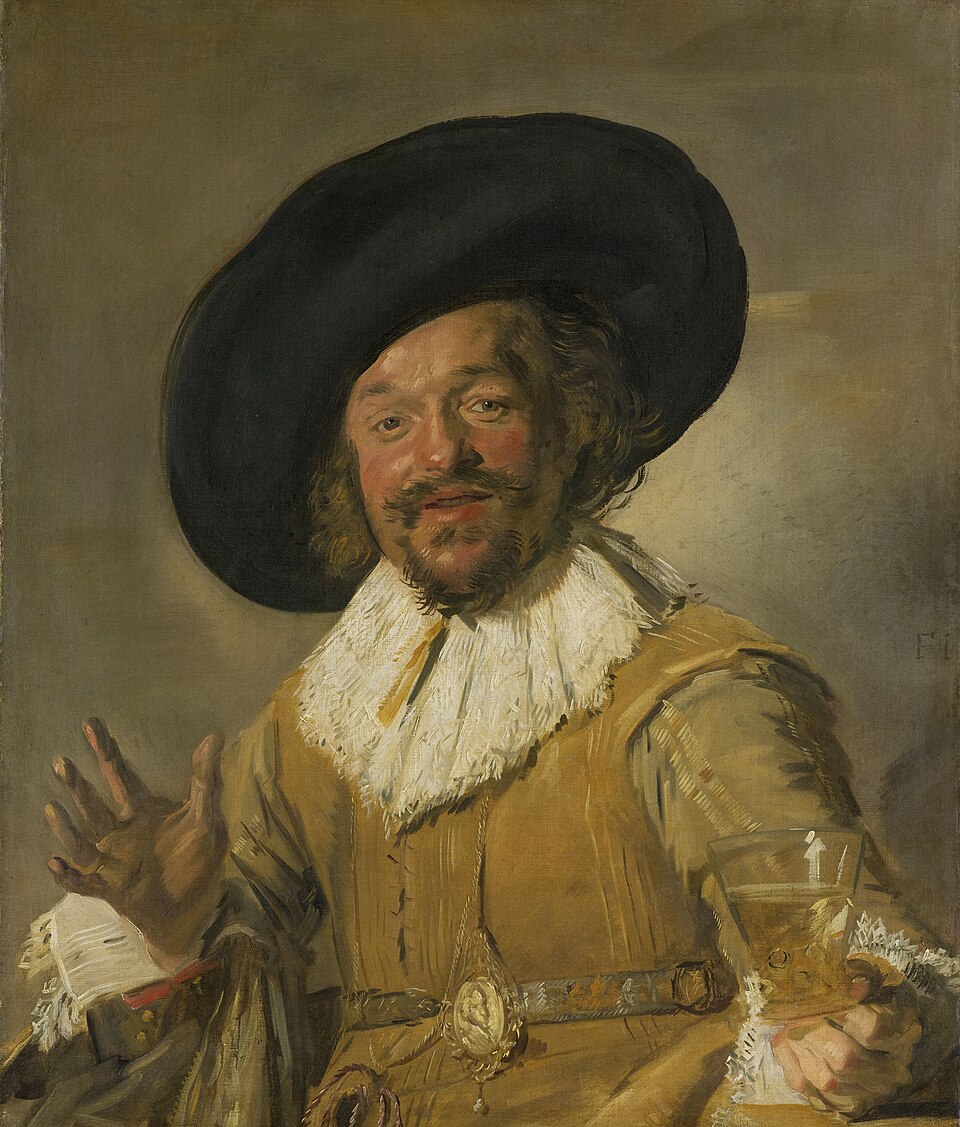
A flushed man in a floppy hat raises his glass and gestures as if he has just turned to speak to you. Frans Hals caught him in a few quick strokes, and four centuries later he is still talking.
The story behind the painting
Frans Hals painted The Merry Drinker around 1628 to 1630; Wikidata dates it simply to the 1620s. It is an oil on canvas of 81 by 66.5 cm. It is also known as A Militiaman Holding a Berkemeyer, after the type of glass he holds. It was made roughly twenty years before the end of the Eighty Years' War, when Dutch independence was increasingly reflected in art. With Protestantism spreading in the north, private citizens rather than the Church were buying paintings for their homes, and new types such as tavern scenes and portraits became popular.
What to look for
The man wears a leather jerkin, a lace collar and cuffs, and a floppy hat tipped at an angle. His right hand gestures; his left holds a glass of white wine. His mouth is open enough to show his teeth. Look at the brushwork: strokes go from thin to thick, circular forms and quick slashes, with some hatching, and Hals even used the end of his brush to shape the wet paint. He worked quickly but in layers over a tinted ground. The plain grey background sets off the flushed skin and golden clothes, and he wears a medal, thought to show Maurice, Prince of Orange.
Meaning and intent
Is it a portrait or a genre scene? Art historians still debate. Old Dutch inventories often list merry drinkers, and Hofstede de Groot classed it as genre in 1910. Hugh Honour and John Fleming saw an allegory of taste. Some have suggested a Haarlem innkeeper, Hendrick den Abt, who owned works by Hals. Since polite society expected laughter to be hidden, the visible teeth argue for genre. Rather than a moral warning about drink, Hals shows its pleasure, and the painting has been read as an emblem of the young Dutch Republic: individual, natural, ebullient.
Legacy
The Rijksmuseum bought the painting in 1816 from the family of Baroness van Leyden van Warmond. In 1822 Lord Dover called the style unfinished but admired the face. In 1868 the critic Théophile Thoré-Bürger argued the loose strokes were deliberate, and interest in Hals revived. Its in-the-moment feel has been described as a precursor of Impressionism. A 1971 restoration removed discoloured varnish and brought back the contrast Hals intended between grey background and golden clothes. It remains one of the most visited paintings in the Rijksmuseum.
Le saviez-vous ?
- Painted around 1628-1630 by Frans Hals.
- Also called A Militiaman Holding a Berkemeyer.
- Debated as portrait or genre scene.
- In the Rijksmuseum since 1816.
À propos de l'artiste
Frans Hals (1591-1666)
Autres œuvres de Frans Hals
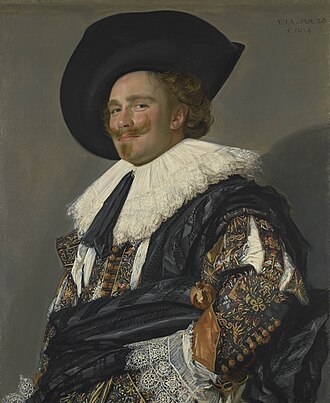 Le Cavalier riant - Frans Hals (1624)
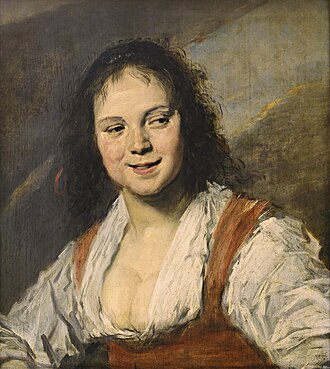 La Bohémienne - Frans Hals (1628)
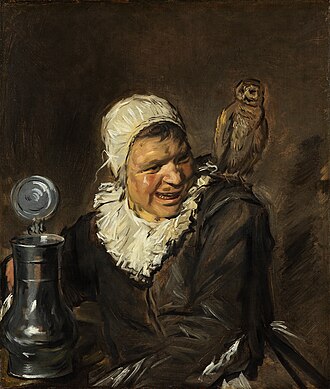 Malle Babbe - Frans Hals (1640s)
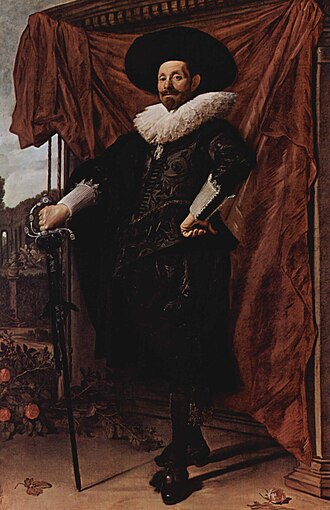 Portrait de Willem van Heythuysen - Frans Hals (1625)
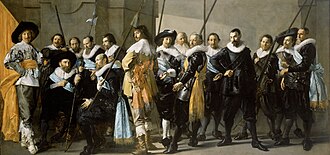 La Compagnie du capitaine Reinier Reael, dite ‘La Maigre Compagnie’ - Frans Hals (1630s)
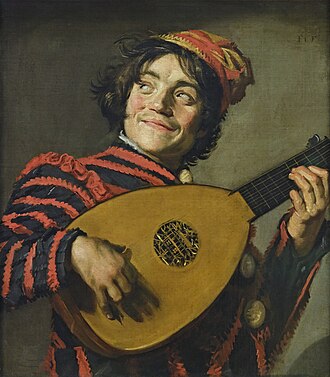 Le Bouffon au luth - Frans Hals (1623)
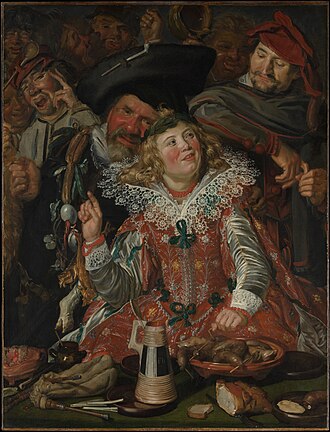 Fêtards du Mardi Gras - Frans Hals (1610s)
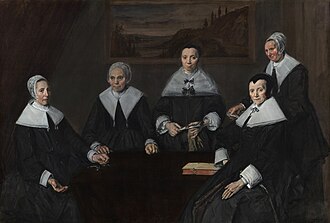 Portrait de groupe des régentes de l'hospice des vieillards - Frans Hals (1664)
Œuvres d'artistes liés
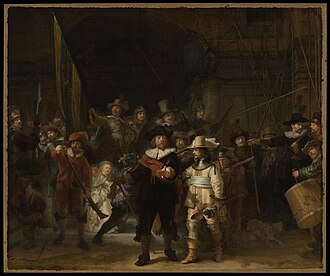 La Ronde de nuit - Rembrandt van Rijn (1642)
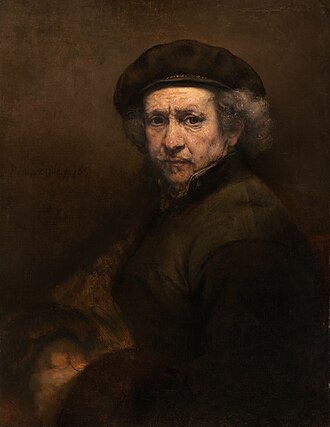 Autoportrait - Rembrandt van Rijn (1659)
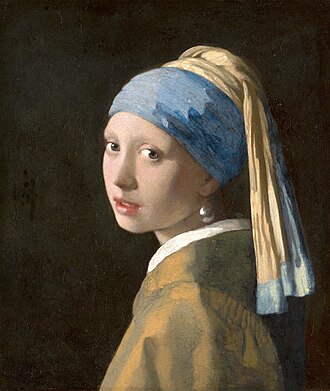 La Jeune Fille à la perle - Johannes Vermeer (1665)
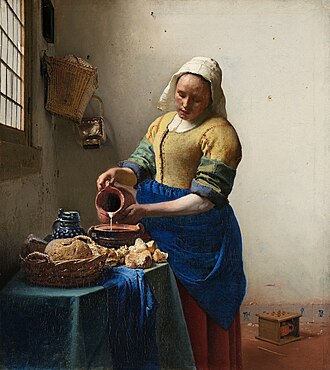 La Laitière - Johannes Vermeer (c. 1658)