Judith décapitant Holopherne
Caravaggio · 1598
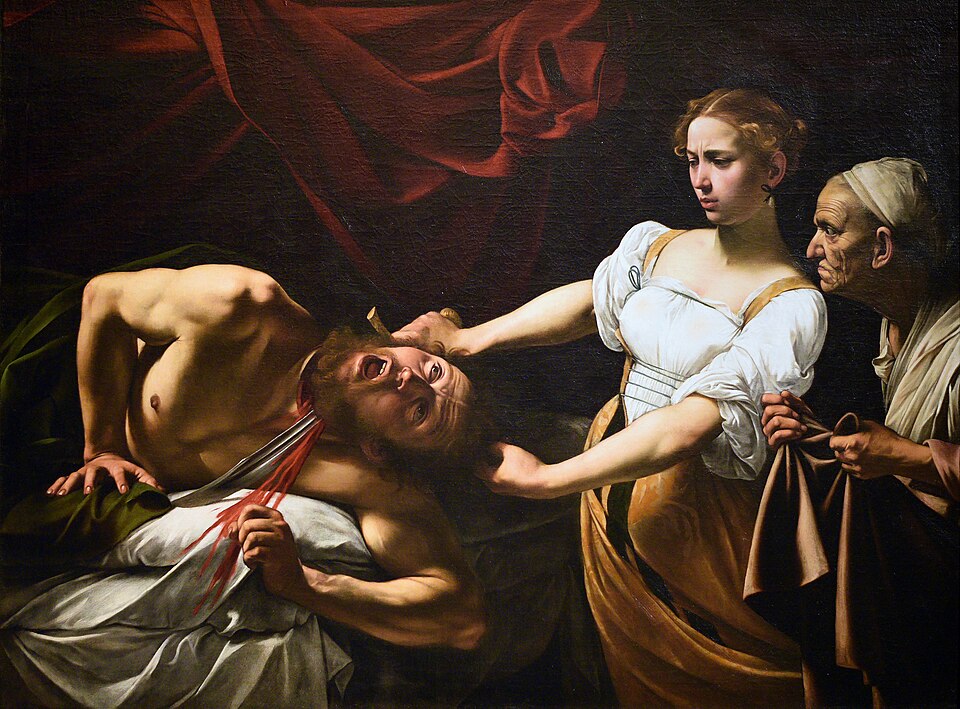
Caravaggio refused to show the moment before or after; he chose the deed itself, and three faces lit against total darkness still make visitors catch their breath.
The story behind the painting
The subject comes from the Book of Judith, in which the widow Judith saves her people by deceiving the Assyrian general Holofernes: after a banquet in his tent, when he lies drunk, she takes his sword and kills him. Caravaggio painted it in Rome, but the date is debated. Wikipedia gives c. 1599 to 1600 or 1602, while Wikidata records 1598. The 2017 to 2018 exhibition Dentro Caravaggio in Milan argued for 1602, because the canvas uses light underlying sketches typical of his later work. According to the biographer Giovanni Baglione, it was commissioned by the Genoese banker Ottavio Costa. The model for Judith was probably the Roman courtesan Fillide Melandroni, who posed for several of his works.
What to look for
The three figures stand on a shallow stage, lit theatrically from the side and isolated against an inky black background. On the left, Holofernes lies on his stomach, his neck twisted as he turns towards his killer: he is utterly vulnerable. Judith extends her arm to hold the blade to his neck, and her face is the heart of the picture, showing determination mixed with repulsion. Beside her on the right stands her maid Abra, watching. The violence is real and the blood is not hidden, yet the painting's power lies chiefly in the faces. X-rays show Caravaggio adjusted Holofernes's head as he worked, separating it slightly from the torso and moving it minutely to the right.
Meaning and intent
Caravaggio chose what he considered the moment of greatest dramatic impact: not Judith approaching, not her holding up a trophy, but the act of decapitation itself. This was a radical choice, turning a heroic biblical story into something immediate and morally uncomfortable. Judith is no serene emblem of virtue; she is a young woman doing something terrible and feeling it. The sources suggest the grim realism may have drawn on what Caravaggio saw at the public execution of Beatrice Cenci in 1599, though this is offered only as a possibility. Either way, the picture asks viewers to confront courage and horror in the same instant.
Legacy
Remarkably, the painting was lost from view for centuries and rediscovered only in 1950. It now belongs to the Galleria Nazionale d'Arte Antica in Rome. Its influence was profound: Artemisia Gentileschi and other painters were deeply affected by it, and her own versions of the subject are among the most famous responses. The story has a further twist. A second Judith, possibly by Caravaggio and dated to 1607, was found in an attic in Toulouse in 2014. Some scholars accept it as his; others attribute it to his associate Louis Finson. That debate continues, while the Rome canvas remains the undisputed original vision.
Le saviez-vous ?
- The painting was rediscovered in 1950.
- Dates proposed range from 1598 (Wikidata) to c. 1599-1600 or 1602 (Wikipedia).
- X-rays show Caravaggio moved Holofernes's head slightly while painting.
- Judith was probably modelled by the Roman courtesan Fillide Melandroni.
À propos de l'artiste
Caravaggio (1571-1610)
femme · art religieux · robe · station debout · cheveux roux
Autres œuvres de Caravaggio
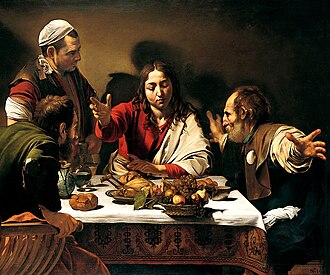 Le Souper à Emmaüs - Caravaggio (1601)
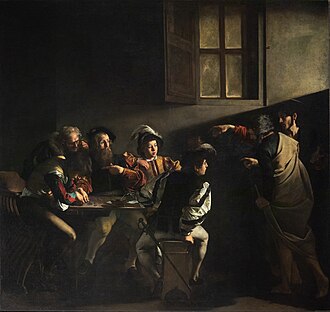 La Vocation de saint Matthieu - Caravaggio (1609)
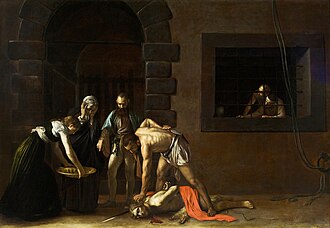 La Décollation de saint Jean-Baptiste - Caravaggio (1608)
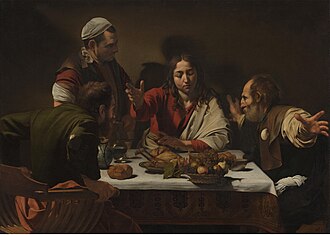 Le Souper à Emmaüs - Caravaggio (1601)
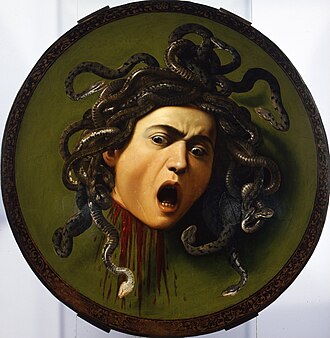 Méduse - Caravaggio (1597)
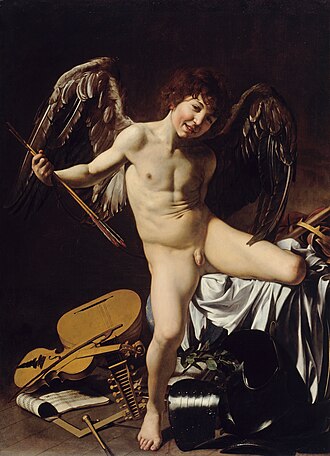 L'Amour victorieux - Caravaggio (1600s)
%2C%201595%20circa%2C%20534.jpg) Le Petit Bacchus malade - Caravaggio (1595)
Le Petit Bacchus malade - Caravaggio (1595).jpg) La Mort de la Vierge - Caravaggio (1600s)
La Mort de la Vierge - Caravaggio (1600s)
Œuvres d'artistes liés
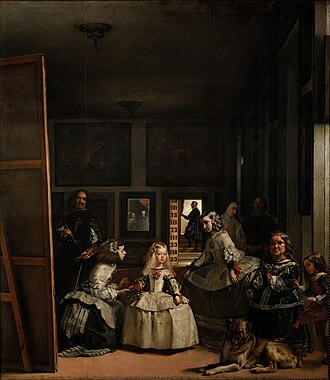 Les Ménines - Diego Velázquez (1656)
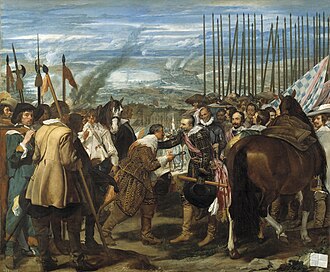 La Reddition de Bréda - Diego Velázquez (1635)
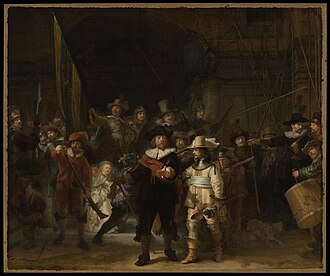 La Ronde de nuit - Rembrandt van Rijn (1642)
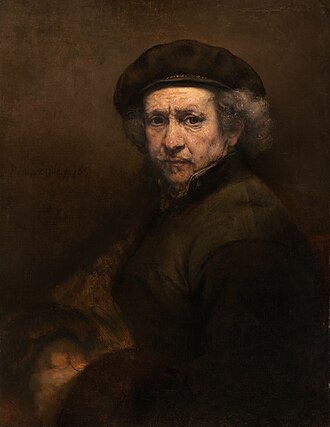 Autoportrait - Rembrandt van Rijn (1659)
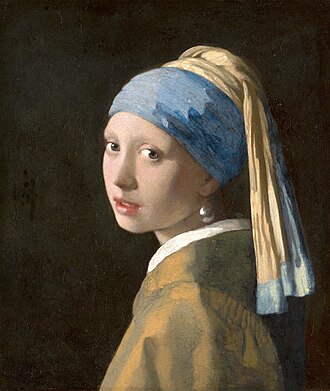 La Jeune Fille à la perle - Johannes Vermeer (1665)
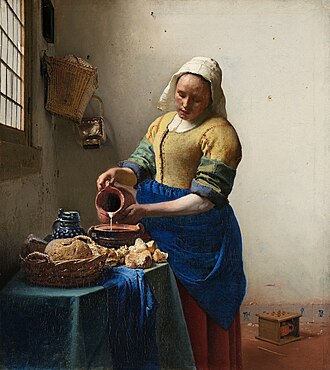 La Laitière - Johannes Vermeer (c. 1658)