La Décollation de saint Jean-Baptiste
Caravaggio · 1608
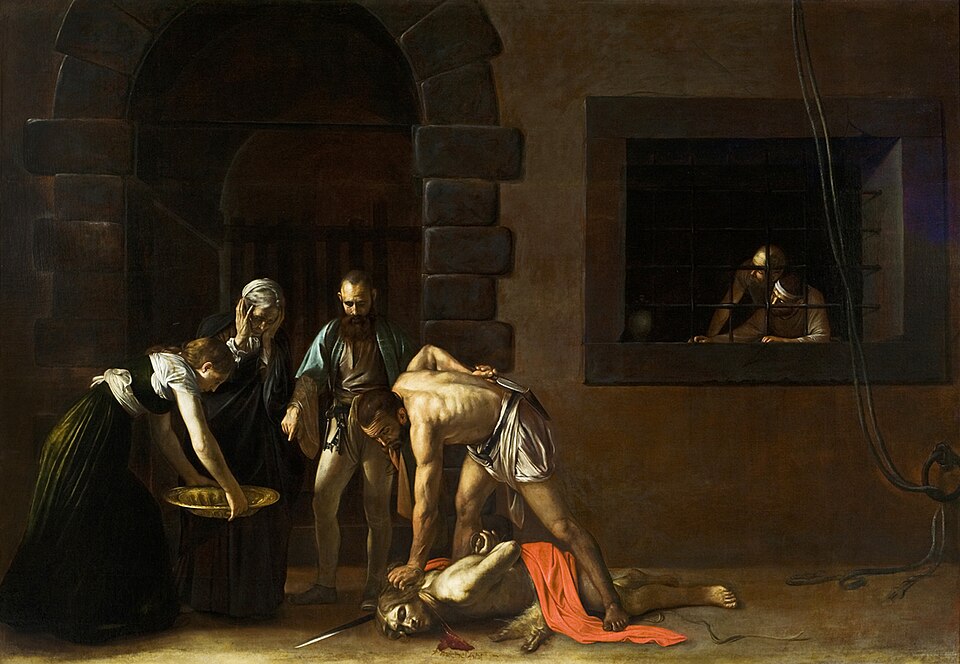
A vast, shadowed courtyard, a handful of figures, and a pool of blood in which the painter wrote his own name. This is the only signature Caravaggio ever left on a painting.
The story behind the painting
In 1608 Caravaggio was in Malta, a painter on the run. Two years earlier the death of Ranuccio Tomassoni at his hands had forced him to flee Rome. The Knights of Malta welcomed him, inducted him into their Order, and commissioned this canvas as an altarpiece for St. John's Co-Cathedral in Valletta. It became the largest altarpiece he would ever paint. His time as a knight was brief and troubled: he was soon imprisoned for an unrecorded crime, escaped, and became a fugitive. About six months after his induction, the Order expelled him in absentia as a "foul and rotten member" - and that ceremony took place in the Oratory, in front of this very painting.
What to look for
Let your eyes adjust to the darkness. The canvas is enormous, about 3.7 by 5.2 metres, so the figures are roughly life-size, yet much of the space is left empty, swallowed by shadow. Against it glow vivid reds and warm yellows, shaped by Caravaggio's dramatic chiaroscuro. The Baptist lies on the ground. The executioner reaches for his dagger to finish the act, while a jailer points and gives instructions. A servant girl holds out a golden platter to receive the head, and an older woman beside her raises her hands to her face in shock. Now look at the blood spilling from the saint's throat: in it, revealed during restoration, is the signature.
Meaning and intent
The scene follows the Golden Legend rather than the Bible directly, and Caravaggio sets it in a bleak prison yard, perhaps drawn from memories of Roman jails or from the Knights' own prison, where he would soon be held himself. The shocked woman has been read either as Herodias or as a bystander who suddenly grasps that the killing is wrong. The signature, "f. Michelang.o", uses the "f" of a brother of the Order. A popular story claims he wrote a confession of guilt in the blood, perhaps for Tomassoni's death; the inscription itself does not say this, and the idea remains disputed.
Legacy
Andrea Pomella describes the work as widely considered Caravaggio's masterpiece, and critic Jonathan Jones has named it among the ten greatest artworks of all time. The painting was badly damaged and was restored in the 1950s before a celebrated exhibition in Rome in 1955-56, which brought it new attention. It still hangs where it was made to hang, in the Oratory of St. John's Co-Cathedral. In the summer of 2023 the Oratory's windows were permanently shuttered, cutting off natural light, a decision that drew public protest from art historians, Caravaggio scholars and Maltese citizens. Few paintings carry so much of their maker's own life inside them.
Le saviez-vous ?
- It is the only painting Caravaggio signed - in the Baptist's blood.
- The signature only became visible to modern viewers during the 1950s restoration.
- Caravaggio was expelled from the Knights of Malta in a ceremony held in front of this painting.
- It is the largest altarpiece Caravaggio ever painted.
À propos de l'artiste
Caravaggio (1571-1610)
art religieux · Jean le Baptiste
Autres œuvres de Caravaggio
 Le Souper à Emmaüs - Caravaggio (1601)
 La Vocation de saint Matthieu - Caravaggio (1609)
 Le Souper à Emmaüs - Caravaggio (1601)
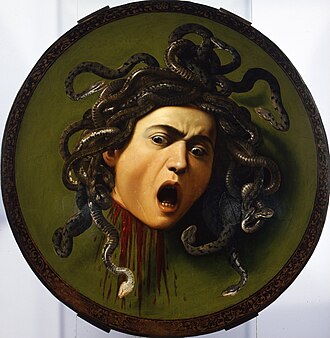 Méduse - Caravaggio (1597)
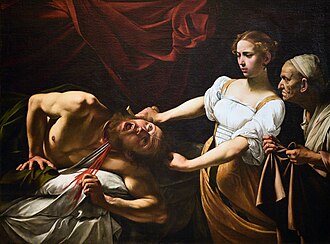 Judith décapitant Holopherne - Caravaggio (1598)
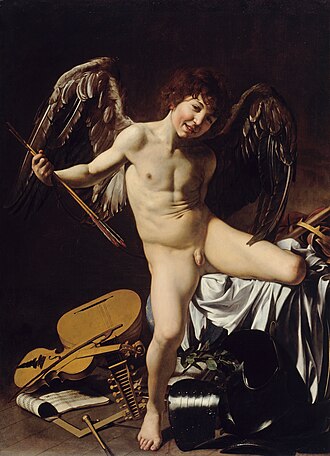 L'Amour victorieux - Caravaggio (1600s)
%2C%201595%20circa%2C%20534.jpg) Le Petit Bacchus malade - Caravaggio (1595)
Le Petit Bacchus malade - Caravaggio (1595).jpg) La Mort de la Vierge - Caravaggio (1600s)
La Mort de la Vierge - Caravaggio (1600s)
Œuvres d'artistes liés
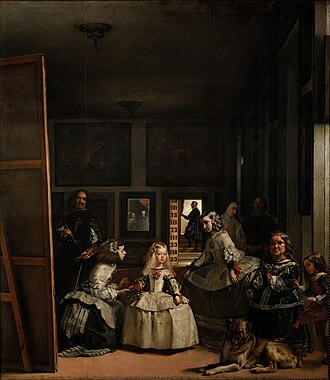 Les Ménines - Diego Velázquez (1656)
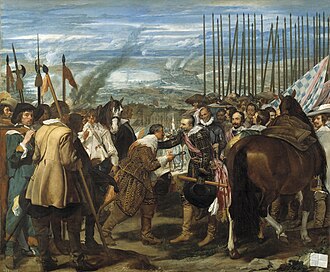 La Reddition de Bréda - Diego Velázquez (1635)
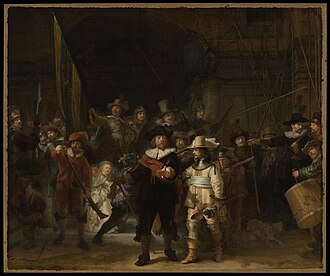 La Ronde de nuit - Rembrandt van Rijn (1642)
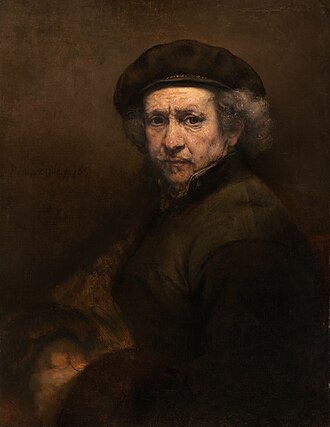 Autoportrait - Rembrandt van Rijn (1659)
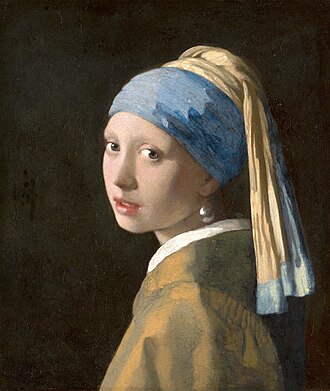 La Jeune Fille à la perle - Johannes Vermeer (1665)
 La Laitière - Johannes Vermeer (c. 1658)