Vocation de saint Pierre et saint André
Caravaggio · 1603
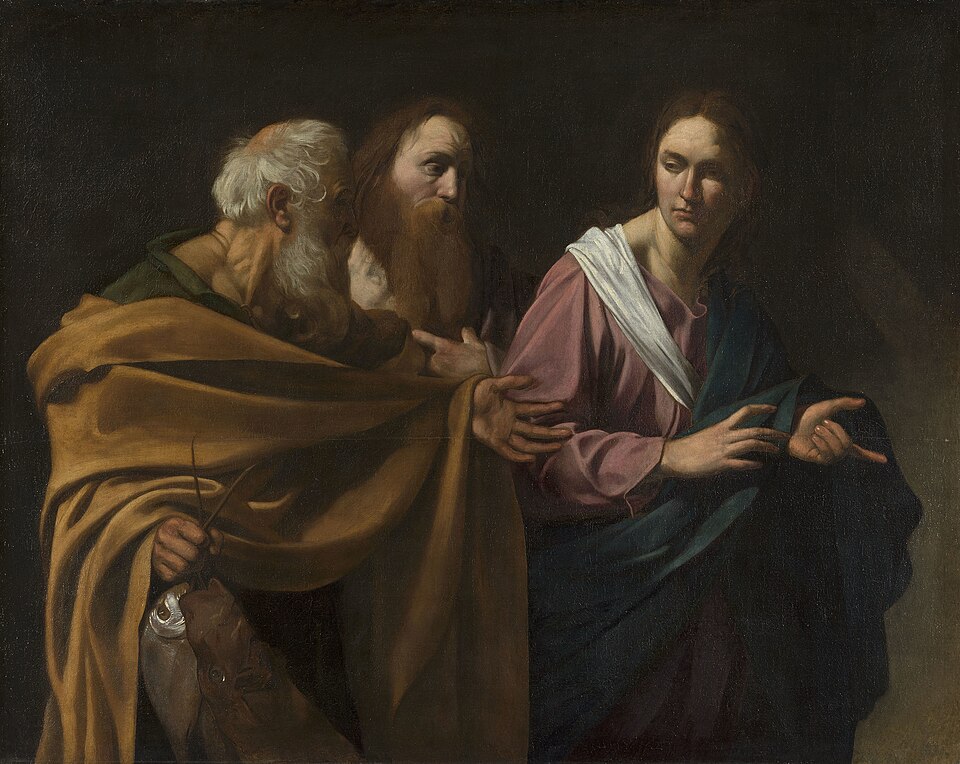
A young, beardless Christ calls two weathered fishermen to follow him, and one still holds a fish in his hand. For centuries this canvas in the British Royal Collection was thought a worthless copy, until 2006 proved it a real Caravaggio.
The story behind the painting
The painting takes its theme from the Gospel of Matthew. Walking by the Sea of Galilee, Jesus saw two brothers, Simon, later called Peter, and Andrew, casting a net, for they were fishermen. He told them to follow him and he would make them fishers of men, and at once they left their nets. The picture appears to date from the height of Caravaggio's Roman period, around 1603 to 1606; Wikidata gives 1603.
What to look for
Christ is young and beardless, leading two brothers who look much older. The more prominent one, presumably Simon, holds a fish in his right hand, the sign of the trade he is about to leave. Look closely and you may find incisions in the ground of the canvas marking out Peter's ear and Christ's eyes, typical of Caravaggio's technique. The edges of the canvas are rather damaged, but the central area is in good condition.
Meaning and intent
The scene is the instant of a call and a choice: men who work with their hands are asked to drop everything, and the fish still held in Simon's hand keeps that moment of hesitation in view. Caravaggio sets the youth of Christ against the age of the fishermen, so that authority comes from the younger man. The marks scored into the ground show how carefully the faces and the gaze were planned before painting.
Legacy
Charles I bought the work in 1637. It was sold during the Commonwealth and bought back by Charles II after the Restoration, and it has remained in the Royal Collection since. Long believed a relatively valueless copy of a lost original, it was declared an authentic Caravaggio on 10 November 2006, after six years of restoration and study, a verdict supported by outside experts. It was shown in Rome, at Buckingham Palace in 2007, and at Hampton Court Palace.
Le saviez-vous ?
- Painted around 1603-1606 in Caravaggio's Roman period.
- Bought by Charles I in 1637.
- Declared an authentic Caravaggio on 10 November 2006.
- Part of the Royal Collection.
À propos de l'artiste
Caravaggio (1571-1610)
art religieux · homme · Jésus-Christ · baroque · Pierre · Royal Collection · conversation
Autres œuvres de Caravaggio
 Le Souper à Emmaüs - Caravaggio (1601)
 La Vocation de saint Matthieu - Caravaggio (1609)
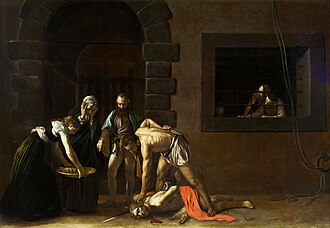 La Décollation de saint Jean-Baptiste - Caravaggio (1608)
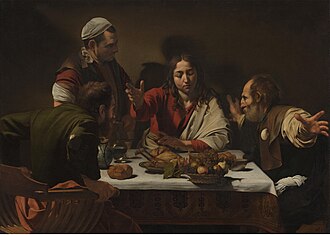 Le Souper à Emmaüs - Caravaggio (1601)
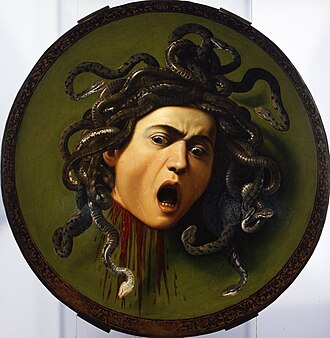 Méduse - Caravaggio (1597)
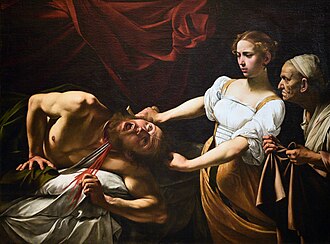 Judith décapitant Holopherne - Caravaggio (1598)
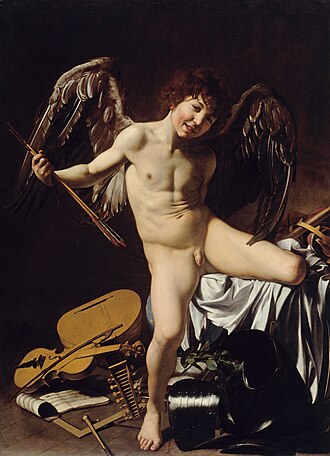 L'Amour victorieux - Caravaggio (1600s)
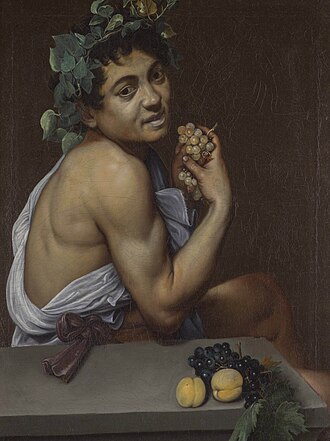 Le Petit Bacchus malade - Caravaggio (1595)
Œuvres d'artistes liés
 Les Ménines - Diego Velázquez (1656)
 La Reddition de Bréda - Diego Velázquez (1635)
 Saint Francis in Meditation - Francisco de Zurbarán (1639)
 The Immaculate Conception - Francisco de Zurbarán (1661)
 Triple portrait de Charles Ier - Anthony van Dyck (1635)
 Charles Ier à cheval avec Monsieur de Saint Antoine - Anthony van Dyck (1636)
 L'Érection de la croix - Peter Paul Rubens (1609)
 L'Enlèvement des filles de Leucippe - Peter Paul Rubens (1618)
 La Ronde de nuit - Rembrandt van Rijn (1642)
 Autoportrait - Rembrandt van Rijn (1659)
 Le Joyeux Buveur - Frans Hals (1620s)
 Le Cavalier riant - Frans Hals (1624)