Nature morte aux fruits
Caravaggio · 1601
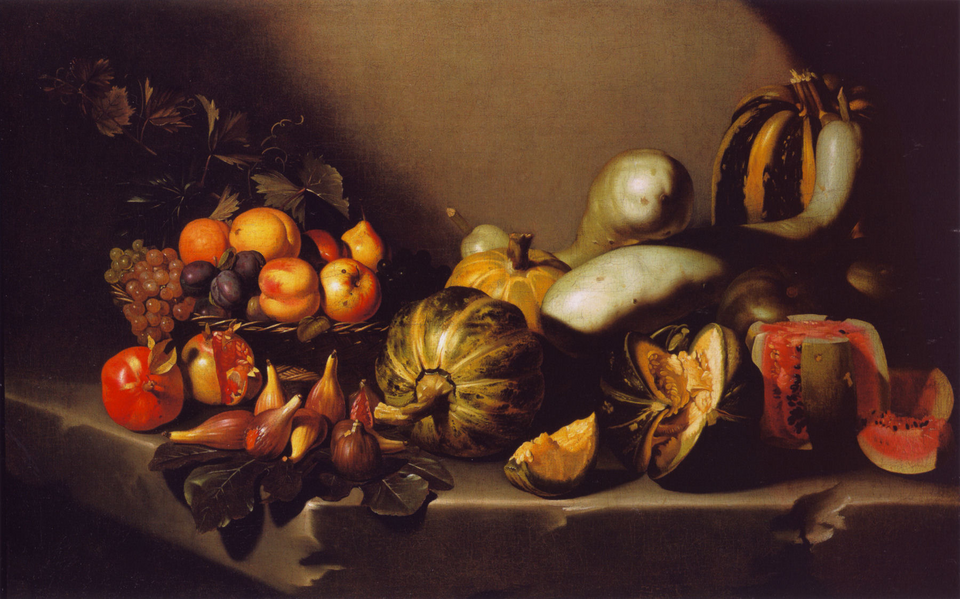
Melons split open, marrows twisting as if trying to escape the canvas, all lit by a shaft of light from above. This heaped basket on a stone ledge is one of only two independent still lifes attributed to Caravaggio.
The story behind the painting
The painting, also known as Still Life with Fruit on a Stone Ledge, is attributed to Caravaggio and has been dated anywhere from 1601 to 1610; the scholar John Spike places it around 1603, and Wikidata gives 1601. Its first recorded mention is in the collection of Cardinal Antonio Barberini in 1671, described as by the artist's hand. How it got there is unknown. Barberini bought part of the collection of Cardinal Francesco Maria del Monte, Caravaggio's first patron, after his death in 1627, so it may once have been a private work for del Monte.
What to look for
A wicker basket heaped with fruit and vegetables sits on a stone table. Most of the space is taken by large melons, marrows and pumpkins; the watermelon and pumpkin are cut open to show their insides, and the long, twisting marrows seem to push out of the flat picture. A strong yet mellow shaft of light falls from the top left, as if through a hole in the ceiling. Around this time Caravaggio was sued by a landlady for cutting a hole in the ceiling of his rented rooms, presumably to create that very lighting.
Meaning and intent
Caravaggio is credited as the father of Roman still-life painting, a genre then in its infancy. He often put still-life details into his pictures, yet only two independent still lifes by him have been identified: this one and the Basket of Fruit in the Ambrosiana in Milan. Scholars call it a capital picture for the artist and a masterpiece of still life. Renaissance symbolism of fruit was rich, and some of his simple-looking paintings carry coded messages, but no convincing reading of this one has been offered, though commentators note the suggestive cut fruits and writhing marrows.
Legacy
A second theory of its origin points to Pope Urban VIII, a great patron of the Roman Baroque, who as a cardinal acquired several paintings directly from Caravaggio in 1603. In 1644 his nephew Cardinal Antonio Barberini could have inherited the still life from him. It shares the same dimensions and palette as the Sacrifice of Isaac in the Uffizi, which belonged to that group and dates from the same period. Whichever path it took, the picture stands at the very start of still life as an independent subject in Rome.
Le saviez-vous ?
- Dated between 1601 and 1610; John Spike suggests around 1603.
- One of only two independent still lifes attributed to Caravaggio.
- First recorded in Cardinal Antonio Barberini's collection in 1671.
- The light falls as if through a hole in the ceiling.
À propos de l'artiste
Caravaggio (1571-1610)
baroque · nature morte · fruit comestible
Autres œuvres de Caravaggio
 Le Souper à Emmaüs - Caravaggio (1601)
 La Vocation de saint Matthieu - Caravaggio (1609)
 La Décollation de saint Jean-Baptiste - Caravaggio (1608)
 Le Souper à Emmaüs - Caravaggio (1601)
 Méduse - Caravaggio (1597)
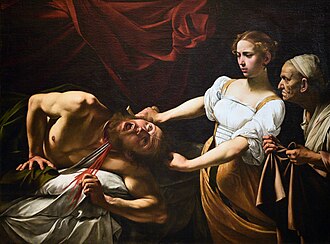 Judith décapitant Holopherne - Caravaggio (1598)
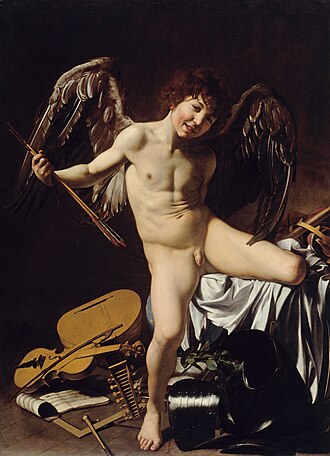 L'Amour victorieux - Caravaggio (1600s)
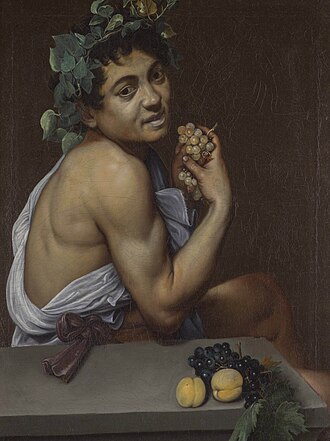 Le Petit Bacchus malade - Caravaggio (1595)
Œuvres d'artistes liés
 Les Ménines - Diego Velázquez (1656)
 La Reddition de Bréda - Diego Velázquez (1635)
 Saint Francis in Meditation - Francisco de Zurbarán (1639)
 The Immaculate Conception - Francisco de Zurbarán (1661)
 Triple portrait de Charles Ier - Anthony van Dyck (1635)
 Charles Ier à cheval avec Monsieur de Saint Antoine - Anthony van Dyck (1636)
 L'Érection de la croix - Peter Paul Rubens (1609)
 L'Enlèvement des filles de Leucippe - Peter Paul Rubens (1618)
 La Ronde de nuit - Rembrandt van Rijn (1642)
 Autoportrait - Rembrandt van Rijn (1659)
 Le Joyeux Buveur - Frans Hals (1620s)
 Le Cavalier riant - Frans Hals (1624)