Capitaine George K. H. Coussmaker
Joshua Reynolds · 1782
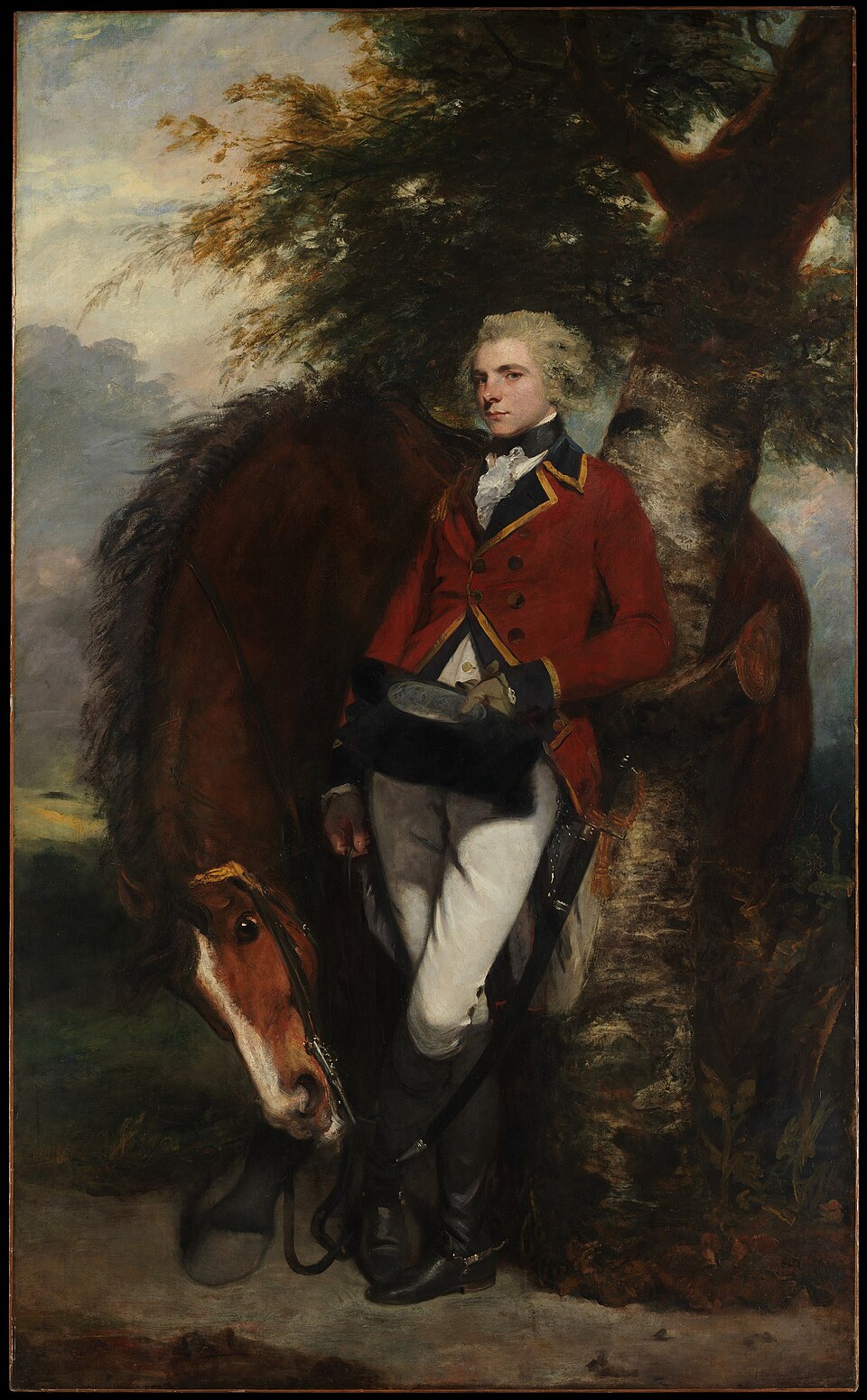
A young Guards officer leans casually against a tree while his horse waits beside him. Behind that ease lay an extraordinary effort: twenty-one sittings for the man, and eight for the horse.
The story behind the painting
George Keene Hayward Coussmaker was born in London in 1759 to Evert and Mary Coussmaker. He entered the army in 1776 as an ensign in the 1st Regiment of Foot Guards. In early 1782, between February 9 and April 16, he sat for Sir Joshua Reynolds an exceptional twenty-one times, and his horse sat eight times. The result is a grand oil on canvas, 238.1 by 145.4 centimetres. One small puzzle is worth noting: the painting is known as Captain George K. H. Coussmaker, yet the source records that he was promoted to lieutenant in 1778 and only to captain in 1788, six years after the portrait was made. The German title even calls him Colonel.
What to look for
The portrait shows a man and his horse, the two subjects named in the museum record. The size alone tells you this was meant to impress: at almost two and a half metres tall, the figures approach life scale. Curators at the Metropolitan Museum of Art describe the composition as complex and the whole picture as vigorously painted. Look at how the officer and the animal are arranged together, the human figure and the large body of the horse fitted into one tall format. Spend time on the brushwork too, since the vigour the curators praise lives in the surface of the paint. The many sittings suggest Reynolds wanted both figures studied closely from life.
Meaning and intent
There is something gently ironic in this martial image. According to the source, Coussmaker never saw active service. He married Catherine Southwell in 1790, had two children, George and Sophia, who later became Baroness de Clifford, retired from the army in 1795 and died in 1801. The painting therefore presents the ideal of a soldier rather than a record of battle: a young gentleman in uniform, his horse beside him, posed with the assurance of his class and regiment. Reynolds, the leading portraitist of his day, could turn such a commission into something more than a likeness, an image of confidence and poise that has outlived the sitter's modest military career.
Legacy
The portrait stayed with Coussmaker and his descendants for about a century, until 1884, when it passed to William K. Vanderbilt. Vanderbilt bequeathed it to the Metropolitan Museum of Art in New York in 1920, where it remains. Museum curators call it an exceptionally fine work, and it stands as an example of how much labour lay behind Reynolds's grand manner: dozens of hours of posing, for man and horse alike. Wikidata groups it under academic art and portraiture. For visitors today it offers a glimpse of an eighteenth-century British gentleman as he wished to be seen, and of a painter willing to take unusual pains to get it right.
Le saviez-vous ?
- Oil on canvas, 1782, 238.1 x 145.4 cm
- Sitter posed 21 times and his horse 8 times between February 9 and April 16, 1782
- Bequeathed to the Metropolitan Museum of Art in 1920
- Title calls him Captain, though the source dates his captaincy to 1788
À propos de l'artiste
Joshua Reynolds (1723-1792)
portrait · homme · Metropolitan Museum of Art · académisme · cheval · portrait
Autres œuvres de Joshua Reynolds
 The Ladies Waldegrave - Joshua Reynolds (1780)
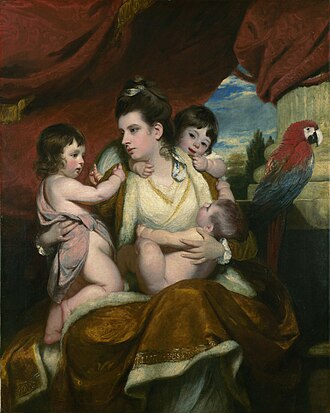 Lady Cockburn et ses enfants - Joshua Reynolds (1773)
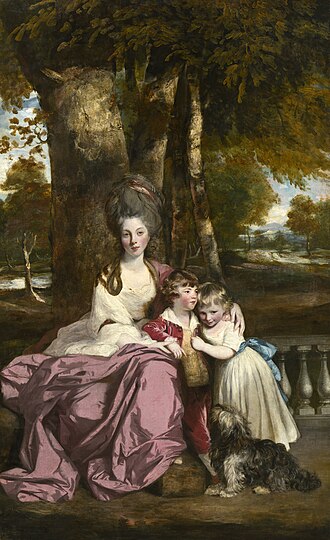 Lady Elizabeth Delmé et ses enfants - Joshua Reynolds (1770s)
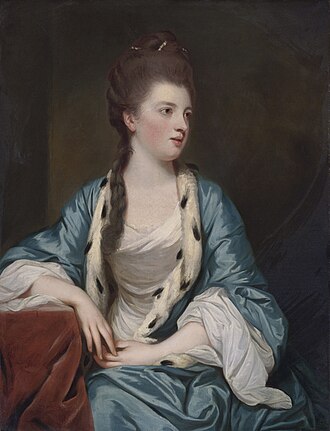 Elizabeth Kerr, Marchioness of Lothian - Joshua Reynolds (1769)
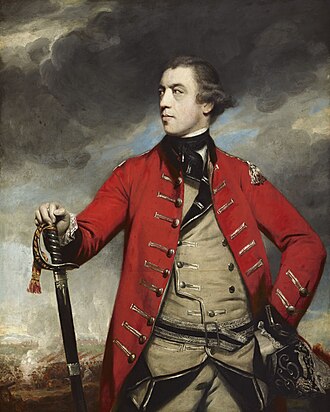 Portrait de John Burgoyne - Joshua Reynolds (1766)
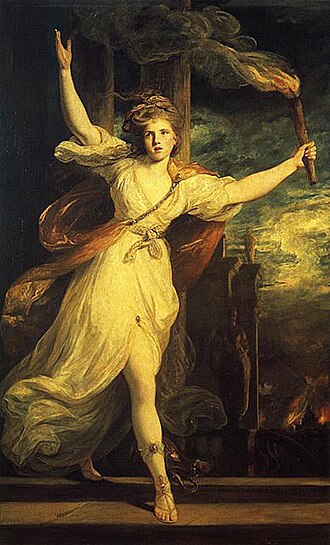 Thaïs - Joshua Reynolds (1781)
 David Garrick Between Tragedy and Comedy - Joshua Reynolds (1761)
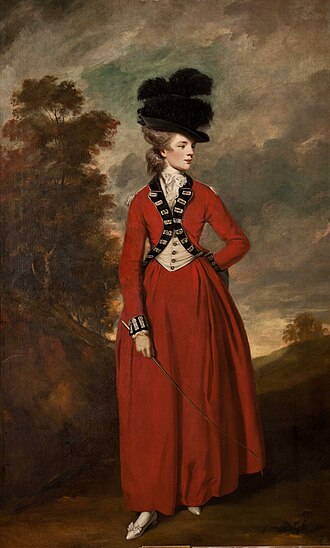 Lady Worsley - Joshua Reynolds (1779)
Œuvres d'artistes liés
 Le Dernier Voyage du Téméraire - J. M. W. Turner (1839)
 Pluie, Vapeur et Vitesse - J. M. W. Turner (1844)
 Pollice verso - Jean-Léon Gérôme (1872)
 Le Marché aux esclaves - Jean-Léon Gérôme (1866)
 Le Déjeuner sur l'herbe - Édouard Manet (1863)
 Olympia - Édouard Manet (1863)
 L'Origine du monde - Gustave Courbet (1866)
 Un enterrement à Ornans - Gustave Courbet (2020)
 Œillet, lys, lys, rose - John Singer Sargent (1885-1886)
 Madame X - John Singer Sargent (1884)
 La Liberté guidant le peuple - Eugène Delacroix (1830)
 La Mort de Sardanapale - Eugène Delacroix (1827)