Amour endormi
Caravaggio · 1608
.jpg)
The god of love lies asleep in the dark, his bowstring broken and his arrows cast aside. Painted on Malta in 1608, this small boy at rest carries a very grown-up message.
The story behind the painting
Unlike many of Caravaggio's paintings, Sleeping Cupid can be dated precisely: an old inscription on the back records that it was painted in Malta in 1608. Caravaggio had come to the island in 1607 after fleeing Rome under a death sentence for killing a man in 1606, hoping that Alof de Wignacourt, Grand Master of the Knights of Saint John, would help him win a pardon. Wignacourt made him official painter to the Order and a Knight. This picture was commissioned by Fra Francesco dell'Antella, a Florentine who served as Wignacourt's Secretary for Italy. Today it belongs to the Galleria Palatina in Florence.
What to look for
The canvas is wide and low, about 72 by 105 centimetres, the right shape for a body lying down. A naked boy with wings sleeps on his back, his limbs heavy and loose, emerging from deep shadow. This is no plump, playful Cupid from a decorative ceiling. Look for his attributes: the bow with its bowstring broken, and the arrows that have been put aside. Caravaggio gives the child the same unsparing, close observation he gave to saints and cardsharps, so that the mythological god feels like a real boy caught in sleep. The strong light falling on the body, against the surrounding darkness, makes his stillness almost startling.
Meaning and intent
The subject of a sleeping Cupid, his bowstring broken and his arrows abandoned, usually signifies turning away from worldly pleasures. Love's weapons are useless while he sleeps. The source suggests that dell'Antella may have commissioned the painting as a reminder of his own vow of chastity. So this is a private meditation rather than a playful mythology: a picture to live with, set before the eyes of a man who had promised to put desire aside. The sleeping child becomes a quiet emblem of that promise. Seen this way, the darkness around him is not menace but rest, a stillness chosen rather than imposed.
Legacy
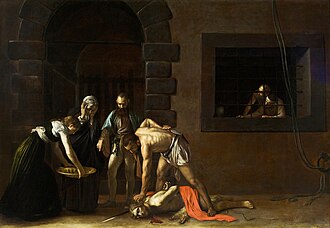
Sleeping Cupid belongs to Caravaggio's brief, intense time on Malta, which also produced The Beheading of Saint John the Baptist, his largest work, and a portrait of Wignacourt. That period ended badly. By late August 1608 he had been arrested and imprisoned, probably after another brawl, and he escaped; in December he was expelled from the Order. The calm of this painting stands in sharp contrast to that turmoil. Its secure date, written on the back, also makes it a valuable fixed point for understanding the artist's late work. In Florence today, the sleeping boy still rests, his weapons laid down.
Le saviez-vous ?
- An old inscription on the back records it was painted in Malta in 1608.
- Commissioned by Fra Francesco dell'Antella, Secretary for Italy to Grand Master Alof de Wignacourt.
- Held at the Galleria Palatina, Florence; 72 × 105 cm.
Wikipedia · Wikipedia: Caravaggio · Wikidata
À propos de l'artiste
Caravaggio (1571-1610)
peinture mythologique · garçon · Peinture baroque italienne · nu · nudité · Cupidon
Autres œuvres de Caravaggio
 Le Souper à Emmaüs - Caravaggio (1601)
 La Vocation de saint Matthieu - Caravaggio (1609)
 La Décollation de saint Jean-Baptiste - Caravaggio (1608)
 Le Souper à Emmaüs - Caravaggio (1601)
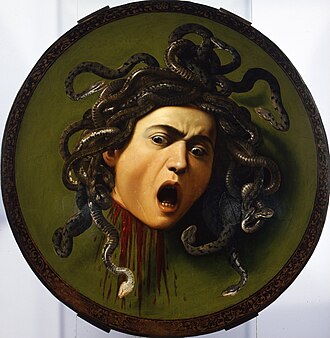 Méduse - Caravaggio (1597)
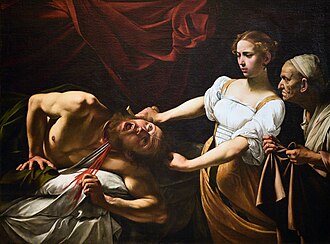 Judith décapitant Holopherne - Caravaggio (1598)
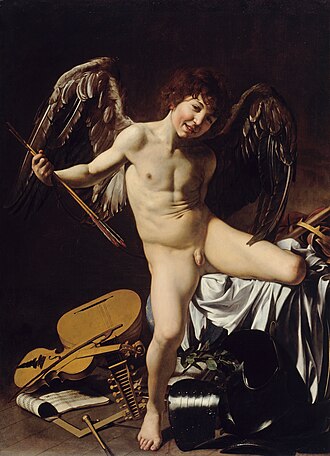 L'Amour victorieux - Caravaggio (1600s)
%2C%201595%20circa%2C%20534.jpg) Le Petit Bacchus malade - Caravaggio (1595)
Le Petit Bacchus malade - Caravaggio (1595)
Œuvres d'artistes liés
 Les Ménines - Diego Velázquez (1656)
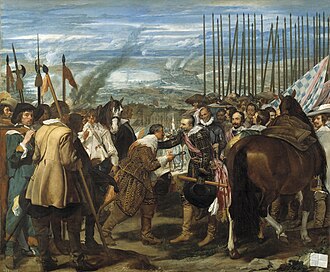 La Reddition de Bréda - Diego Velázquez (1635)
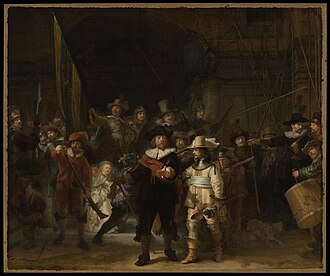 La Ronde de nuit - Rembrandt van Rijn (1642)
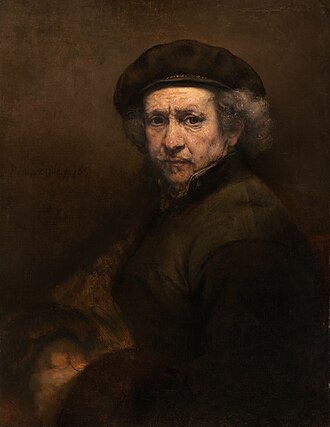 Autoportrait - Rembrandt van Rijn (1659)
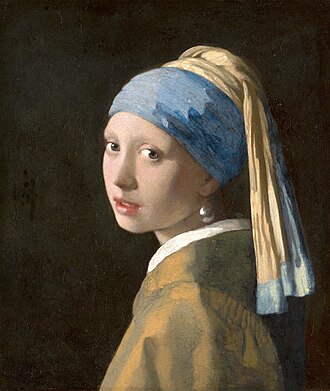 La Jeune Fille à la perle - Johannes Vermeer (1665)
 La Laitière - Johannes Vermeer (c. 1658)