Le Sacrifice d'Isaac
Caravaggio · 1603
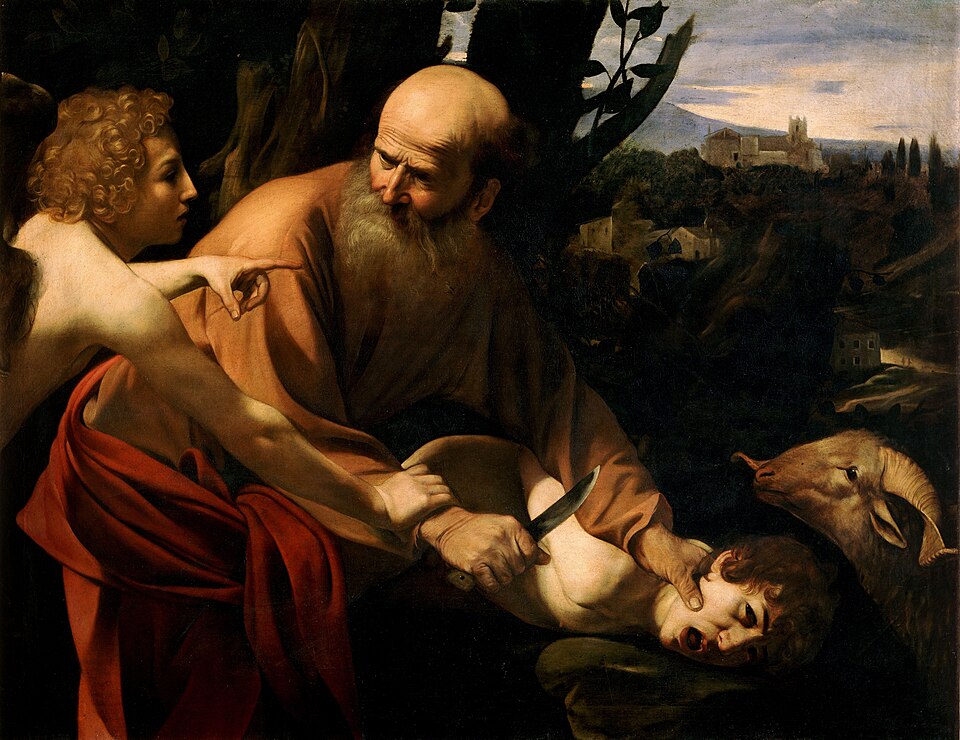
A father's hand grips his son's neck, the knife is almost at the boy's throat, and an angel seizes his wrist just in time. Caravaggio made the terror of Isaac impossible to forget, in one of the very few landscapes he ever painted.
The story behind the painting
The painting was commissioned by Cardinal Maffeo Barberini, who twenty years later became Pope Urban VIII. Like other great Roman patrons, he wanted a work by the Lombard painter whose fame in Rome had become considerable around 1600. The early biographer Giovanni Pietro Bellori recorded that for Barberini Caravaggio made the sacrifice of Abraham, who brings the blade to the throat of his son, who cries out and falls. Most experts date it to about 1603, based on payments from Barberini between May 1603 and July 1604, but those records cover two works without naming them, and some authors propose about 1597 to 1598.
What to look for
The scene follows Genesis 22: Abraham is about to kill his son when an angel stops his arm. Unusually for Caravaggio, it is set outdoors, and it is the last landscape he painted. In the background you can see a church, and the tree behind is a laurel. Rossella Vodret notes that the laurel and the sun lighting the scene recall the Barberini coat of arms, and Alfred Moir suggested the landscape might even be a Barberini estate in the Alban Hills. Look at the attitudes of father and son, which the source calls quite unusual for the religious imagery of the time.
Meaning and intent
An Old Testament subject was unexpected among Caravaggio's religious easel paintings of these years, which drew on the New Testament, such as The Incredulity of Saint Thomas and The Supper at Emmaus. The theme itself was classic: in early 15th-century Florence, Lorenzo Ghiberti and Filippo Brunelleschi competed with bronze reliefs of it for the doors of the baptistery. Ghiberti won with an elegant composition, but two centuries later Caravaggio seems closer to Brunelleschi's more violent, more living interpretation. Matteo Marangoni even felt the parts belonged to three different moments of the painter's style.
Legacy
The picture stayed for a long time in the Barberini family and passed in 1812 to the Colonna Sciarra branch, by which time its attribution had been forgotten in favour of Gerrit van Honthorst. At the end of the 19th century Prince Maffeo Barberini Colonna di Sciarra had to give up most of his paintings to creditors, and the painter and collector Charles Fairfax Murray acquired it as a van Honthorst. Murray's son gave it to the Uffizi in Florence in 1917, where it remains. Today all specialists accept it as Caravaggio's. A second version in Princeton is far less certain.
Le saviez-vous ?
- Commissioned by Cardinal Maffeo Barberini, later Pope Urban VIII.
- Usually dated about 1603; some authors say 1597 to 1598.
- Once attributed to Gerrit van Honthorst.
- In the Uffizi since 1917.
À propos de l'artiste
Caravaggio (1571-1610)
art religieux · ange · galerie des Offices · Peinture baroque italienne · jeune homme · agneau · Isaac · homme âgé
Autres œuvres de Caravaggio
 Le Souper à Emmaüs - Caravaggio (1601)
 La Vocation de saint Matthieu - Caravaggio (1609)
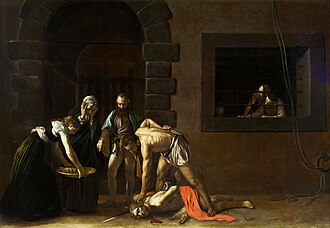 La Décollation de saint Jean-Baptiste - Caravaggio (1608)
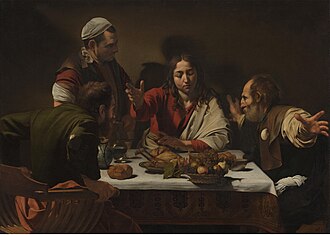 Le Souper à Emmaüs - Caravaggio (1601)
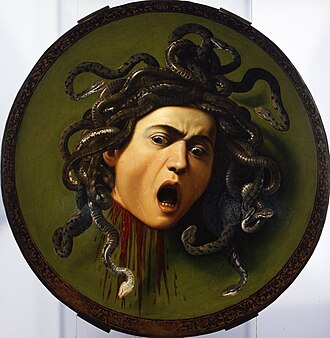 Méduse - Caravaggio (1597)
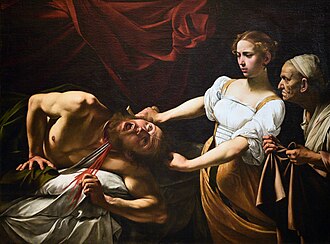 Judith décapitant Holopherne - Caravaggio (1598)
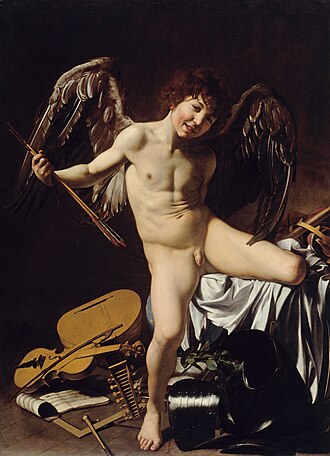 L'Amour victorieux - Caravaggio (1600s)
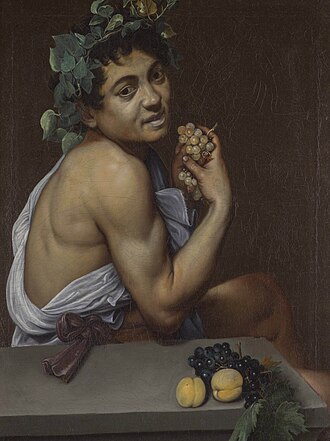 Le Petit Bacchus malade - Caravaggio (1595)
Œuvres d'artistes liés
 Les Ménines - Diego Velázquez (1656)
 La Reddition de Bréda - Diego Velázquez (1635)
 Saint Francis in Meditation - Francisco de Zurbarán (1639)
 The Immaculate Conception - Francisco de Zurbarán (1661)
 Triple portrait de Charles Ier - Anthony van Dyck (1635)
 Charles Ier à cheval avec Monsieur de Saint Antoine - Anthony van Dyck (1636)
 L'Érection de la croix - Peter Paul Rubens (1609)
 L'Enlèvement des filles de Leucippe - Peter Paul Rubens (1618)
 La Ronde de nuit - Rembrandt van Rijn (1642)
 Autoportrait - Rembrandt van Rijn (1659)
 Le Joyeux Buveur - Frans Hals (1620s)
 Le Cavalier riant - Frans Hals (1624)