Malle Babbe
Frans Hals · 1640s
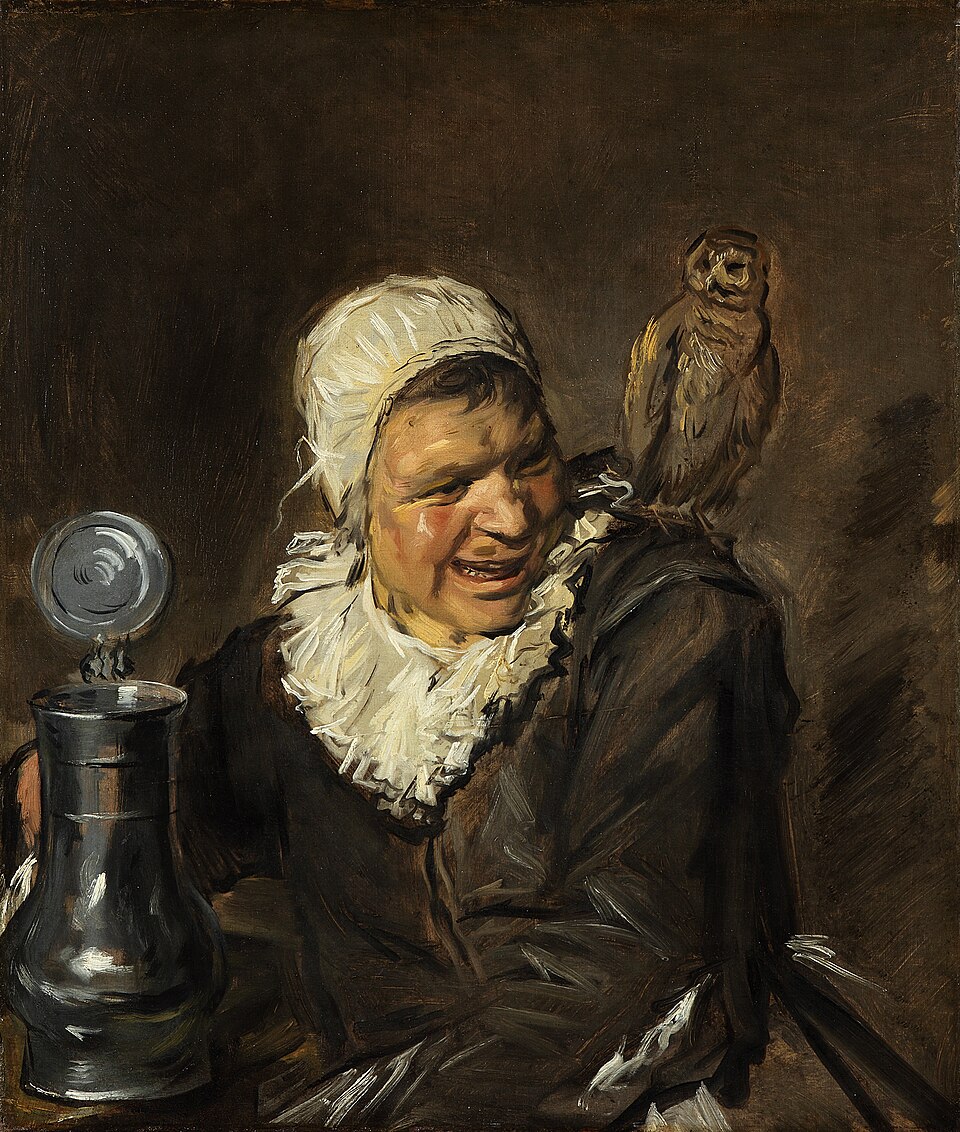
She laughs at someone we cannot see, a pewter mug in her fist and an owl on her shoulder. For centuries she was called a witch. Then the archives of Haarlem gave her back a name: Barbara Claes.
The story behind the painting
Frans Hals painted this picture in Haarlem around 1633 to 1635, according to Wikipedia; Wikidata gives the 1640s. It was long called Hille Bobbe or the Witch of Haarlem, and read as a tronie, a genre picture in portrait format showing a mythical witch. It was even mislabelled Retarded Man through a misreading of the inscription on the back of the frame, which actually reads Malle Babbe van Haerlem, Malle Babbe of Haarlem. Malle means crazy or loony in Dutch, and the painting is now often seen as a genre-style portrait of a real person from the town.
What to look for
A smiling woman sits at the corner of a table, apparently talking or laughing at someone off to the right. Her right hand grips a pewter beer mug with its lid open, and an owl perches on her left shoulder. Her simple clothes match Haarlem fashion around 1630. Her face is caught in an almost manic grimace. Look at the brushwork: the very free handling of paint is typical of Hals, and not very different from his formal commissioned portraits. Wikipedia gives the canvas as 75 by 64 cm; Wikidata records 78.5 by 66.2 cm.
Meaning and intent
Under the witch reading, the owl was her familiar. But Hals's other subjects suggest a tavern scene, and then the owl recalls the Dutch saying drunk as an owl. Research in Haarlem found that a real Malle Babbe, Barbara Claes, lived in Het Dolhuys, a hospital outside the walls for people dangerous to themselves or others, which also sheltered late travellers. Around 1642 Hals's son Pieter was also there. Nothing else of her life survives except that she died in 1663. Painters often showed such village figures as part of everyday life, or explored the thin line between sanity and madness.
Legacy
The painting was admired in Hals's own lifetime, judging by the copies and variants made by his followers. Gustave Courbet copied it in 1869 while it was on view in Munich. A similar picture in the Metropolitan Museum, once given to Hals, is now thought to be by a pupil, and other variants show her with a male drinker. Han van Meegeren made a version in the style of Vermeer. In 1973 Rob de Nijs first sang a Dutch song called Malle Babbe, though it was inspired by Hals's Gypsy Girl. The original hangs in the Gemäldegalerie in Berlin.
Le saviez-vous ?
- Long known as Hille Bobbe or the Witch of Haarlem.
- The real Malle Babbe was Barbara Claes, who died in 1663.
- Courbet copied it in 1869.
- In the Gemäldegalerie, Berlin.
À propos de l'artiste
Frans Hals (1591-1666)
femme · portrait · âge d'or de la peinture néerlandaise · Gemäldegalerie
Autres œuvres de Frans Hals
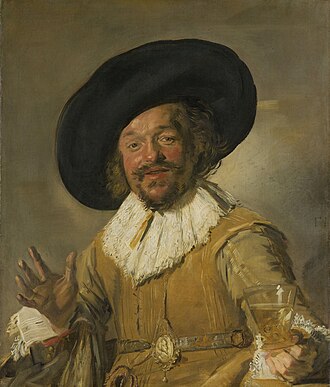 Le Joyeux Buveur - Frans Hals (1620s)
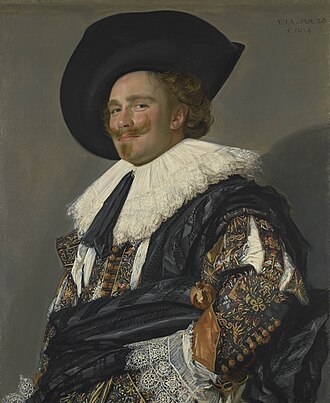 Le Cavalier riant - Frans Hals (1624)
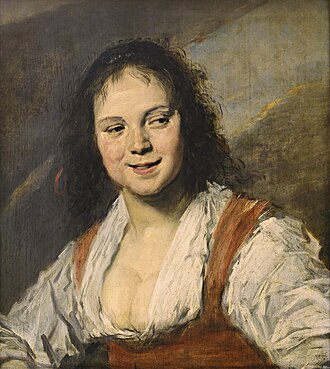 La Bohémienne - Frans Hals (1628)
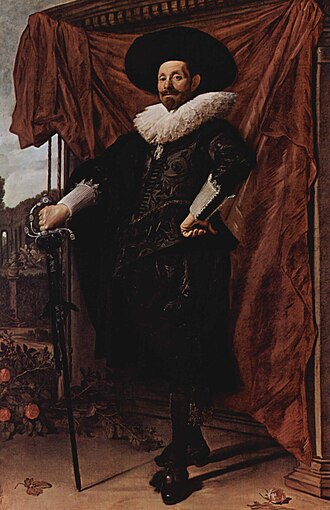 Portrait de Willem van Heythuysen - Frans Hals (1625)
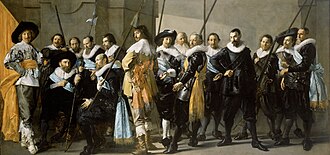 La Compagnie du capitaine Reinier Reael, dite ‘La Maigre Compagnie’ - Frans Hals (1630s)
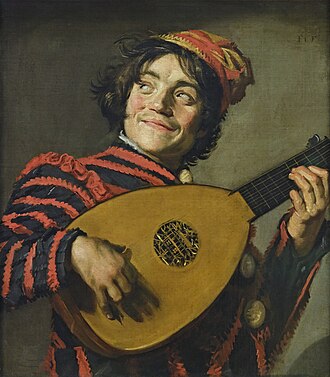 Le Bouffon au luth - Frans Hals (1623)
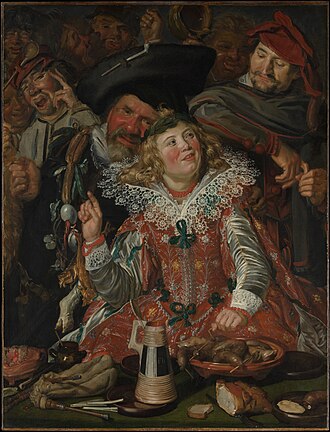 Fêtards du Mardi Gras - Frans Hals (1610s)
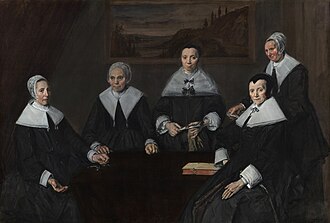 Portrait de groupe des régentes de l'hospice des vieillards - Frans Hals (1664)
Œuvres d'artistes liés
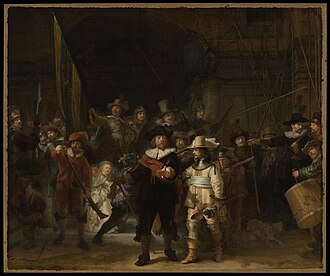 La Ronde de nuit - Rembrandt van Rijn (1642)
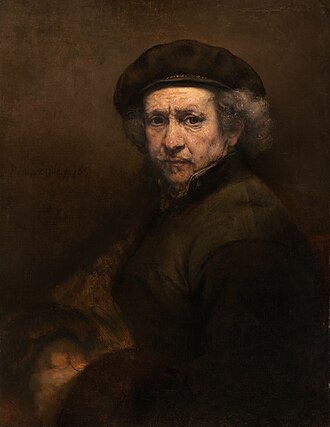 Autoportrait - Rembrandt van Rijn (1659)
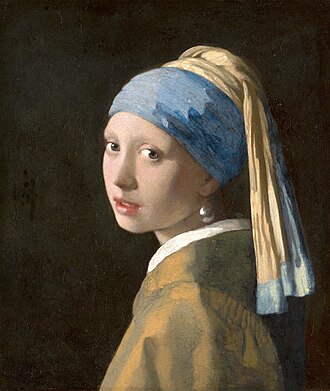 La Jeune Fille à la perle - Johannes Vermeer (1665)
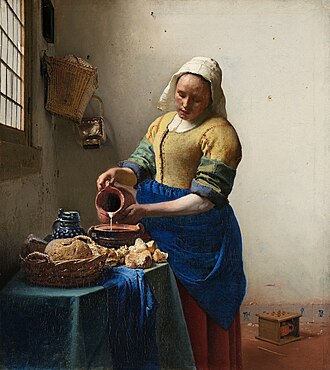 La Laitière - Johannes Vermeer (c. 1658)