Le Bouffon au luth
Frans Hals · 1623
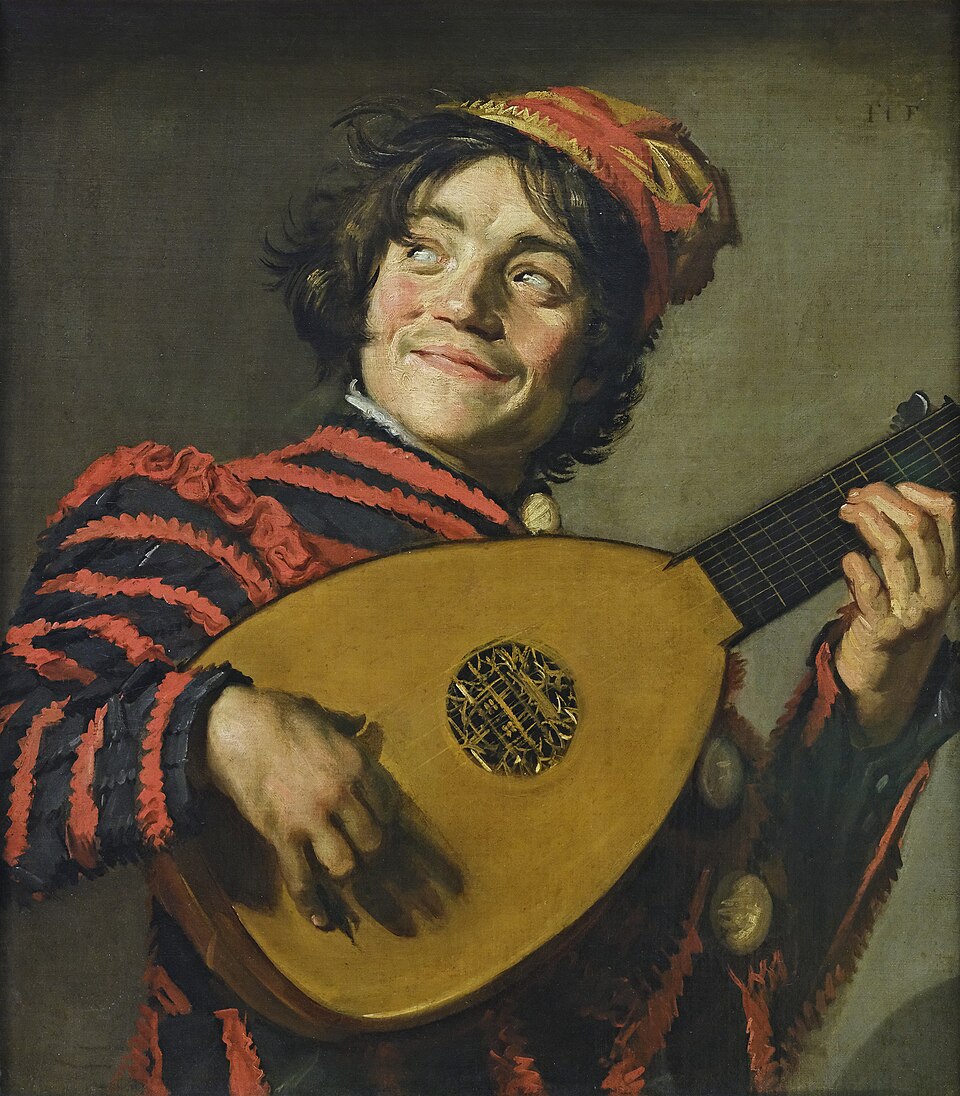
A young man in red and yellow plays a lute and looks up, smiling, as if someone just out of sight is singing along. Frans Hals painted him with quick, loose strokes around 1623.
The story behind the painting
Frans Hals of Haarlem painted this canvas in 1623 or 1624; Wikidata gives 1623. It shows a smiling actor in a jester's costume playing a lute, and it is known in English as The Lute Player. The half-length lute player was a theme born in Italy. The Dutch painter Dirck van Baburen introduced it to the Northern Netherlands with his lute player of 1622, and Hals was one of the painters who answered him. Hendrik ter Brugghen also painted several lute players in the 1620s, some mixing ideas from Baburen and Hals.
What to look for
The scholar Hofstede de Groot described it in 1910: a half-length man turned to the right in a red costume trimmed with yellow, long hair under a red and yellow cap, his face seen full on as he looks up to the left, right hand on the strings, left hand on the neck. He praised the contrasting flesh tones, the reds and yellows, and the reflections in the eyes. The handling is very free, a good example of Hals's rough style. The initials F. H. are signed at the upper right. Hals painted two other lute players as well.
Meaning and intent
Compare it with Baburen: his player points the lute at us with his mouth open in song. Hals's player instead looks up and smiles naturally, as if playing alongside a singer or another musician we cannot see. The picture catches a moment of shared music rather than a performance aimed at the viewer, and that easy smile is what other painters later borrowed. The jester's costume and the free brushwork add to the sense of a lively, unposed instant caught by a painter working fast.
Legacy
A period copy in the Rijksmuseum, dated before 1626 from an engraving, has been attributed to Hals, to his brother Dirck and to Judith Leyster. David Bailly included the picture in his 1651 self-portrait with the works that influenced him, and Adriaan de Lelie painted it on the wall of Josephus Augustinus Brentano's collection in 1813. Jan Steen borrowed the pose and upward smile for his self-portrait as a lute player, and Herman Braun-Vega reworked it in 2004. Gustave de Rothschild bought it in 1873, and his family kept it until 1984. It now hangs in the Louvre.
Le saviez-vous ?
- Painted in 1623 or 1624.
- Answers Dirck van Baburen's lute player of 1622.
- Signed F. H. at the upper right.
- Owned by the Rothschild family from 1873 to 1984, now in the Louvre.
À propos de l'artiste
Frans Hals (1591-1666)
homme · département des peintures du musée du Louvre · luth · sourire · Tronie · bouffon · musique
Autres œuvres de Frans Hals
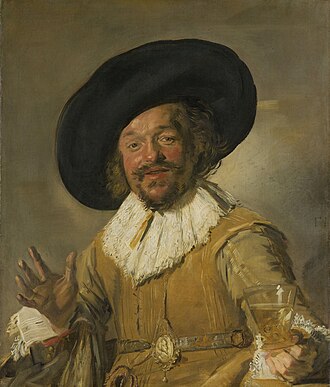 Le Joyeux Buveur - Frans Hals (1620s)
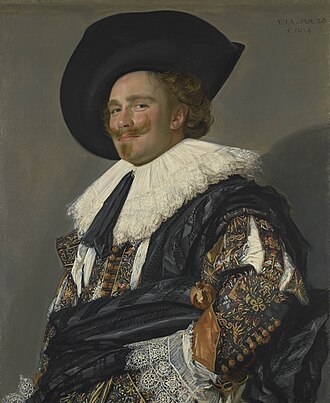 Le Cavalier riant - Frans Hals (1624)
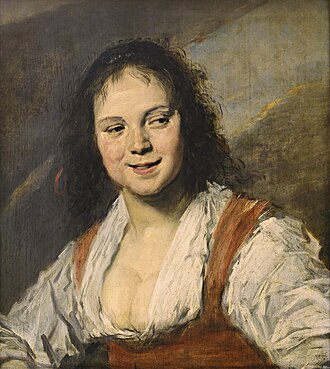 La Bohémienne - Frans Hals (1628)
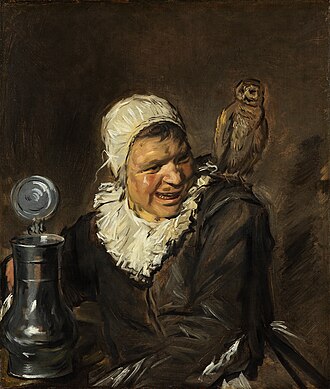 Malle Babbe - Frans Hals (1640s)
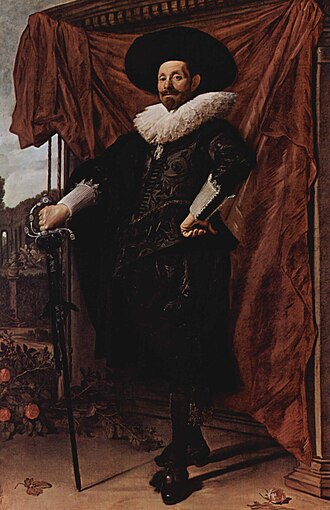 Portrait de Willem van Heythuysen - Frans Hals (1625)
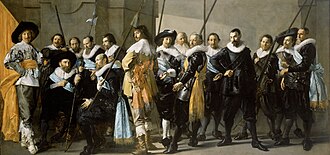 La Compagnie du capitaine Reinier Reael, dite ‘La Maigre Compagnie’ - Frans Hals (1630s)
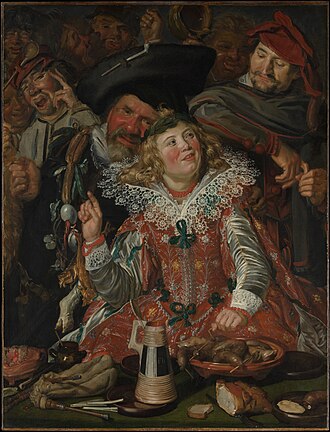 Fêtards du Mardi Gras - Frans Hals (1610s)
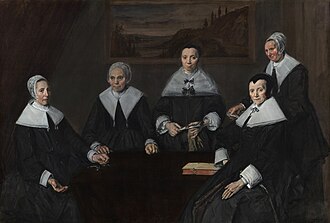 Portrait de groupe des régentes de l'hospice des vieillards - Frans Hals (1664)
Œuvres d'artistes liés
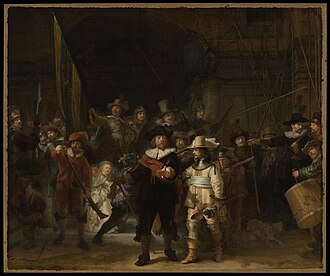 La Ronde de nuit - Rembrandt van Rijn (1642)
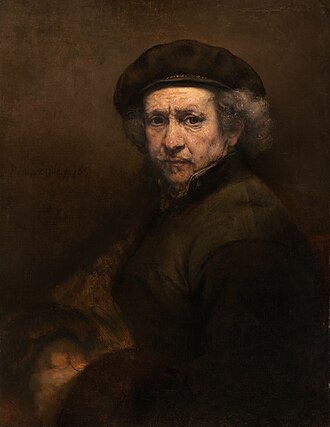 Autoportrait - Rembrandt van Rijn (1659)
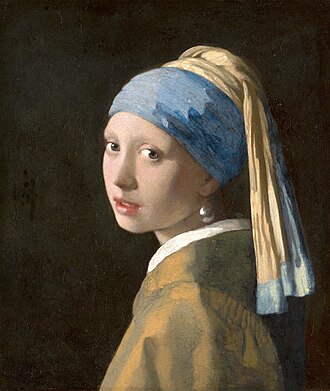 La Jeune Fille à la perle - Johannes Vermeer (1665)
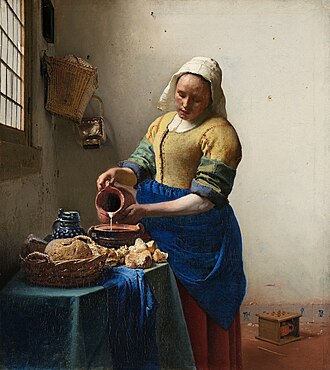 La Laitière - Johannes Vermeer (c. 1658)