La Vierge et l'Enfant dans une gloire de séraphins
Sandro Botticelli · 1469
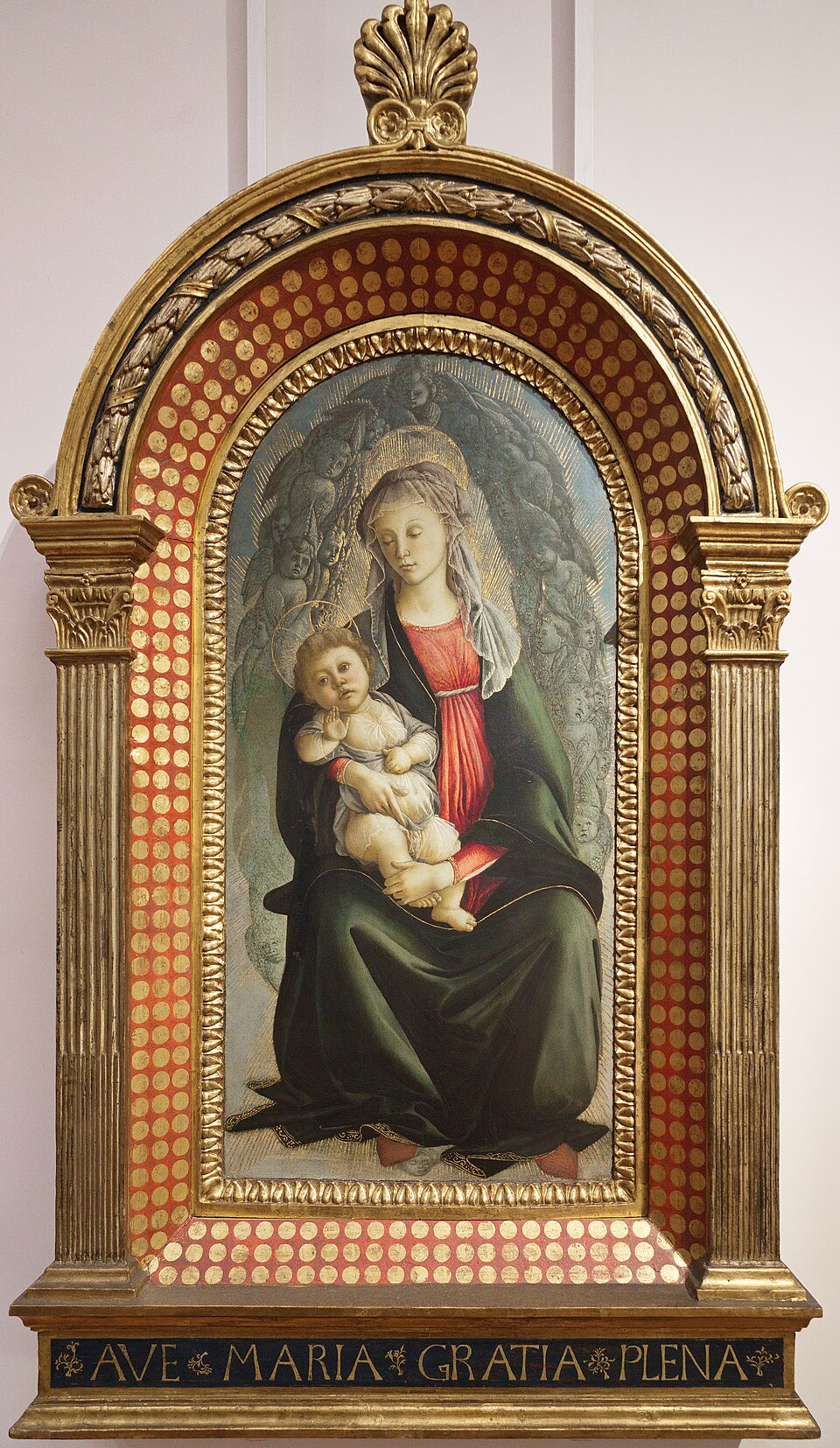
A mother on a throne of clouds holds her baby close, as if she already knows what is coming. For centuries nobody knew who painted this Uffizi panel, until a German scholar saw the young Botticelli in it.
The story behind the painting
Madonna in Glory with Seraphim is a tempera painting on panel, about 120 by 65 cm, now in the Uffizi in Florence. Its original location is not known. It appears in the Uffizi inventories of 1784 and 1825, but only as an anonymous work. The art historian Wilhelm von Bode was the first to attribute it to Sandro Botticelli, and he dated it to the period when the young painter was close to Verrocchio, around 1469 to 1470, just before his Fortitude. Wikidata gives 1469. Later studies confirmed von Bode's view, with one exception: Adolfo Venturi believed it came from the school of Filippo Lippi.
What to look for
Mary holds the baby Jesus on her knees. She is enthroned on clouds and surrounded by seraphim and rays of light. The Child wears a cross-shaped halo, looks out toward us and raises his hand in blessing. Notice the sharp, almost graphic contrast of light and shadow, which reflects the influence of Verrocchio, in whose workshop Botticelli helped as a young artist. The Child, though, is plainly Botticelli's own, with rounded shapes and the melancholy air that often appears in his work. Mary's figure is long and loose, and her softly rounded face, drawn with contour lines, recalls Filippo Lippi.
Meaning and intent
The source sees a tension at the heart of the image. The mother knows the Passion her son will suffer, and so she holds him protectively in her arms, even as he blesses the viewer. Glory and foreboding sit together: a heavenly throne of clouds and light above, and a gesture of a mother guarding her child. The painting also shows a young artist absorbing his teachers. The hard light of Verrocchio and the graceful lines of Lippi meet here, and from them Botticelli begins to form the gentle sadness that would mark his later Madonnas.
Legacy
Similar panel paintings of the Madonna by Botticelli survive from around 1470. Two full figure Madonnas, this Madonna in Glory and the Madonna of the Rose Garden, are both in the Uffizi. Like this one, they show monumental seated figures filling the whole picture. Seen together, they offer a rare look at Botticelli's beginnings, long before the Birth of Venus. The story of this panel is also a lesson in how attribution works: a painting listed for decades without a name became, through the eye of a scholar and the agreement of later research, one of the earliest known works of a Florentine master.
Le saviez-vous ?
- Tempera on panel, about 120 by 65 cm, in the Uffizi.
- Listed as anonymous in Uffizi inventories of 1784 and 1825.
- Wilhelm von Bode attributed it to Botticelli, c. 1469-1470.
- Adolfo Venturi instead placed it in the school of Filippo Lippi.
À propos de l'artiste
Sandro Botticelli (1445-1510)
art religieux · femme · Marie · Enfant Jésus · garçon · Première Renaissance · ange · mère · galerie des Offices
Autres œuvres de Sandro Botticelli
 La Naissance de Vénus - Sandro Botticelli (c. 1485)
 Le Printemps - Sandro Botticelli (1480s)
 Vénus et Mars - Sandro Botticelli (1485)
 L'Adoration des mages - Sandro Botticelli (1470s)
 La Madone du Magnificat - Sandro Botticelli (1481)
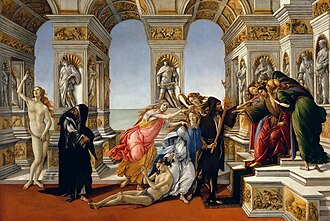 La Calomnie d'Apelle - Sandro Botticelli (1490s)
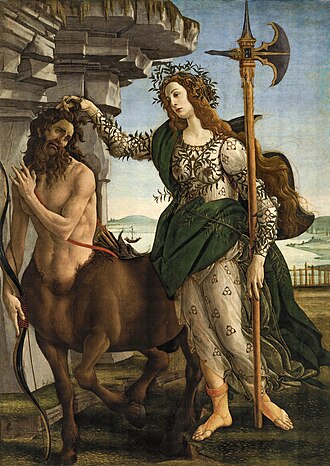 Pallas et le Centaure - Sandro Botticelli (1482)
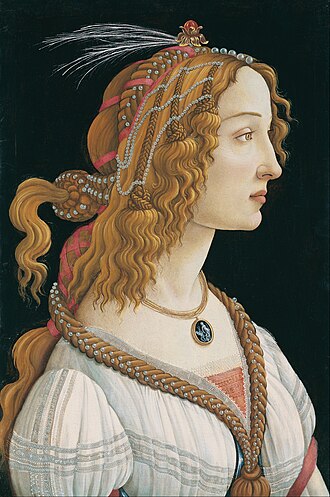 Portrait ideale d'une jeune femme - Sandro Botticelli (1480)
Œuvres d'artistes liés
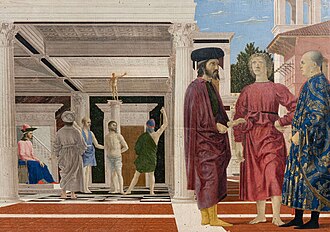 La Flagellation du Christ - Piero della Francesca (1450s)
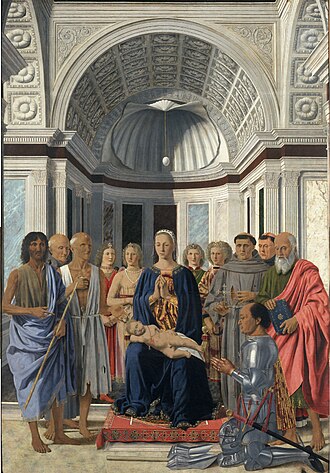 La Conversation sacrée - Piero della Francesca (1472)
 La Joconde - Leonardo da Vinci (1503-1519)
 La Dame à l'hermine - Leonardo da Vinci (1490)
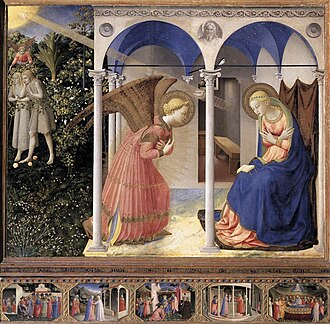 L'Annonciation - Fra Angelico (1425)
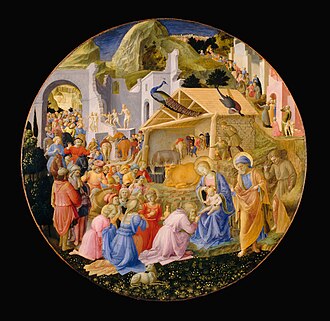 Tondo Cook - Fra Angelico (1430)
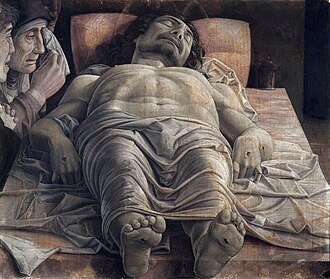 Lamentation sur le Christ mort - Andrea Mantegna (1483)
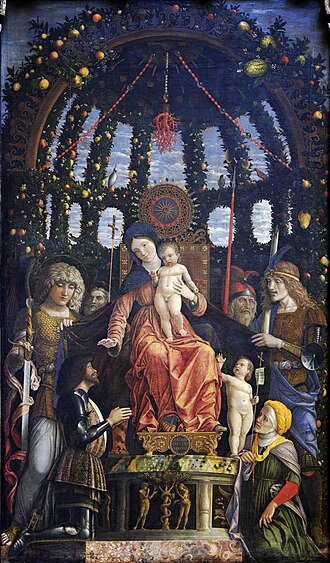 La Vierge de la Victoire - Andrea Mantegna