La Madone des pèlerins
Caravaggio · 1605
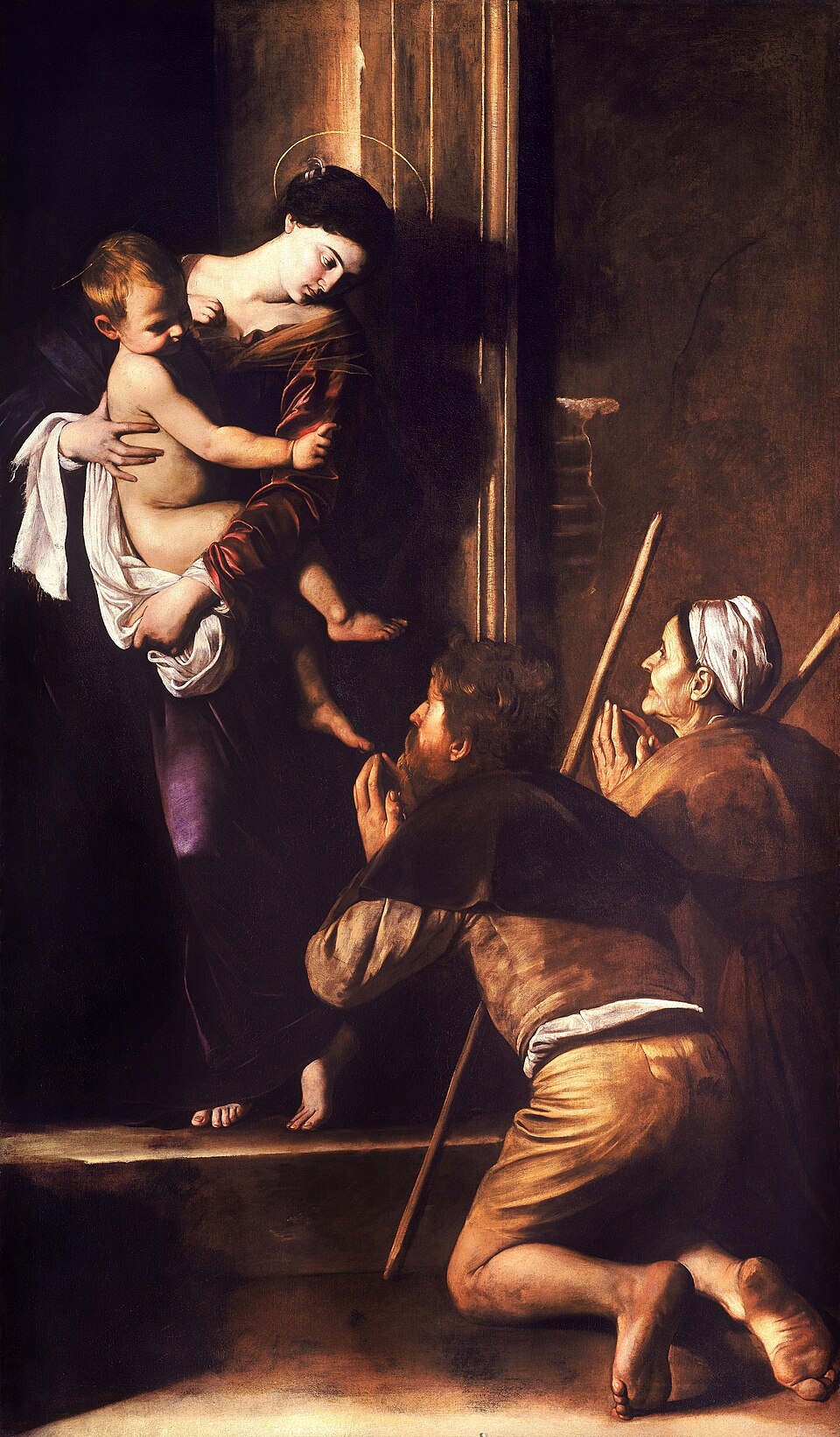
Two tired pilgrims kneel with dirty bare feet before a doorway, and the woman who answers is the Virgin. When Caravaggio unveiled this altarpiece in Rome, the common people made a great noise about it.
The story behind the painting
The Marquis Ermete Cavalletti died on 21 July 1602. As his will instructed, his heirs bought a chapel in the church of Sant'Agostino in Rome on 4 September 1603, and that year they commissioned a painting on the theme of the Madonna of Loreto to decorate it. Caravaggio painted it around 1604 to 1606; Wikidata gives 1605. It still hangs in the Cavalletti Chapel, just northeast of the Piazza Navona. The painter Giovanni Baglione, a rival who had seen Caravaggio jailed during a libel trial, wrote that the unveiling caused the common people to make a great cackle over it.
What to look for
The canvas, about 260 by 150 cm, shows the barefoot Virgin holding her naked child in a doorway before two kneeling peasant pilgrims. Their feet are bare too, and seen up close. The doorway is no cloud of glory or crowd of putti, but a partly decrepit wall of flaking brick. Only a slim halo marks her holiness. Beautiful as she is, she could be any woman stepping out of the shadows, leaning elegantly against a pilaster. The model appears to be the same woman as in Caravaggio's Madonna and Child with Saint Anne in the Galleria Borghese, painted in 1605.
Meaning and intent
Like the Conversion on the Way to Damascus or the Calling of Saint Matthew, the scene is a moment when ordinary people meet the divine, and the divine looks ordinary too. The critic Robert Hughes said Caravaggio's project was to give traditional motifs the immediacy of real life. He noted that next to the wrinkled, devout pilgrims the Madonna looks wooden, and suggested this may be intended: the cult of Loreto centred on a miraculous statue of the Virgin said to come alive when venerated. So the stiff, graceful figure may be a statue waking up for two poor travellers.
Legacy
The uproar at the unveiling was, as the source says, not surprising: bare, dirty feet and a crumbling wall were far from the usual image of a holy appearance. Yet the painting remained in the chapel for which it was made, and the name Pilgrims' Madonna stuck. Scholars have also looked for its roots. It has been suggested that the composition comes at least in part from a detail of a 1574 engraving of the Adoration of the Magi after Rosso Fiorentino, made by Caravaggio's friend Cherubino Alberti. The painting is a key example of how Caravaggio brought sacred stories down to the street.
Le saviez-vous ?
- Commissioned in 1603 by the heirs of Marquis Ermete Cavalletti.
- Painted around 1604-1606; Wikidata gives 1605.
- Still in the Cavalletti Chapel of Sant'Agostino, Rome.
- Its bare feet and crumbling wall caused an uproar at the unveiling.
À propos de l'artiste
Caravaggio (1571-1610)
art religieux · femme · Marie · Enfant Jésus · garçon · baroque · mère
Autres œuvres de Caravaggio
 Le Souper à Emmaüs - Caravaggio (1601)
 La Vocation de saint Matthieu - Caravaggio (1609)
 La Décollation de saint Jean-Baptiste - Caravaggio (1608)
 Le Souper à Emmaüs - Caravaggio (1601)
 Méduse - Caravaggio (1597)
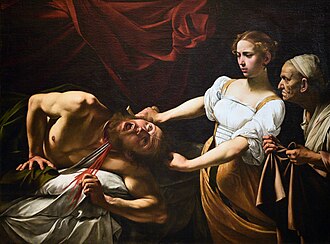 Judith décapitant Holopherne - Caravaggio (1598)
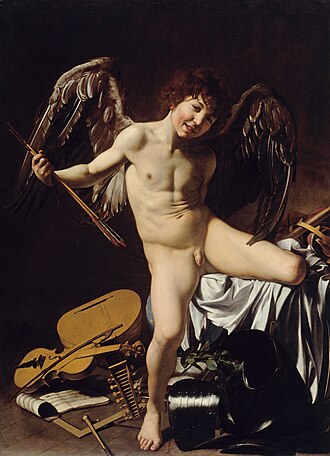 L'Amour victorieux - Caravaggio (1600s)
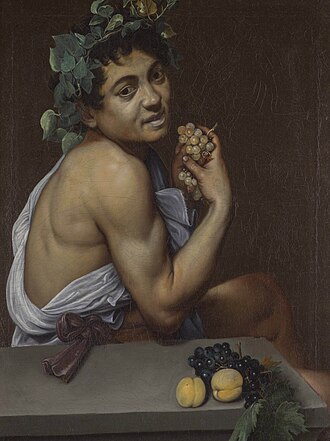 Le Petit Bacchus malade - Caravaggio (1595)
Œuvres d'artistes liés
 Les Ménines - Diego Velázquez (1656)
 La Reddition de Bréda - Diego Velázquez (1635)
 Saint Francis in Meditation - Francisco de Zurbarán (1639)
 The Immaculate Conception - Francisco de Zurbarán (1661)
 Triple portrait de Charles Ier - Anthony van Dyck (1635)
 Charles Ier à cheval avec Monsieur de Saint Antoine - Anthony van Dyck (1636)
 L'Érection de la croix - Peter Paul Rubens (1609)
 L'Enlèvement des filles de Leucippe - Peter Paul Rubens (1618)
 La Ronde de nuit - Rembrandt van Rijn (1642)
 Autoportrait - Rembrandt van Rijn (1659)
 Le Joyeux Buveur - Frans Hals (1620s)
 Le Cavalier riant - Frans Hals (1624)