Vierge à l’Enfant soutenu par un ange sous une guirlande
Sandro Botticelli · 1465
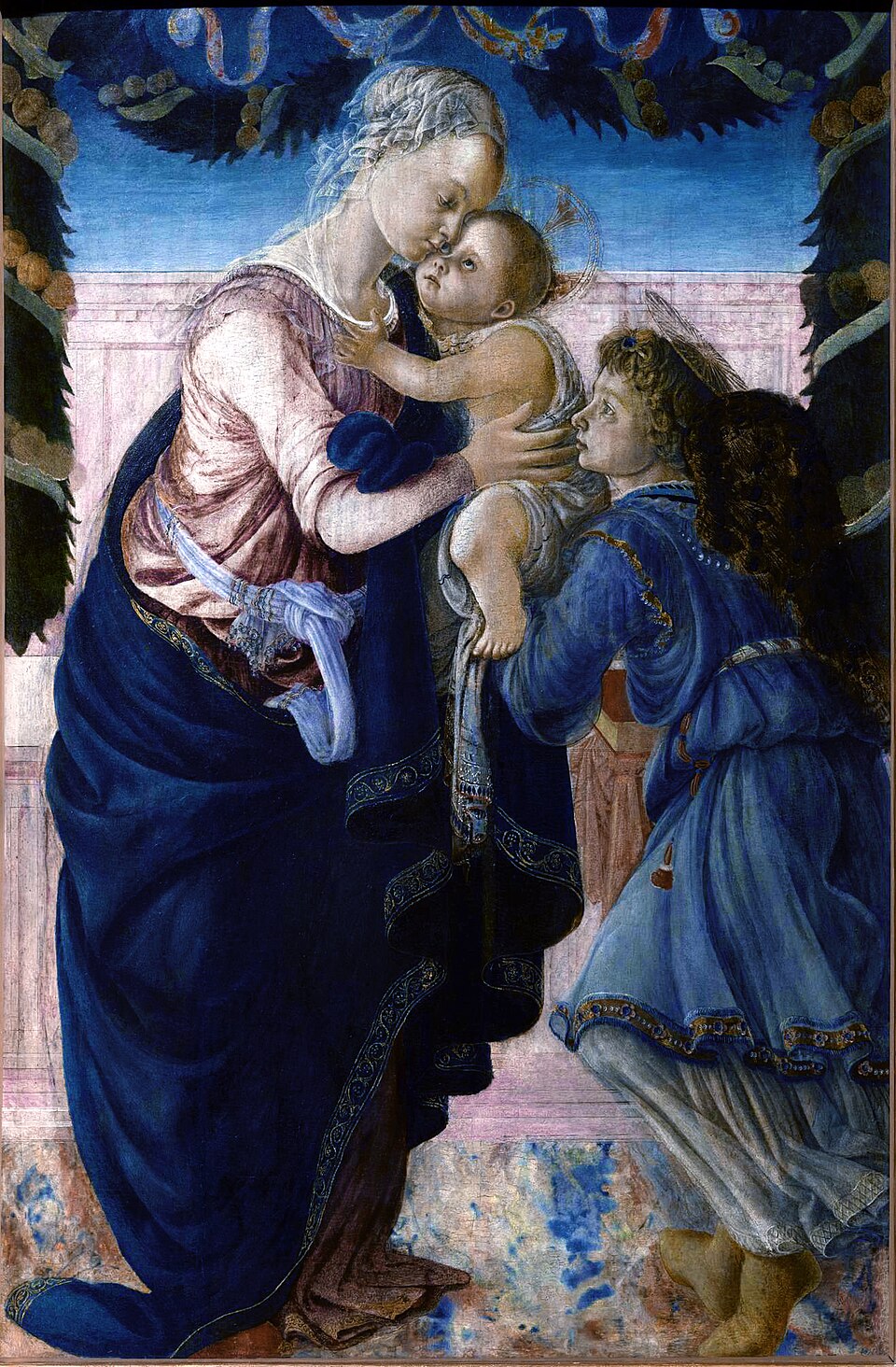
An angel lifts the Christ Child towards his mother, under garlands that do not quite sit in space. This is probably one of the very first paintings by the young Botticelli.
The story behind the painting
This tempera on poplar wood dates from around 1465 to 1467. Its poor state of preservation makes certainty impossible, but it is probably one of Botticelli's very first youthful works. At the time he was an apprentice of the Florentine master Fra Filippo Lippi, with whom he probably worked on the frescoes in Prato. Florentine families often commissioned paintings of the Virgin and Child in those years, and such pictures let Botticelli improve his style, his framing and his technique. The painting later joined the collection of Cardinal Joseph Fesch in Rome.
What to look for
The richly dressed Virgin, her jacket finely embroidered in gold, stands on a marble pavement and leans forward, ready to take the Child that an angel offers her. Behind them is a pinkish screen, with festoons along the top and garlands at the sides. Notice the small signs of inexperience: the perspective is not fully mastered, so the garland and the placing of the figures in depth are uncertain, and the pavement seems to tilt towards us, as if the figures might slide. The panel measures 112 by 74 cm.
Meaning and intent
The pose recalls Fra Filippo Lippi's Lippina of around 1465, and the style is close to Lippi's, but the standing Virgin and the pale skin suggest an early Botticelli. Already, though, his own taste shows: elegant faces, a search for ideal beauty, the lead role of drawing and outline, supple forms, delicately matched colours, warmth in the sacred figures, and a preference for people over background and decor. Here we watch a great painter at the start, still finding his footing and already finding his voice.
Legacy
The painting belongs to the long tradition of the Madonna and Child, here joined by an angel beneath a garland. Cardinal Joseph Fesch, who had gathered it into his collection in Rome, bequeathed it in 1839 to the city of Ajaccio in Corsica. It is now kept at the Musée Fesch in Ajaccio, where this early, fragile panel can still be seen. The source gives the date as around 1465 to 1467, while Wikidata gives 1465.
Le saviez-vous ?
- Probably one of Botticelli's first works, around 1465 to 1467.
- Tempera on poplar, 112 x 74 cm.
- Close to the style of his master Fra Filippo Lippi.
- Bequeathed by Cardinal Fesch to Ajaccio in 1839.
À propos de l'artiste
Sandro Botticelli (1445-1510)
art religieux · femme · Marie · Enfant Jésus · garçon · Première Renaissance · mère
Autres œuvres de Sandro Botticelli
 La Naissance de Vénus - Sandro Botticelli (c. 1485)
 Le Printemps - Sandro Botticelli (1480s)
 Vénus et Mars - Sandro Botticelli (1485)
 L'Adoration des mages - Sandro Botticelli (1470s)
 La Madone du Magnificat - Sandro Botticelli (1481)
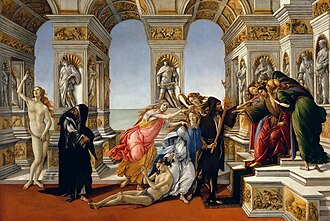 La Calomnie d'Apelle - Sandro Botticelli (1490s)
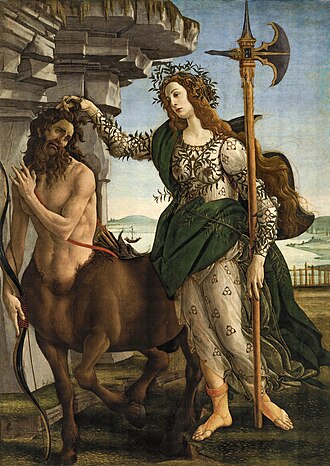 Pallas et le Centaure - Sandro Botticelli (1482)
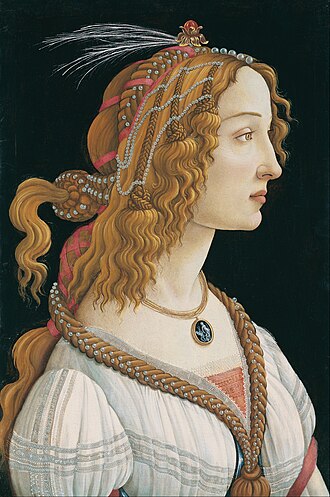 Portrait ideale d'une jeune femme - Sandro Botticelli (1480)
Œuvres d'artistes liés
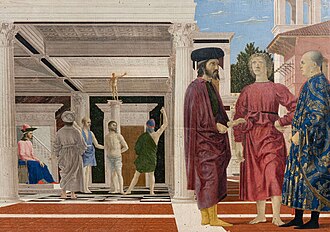 La Flagellation du Christ - Piero della Francesca (1450s)
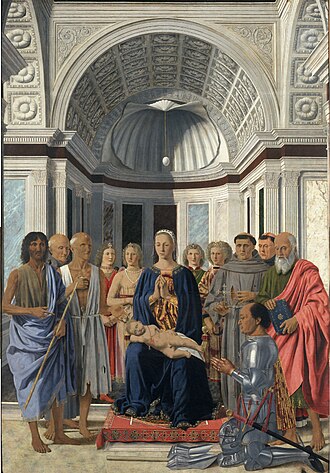 La Conversation sacrée - Piero della Francesca (1472)
 La Joconde - Leonardo da Vinci (1503-1519)
 La Dame à l'hermine - Leonardo da Vinci (1490)
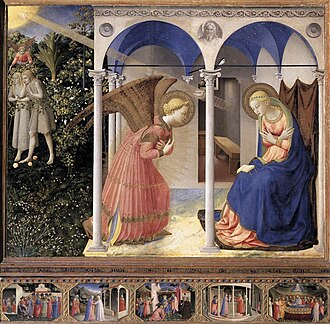 L'Annonciation - Fra Angelico (1425)
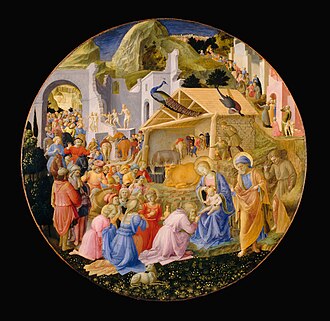 Tondo Cook - Fra Angelico (1430)
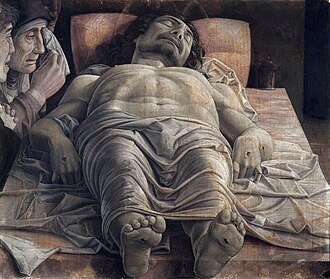 Lamentation sur le Christ mort - Andrea Mantegna (1483)
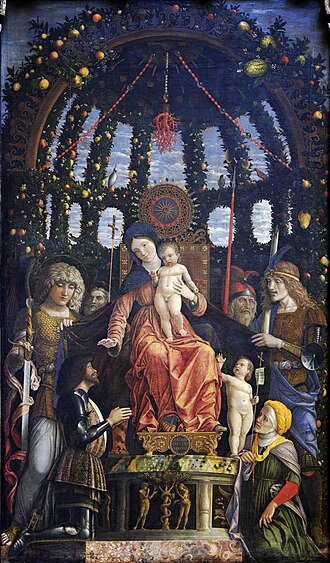 La Vierge de la Victoire - Andrea Mantegna