Femme écrivant une lettre et sa servante
Johannes Vermeer · 1670
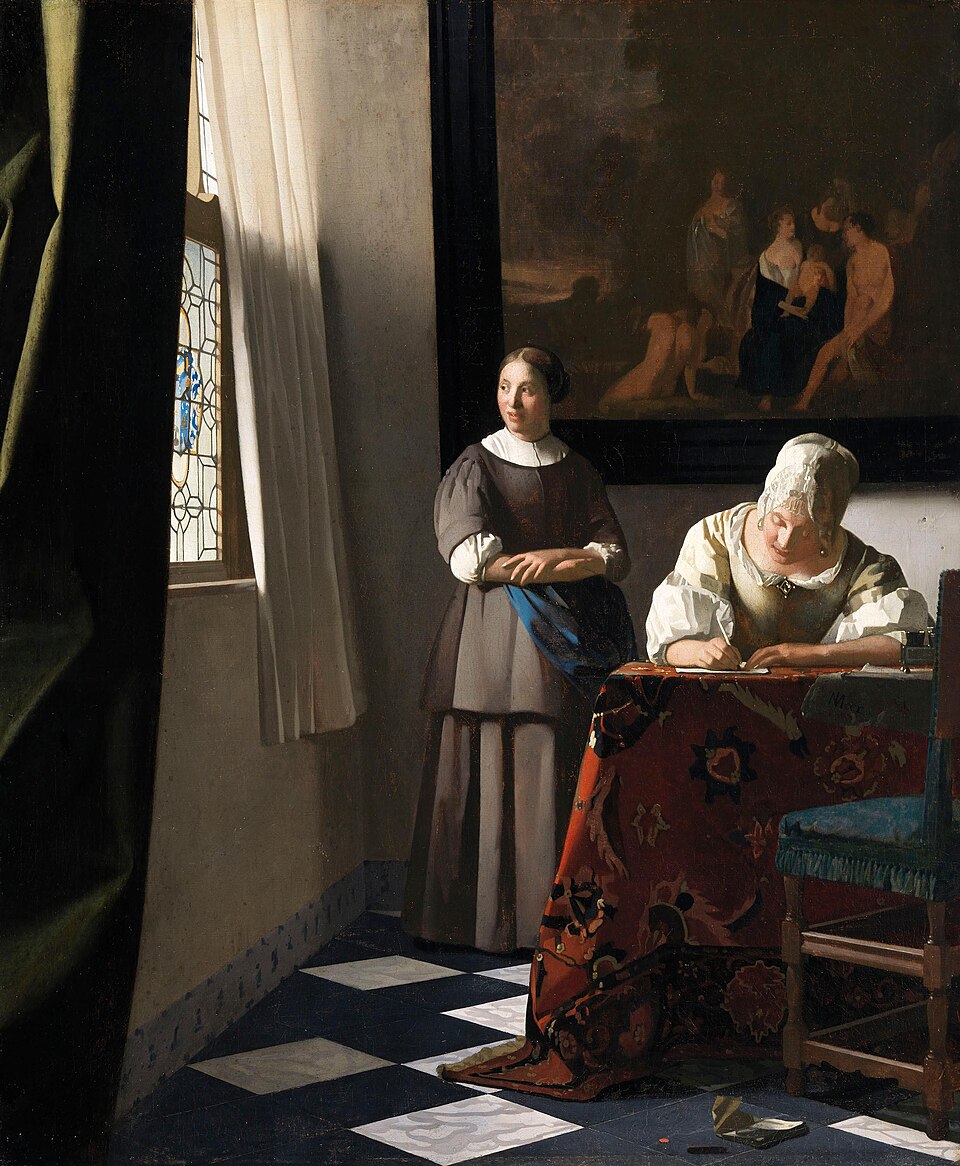
A lady bends over a love letter while her maid stands behind her, arms folded, gazing at the window. Vermeer's quiet room hides a loud history: this painting was stolen twice, once by armed raiders and once by a Dublin crime boss.
The story behind the painting
Vermeer completed Lady Writing a Letter with her Maid in 1670 to 1671, and Wikidata gives the year as 1670. It shows a middle-class woman writing at a table while a housemaid, presumably the messenger and go-between for her and an unseen lover, waits behind her. The work is seen as a bridge between the quiet restraint of Vermeer's paintings of the 1660s and the relatively cooler style of his work in the 1670s. It may have been partly inspired by Gerard ter Borch's Woman Sealing a Letter, and its canvas was almost certainly cut from the same bolt as the one Vermeer used for Woman with a Lute.
What to look for
This is Vermeer's first experiment with a centrifugal composition, where attention is not held only at the centre of the canvas, and his third work in which the drama is not focused on one figure. The maid stands in the mid-ground, hands crossed, waiting for the letter to be finished. The two bodies are turned apart, and the maid's gaze toward the half-visible window has been read as inner restlessness. Notice the tiled floor and the strong verticals of the dresses, the window frame and the painting on the back wall: they show Vermeer's interest in geometry and abstract forms, and his constant play between inside and outside.
Meaning and intent
Many viewers see two women who are emotionally and psychologically apart, the lady absorbed in her letter and the maid bored, waiting for the messenger to carry it away. Some art historians question this reading. Pascal Bonafoux noted that although neither woman shows complicity through a look or a smile, the maid's very presence during something as intimate as writing a love letter suggests at least some closeness between them. The painting leaves both interpretations open, which is part of its pull: a private moment, shared by two people, whose feelings we can only guess from posture, light and distance.
Legacy
On 27 April 1974 armed members of the IRA, led by the British heiress Rose Dugdale, stole the painting with works by Goya, Gainsborough and Rubens from Russborough House, home of Sir Alfred Beit, cutting them from their frames with screwdrivers. They were recovered eight days later at a cottage in County Cork. In 1986 a gang led by the Dublin gangster Martin Cahill took it again and demanded a ransom that was never paid. The painting was finally recovered in August 1993 at Antwerp airport, in what turned out to be a sting operation by the Irish police. By then it had already been donated to the National Gallery of Ireland in Dublin, where it hangs today.
Le saviez-vous ?
- Painted 1670-1671; Wikidata gives 1670.
- About 71.1 x 58.4 cm.
- Stolen in 1974 and again in 1986, and recovered both times.
- Now in the National Gallery of Ireland, Dublin.
À propos de l'artiste
Johannes Vermeer (1632-1675)
femme · scène de genre · âge d'or de la peinture néerlandaise · lettre · Charles Sedelmeyer collection
Autres œuvres de Johannes Vermeer
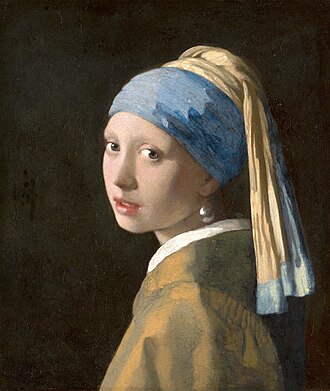 La Jeune Fille à la perle - Johannes Vermeer (1665)
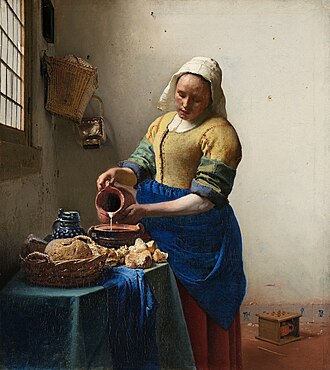 La Laitière - Johannes Vermeer (c. 1658)
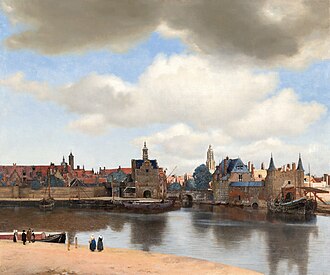 Vue de Delft - Johannes Vermeer (1660s)
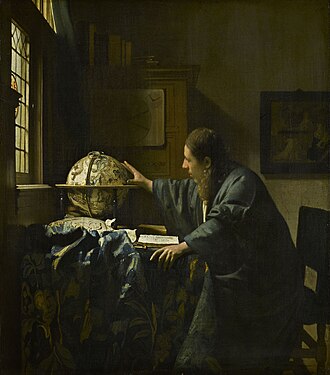 L'Astronome - Johannes Vermeer (1664)
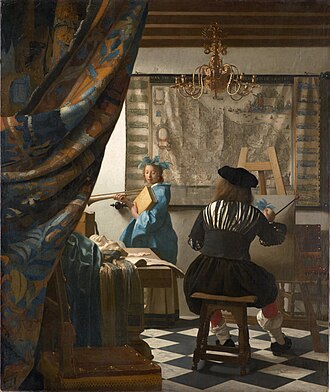 L'Art de la peinture - Johannes Vermeer (1660s)
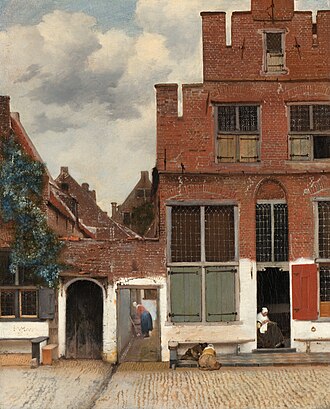 La Ruelle - Johannes Vermeer (1658)
.jpg) La Liseuse à la fenêtre - Johannes Vermeer (1650s)
La Liseuse à la fenêtre - Johannes Vermeer (1650s)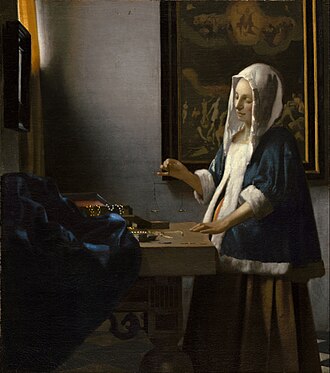 La Femme à la balance - Johannes Vermeer (1665)
Œuvres d'artistes liés
 La Ronde de nuit - Rembrandt van Rijn (1642)
 Autoportrait - Rembrandt van Rijn (1659)