La Femme à la balance
Johannes Vermeer · 1665
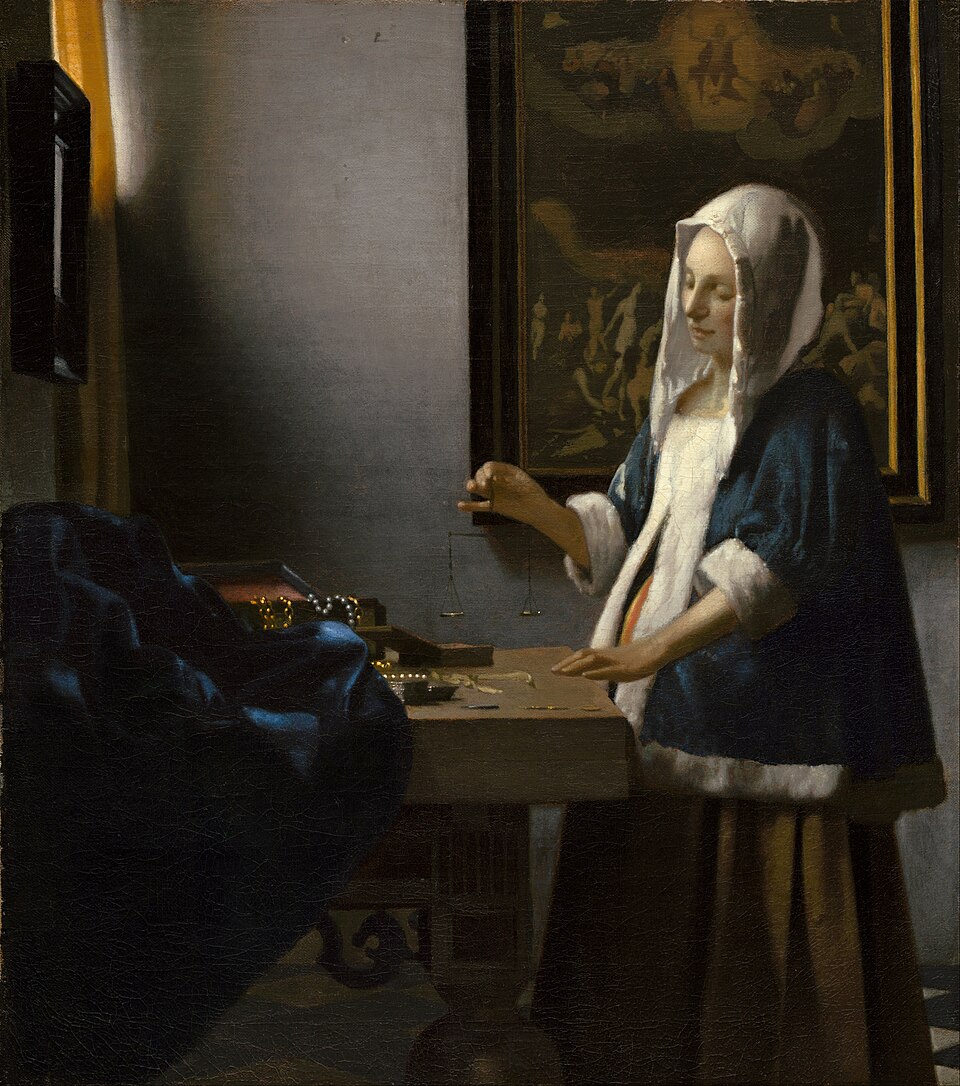
A young woman stands in soft window light, a small balance poised between her fingers. For years people thought she was weighing gold. Look closer: the pans are empty.
The story behind the painting
Johannes Vermeer painted Woman Holding a Balance, also called Woman Testing a Balance, in the Dutch Golden Age; Wikipedia dates it to 1662 or 1663, while Wikidata gives 1665. It is a small picture, 42.5 by 38 centimetres. The woman at its centre may have been modelled on Vermeer's wife, Catharina. For a long time the work was known as Woman Weighing Gold, until microscopic examination confirmed that the balance in her hand holds nothing at all. That discovery changed the title and opened the door to the many readings the painting still invites. The earliest record of its life comes from 16 May 1696, when it was sold in Amsterdam with a large group of Vermeer's works from the estate of Jacob Dissius.
What to look for
Start with her hand, lifting the empty balance with quiet concentration. She appears to be pregnant. On the table before her stands an open jewellery box, with pearls and gold spilling over. In the left foreground lies a blue cloth, and above it hangs a mirror. The light comes from a window on the left that we cannot see, except for its golden curtain. Behind her, on the wall, is a painting of the Last Judgment, with Christ raising his outstretched hands. Technical study found that the blue cloth is painted with ultramarine, the grey wall with lead white, and the bright yellow curtain with lead-tin yellow. The canvas was later extended by about five centimetres on every side.
Meaning and intent
Opinions differ on what this hushed scene means, and the woman has been seen both as a symbol of holiness and of earthliness. The writer Robert Huerta notes it has been read as a vanitas painting, as an image of divine truth or justice, as an aid to religious meditation, and as an encouragement to live a balanced, thoughtful life. Some critics, John Michael Montias among them, see her as a figure of Mary, symbolically weighing unborn souls. Others, who think she is measuring her valuables, see the Last Judgment behind her as a reminder to value heaven's treasures over earth's, with the mirror pointing to vanity. Still others read the balance as her careful harmony of worldly goods and piety, the mirror reflecting self-knowledge.
Legacy
From the 1696 Amsterdam sale onward, the painting has been part of the story of Vermeer's art, sold alongside works such as Girl Asleep at a Table, The Officer and the Laughing Girl and The Milkmaid. Its colours have since become a subject of scientific study. The first pigment analysis, by Hermann Kühn, misidentified the curtain's yellow because his 1968 sample came from the later extension; work by Robert L. Feller in 1974 and M. E. Gifford in 1994 set the record straight. Today the painting belongs to the Widener Collection of the National Gallery of Art in Washington, DC, where visitors can lean in and see for themselves that the scales are empty.
Le saviez-vous ?
- Once called Woman Weighing Gold; microscopic study showed the balance is empty
- Dated c. 1662-1663 by Wikipedia and 1665 by Wikidata
- The canvas was extended by about 5 cm on every side at a much later date
- National Gallery of Art, Washington, DC (Widener Collection); 42.5 × 38 cm
À propos de l'artiste
Johannes Vermeer (1632-1675)
femme · scène de genre · âge d'or de la peinture néerlandaise · National Gallery of Art · table · fenêtre
Autres œuvres de Johannes Vermeer
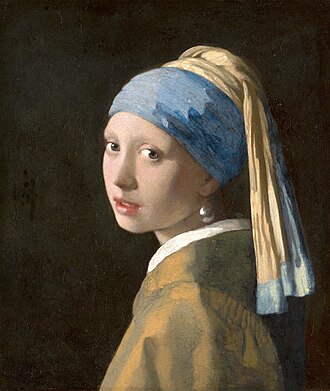 La Jeune Fille à la perle - Johannes Vermeer (1665)
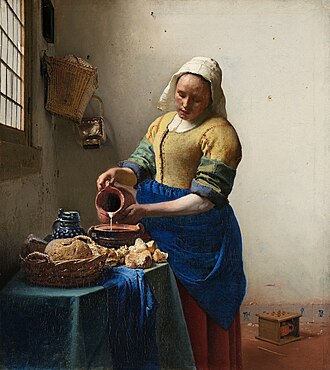 La Laitière - Johannes Vermeer (c. 1658)
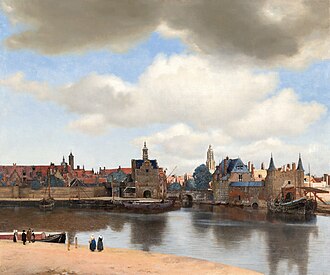 Vue de Delft - Johannes Vermeer (1660s)
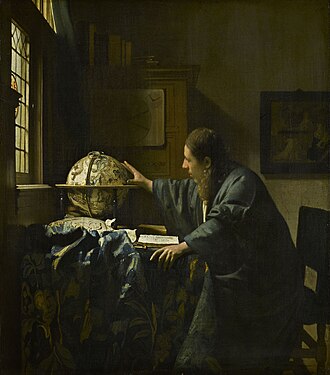 L'Astronome - Johannes Vermeer (1664)
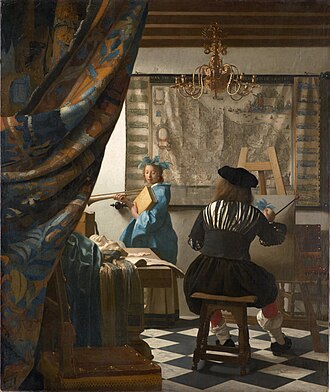 L'Art de la peinture - Johannes Vermeer (1660s)
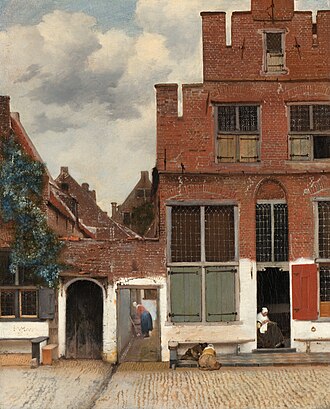 La Ruelle - Johannes Vermeer (1658)
.jpg) La Liseuse à la fenêtre - Johannes Vermeer (1650s)
La Liseuse à la fenêtre - Johannes Vermeer (1650s)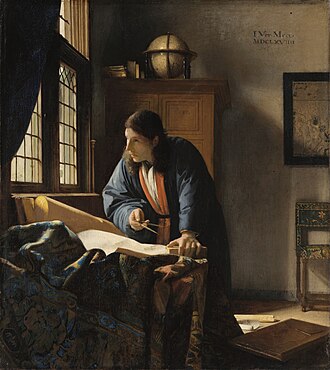 Le Géographe - Johannes Vermeer (1668)
Œuvres d'artistes liés
 La Ronde de nuit - Rembrandt van Rijn (1642)
 Autoportrait - Rembrandt van Rijn (1659)
 Le Souper à Emmaüs - Caravaggio (1601)
 La Vocation de saint Matthieu - Caravaggio (1609)
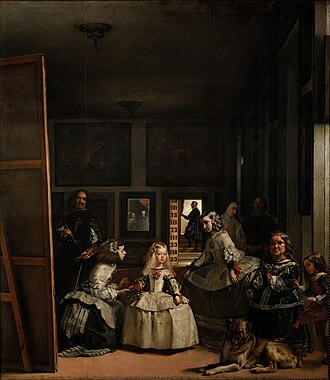 Les Ménines - Diego Velázquez (1656)
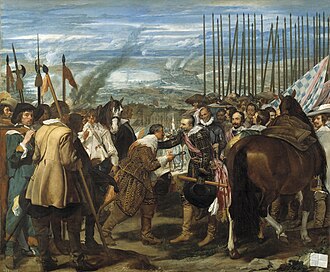 La Reddition de Bréda - Diego Velázquez (1635)