Le Crucifiement de saint Pierre
Caravaggio · 1600
.jpg)
Three laborers strain to raise a heavy cross, and on it an old man, nailed head downward, lifts himself to look beyond the frame. Caravaggio painted martyrdom as hard, ordinary work.
The story behind the painting
The Crucifixion of Saint Peter was painted for the Cerasi Chapel in Santa Maria del Popolo, Rome, opposite the Conversion of Saint Paul, with Annibale Carracci's Assumption on the altar between them. Wikipedia dates it to 1601, while Wikidata gives 1600, the year of the commission. Monsignor Tiberio Cerasi, Treasurer-General to Pope Clement VIII, signed the contract on 24 September 1600. He had a deep devotion to Saints Peter and Paul, the Princes of the Apostles, both closely tied to Rome and the papacy. Cerasi died in May 1601 before the work was done. Baglione wrote that Caravaggio's first versions were rejected; the first Crucifixion later vanished from the records, though a painting in Valencia may be it.
What to look for
Begin with Peter. He is already nailed to the cross, hands and feet bleeding, almost naked, an old man with grey beard and bald head, yet still strong. He raises himself with great effort, twisting his whole body, his gaze lost, not on his executioners but on something outside the picture. Now watch the three men at work. One hauls on a rope, another pushes with arms and shoulders, and a man in yellow breeches crouches beneath the cross, gripping the shovel that dug the hole. Their faces are mostly hidden. Look finally at the background: what seems a wall of darkness is in fact a cliff of rock.
Meaning and intent
According to tradition, Peter asked to be crucified upside down because he did not think himself worthy to die in the same way as Christ. Caravaggio makes that humility the centre of the picture. Helen Langdon notes the striking realism: Peter is very much the poor fisherman from Bethsaida, and the executioners, with veined, reddened hands and dusty feet, are toiling workmen. Their hidden faces make them characterless agents of an unjust act ordered by an invisible authority. The rock behind them alludes to the meaning of Peter's name, the rock on which Christ said his Church would be built. For Cerasi, the two paintings expressed his attachment to the Church of Rome.
Legacy
Denis Mahon grouped this painting and its companion with The Inspiration of Saint Matthew and The Entombment of Christ as works of Caravaggio's mature period, though he found the Conversion more animated. Langdon saw the Crucifixion as the start of a new phase, focused on the Christian ethos of humility and salvation through suffering. The pairing of Peter and Paul had a famous precedent in Michelangelo's frescoes in the Cappella Paolina, but Caravaggio's scenes are starkly different from those crowded compositions. The paintings were finally installed on 1 May 1605. Today they still face each other across the small chapel, where visitors can stand between the two saints.
Le saviez-vous ?
- Wikipedia dates the painting to 1601; Wikidata gives 1600.
- The contract with Tiberio Cerasi was signed on 24 September 1600.
- The paintings were installed in the Cerasi Chapel on 1 May 1605.
- A painting in the Museo del Patriarca, Valencia, may be the lost first version.
À propos de l'artiste
Caravaggio (1571-1610)
art religieux · homme · Peinture baroque italienne · Pierre
Autres œuvres de Caravaggio
 Le Souper à Emmaüs - Caravaggio (1601)
 La Vocation de saint Matthieu - Caravaggio (1609)
 La Décollation de saint Jean-Baptiste - Caravaggio (1608)
 Le Souper à Emmaüs - Caravaggio (1601)
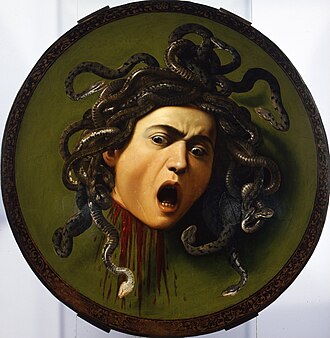 Méduse - Caravaggio (1597)
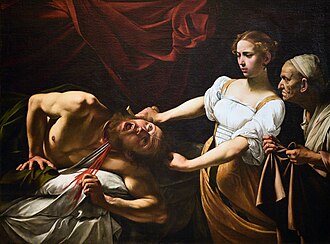 Judith décapitant Holopherne - Caravaggio (1598)
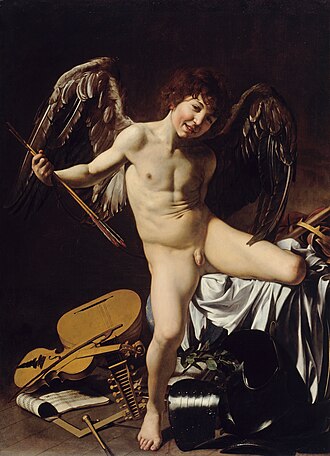 L'Amour victorieux - Caravaggio (1600s)
%2C%201595%20circa%2C%20534.jpg) Le Petit Bacchus malade - Caravaggio (1595)
Le Petit Bacchus malade - Caravaggio (1595)
Œuvres d'artistes liés
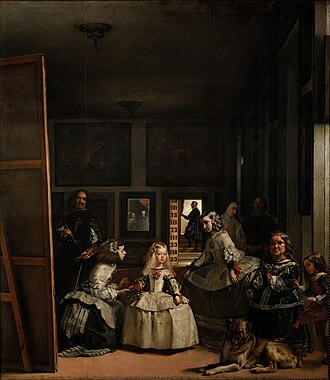 Les Ménines - Diego Velázquez (1656)
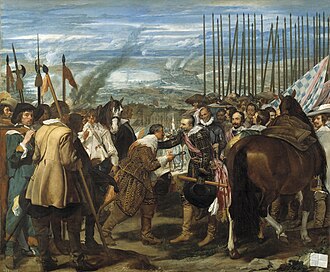 La Reddition de Bréda - Diego Velázquez (1635)
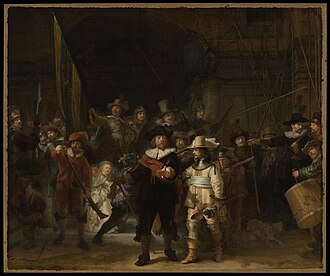 La Ronde de nuit - Rembrandt van Rijn (1642)
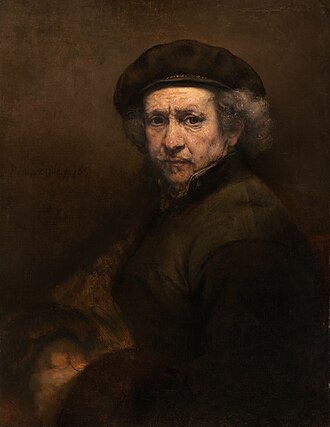 Autoportrait - Rembrandt van Rijn (1659)
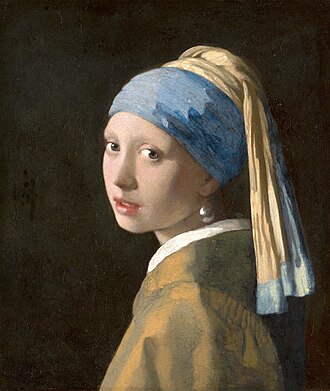 La Jeune Fille à la perle - Johannes Vermeer (1665)
 La Laitière - Johannes Vermeer (c. 1658)