Crucifixion
Antoine van Dyck · 1620
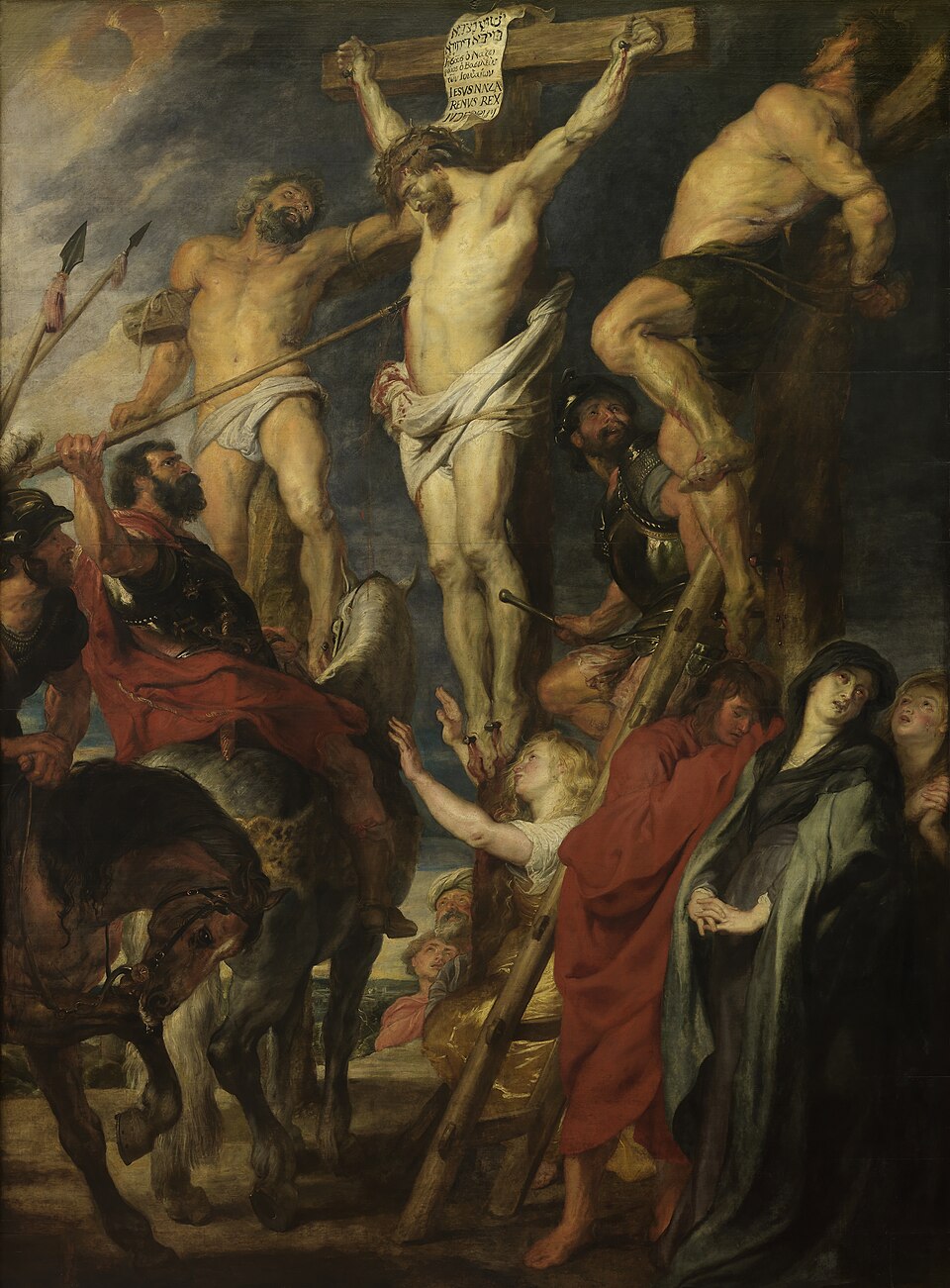
A soldier drives a spear into Christ's side to make sure he is dead. For centuries everyone admired this huge altarpiece as a Rubens. Today the museum in Antwerp says the hand belonged to his young collaborator, Anthony van Dyck.
The story behind the painting
Around 1619 Nicolaas Rockox, a good friend of Rubens, commissioned Rubens to paint this picture for the church of the Convent of the Friars Minor Recollect in Antwerp. At that time the young Anthony van Dyck was working as a collaborator in Rubens' workshop in the same city. The finished canvas, also known as The Thrust of the Spear, is dated 1620. For centuries it was admired as an important masterpiece by Rubens himself, and it now belongs to the Royal Museum of Fine Arts Antwerp.
What to look for
The painting is enormous, about 430 by 311 cm according to Wikidata, made to be seen high on a church wall. It shows the moment during the Crucifixion when a Roman soldier pierces the side of Christ with a spear to make sure he is dead. Christ hangs between the two criminals. Wikidata lists Mary, Mary Magdalene, Mary of Clopas and Joseph of Arimathea among the figures gathered below. Look for the Magdalene, who appears imploring Christ in one of the surviving preparatory sketches.
Meaning and intent
The question that hangs over this picture is whose hand made it. Starting in the 19th century, experts such as Max Rooses, Rudolf Oldenbourg and Gustav Glück doubted that it was by Rubens and proposed van Dyck instead. Some preparatory studies show van Dyck's style and working method: a loose chalk sketch in the Museum Boijmans van Beuningen in Rotterdam, and a sketch of Christ and the imploring Magdalene in the Courtauld Institute in London. The attribution changes how we see the work, as the bold early statement of a pupil inside a master's studio.
Legacy
The strongest clue is a grisaille oil sketch of the whole composition in the Victoria and Albert Museum in London. It differs greatly from the way Rubens painted his preparatory oil sketches. Its thin, nervous brushstrokes recall the sparse, nervous touches found in van Dyck's later oil sketches. Based on this evidence, the Royal Museum of Fine Arts Antwerp changed its attribution of the work to Anthony van Dyck, working in the workshop of Rubens. The painting remains in Antwerp, the city where it was first commissioned.
Le saviez-vous ?
- Commissioned around 1619 by Nicolaas Rockox for the Recollect friars' church in Antwerp.
- Dated 1620; also called The Thrust of the Spear.
- Long admired as a Rubens, now attributed to van Dyck in Rubens' workshop.
- Held by the Royal Museum of Fine Arts Antwerp.
À propos de l'artiste
Antoine van Dyck (1599-1641)
art religieux · homme · Marie · Jésus-Christ · Marie de Magdala · Crucifixion · musée royal des Beaux-Arts d'Anvers · Vlaamse Kunstcollectie · crucifiement · Joseph d'Arimathie
Autres œuvres de Antoine van Dyck
%20-%20Google%20Art%20Project.jpg) Triple portrait de Charles Ier - Anthony van Dyck (1635)
Triple portrait de Charles Ier - Anthony van Dyck (1635)%20with%20M.%20de%20St%20Antoine%20-%20Google%20Art%20Project.jpg) Charles Ier à cheval avec Monsieur de Saint Antoine - Anthony van Dyck (1636)
Charles Ier à cheval avec Monsieur de Saint Antoine - Anthony van Dyck (1636)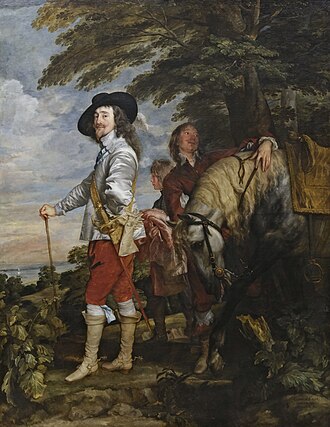 Charles Ier à la chasse - Anthony van Dyck (1635)
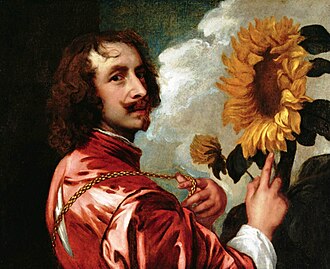 Autoportrait au tournesol - Anthony van Dyck (1632)
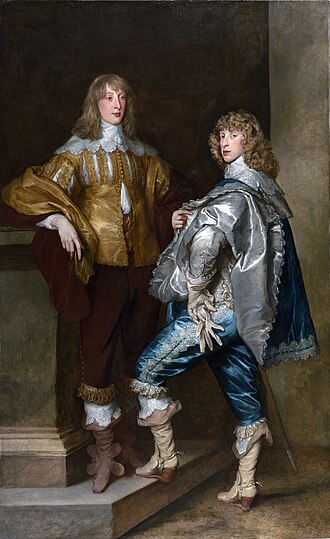 Lord John Stuart et son frère, lord Bernard Stuart - Anthony van Dyck (1638)
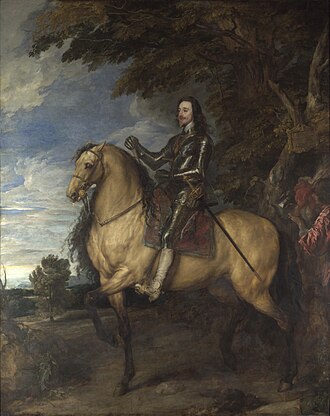 Portrait équestre de Charles Ier - Anthony van Dyck (1637)
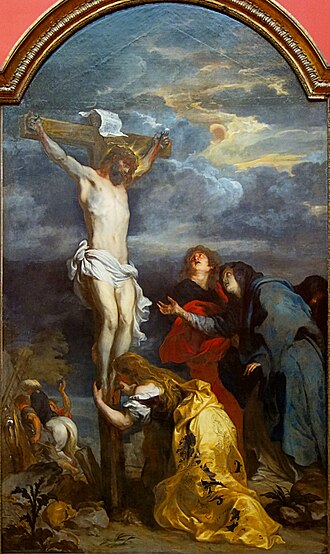 Le Christ en croix - Anthony van Dyck
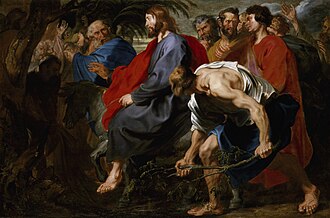 L'Entrée du Christ à Jérusalem - Anthony van Dyck (1617)
Œuvres d'artistes liés
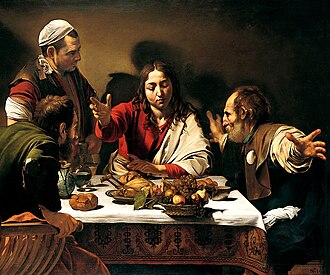 Le Souper à Emmaüs - Caravaggio (1601)
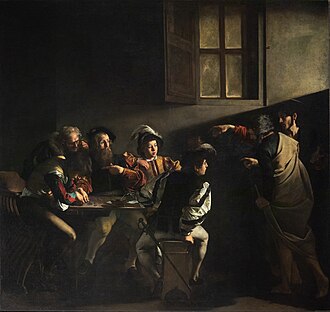 La Vocation de saint Matthieu - Caravaggio (1609)
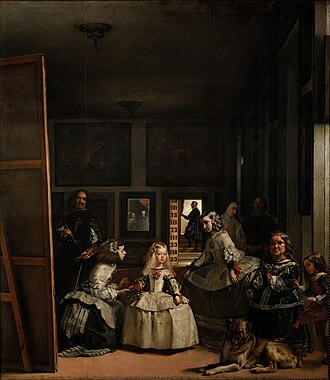 Les Ménines - Diego Velázquez (1656)
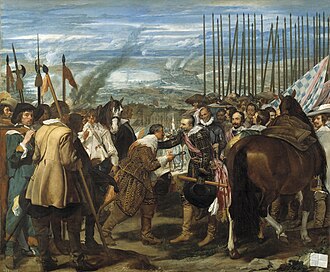 La Reddition de Bréda - Diego Velázquez (1635)
.jpg) L'Érection de la croix - Peter Paul Rubens (1609)
L'Érection de la croix - Peter Paul Rubens (1609)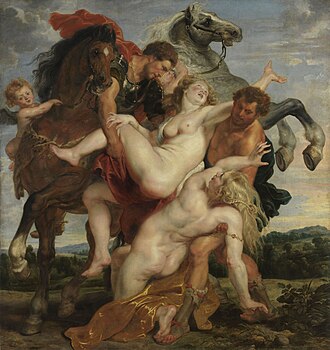 L'Enlèvement des filles de Leucippe - Peter Paul Rubens (1618)
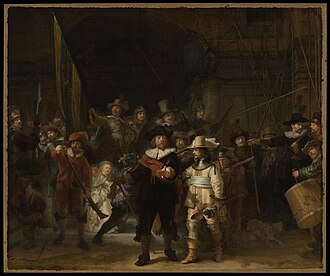 La Ronde de nuit - Rembrandt van Rijn (1642)
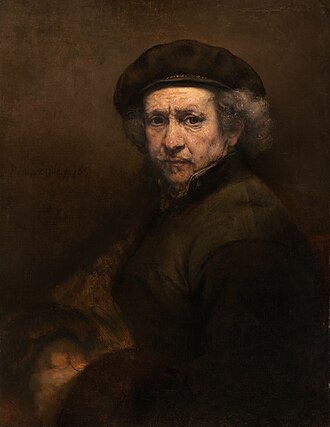 Autoportrait - Rembrandt van Rijn (1659)
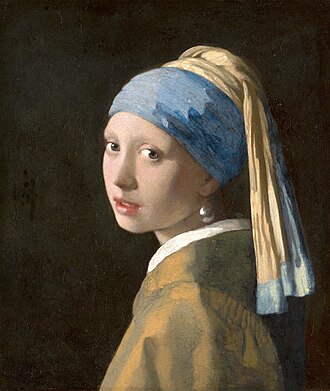 La Jeune Fille à la perle - Johannes Vermeer (1665)
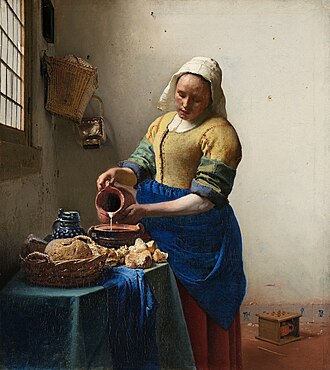 La Laitière - Johannes Vermeer (c. 1658)