Lord John Stuart et son frère, lord Bernard Stuart
Antoine van Dyck · 1638
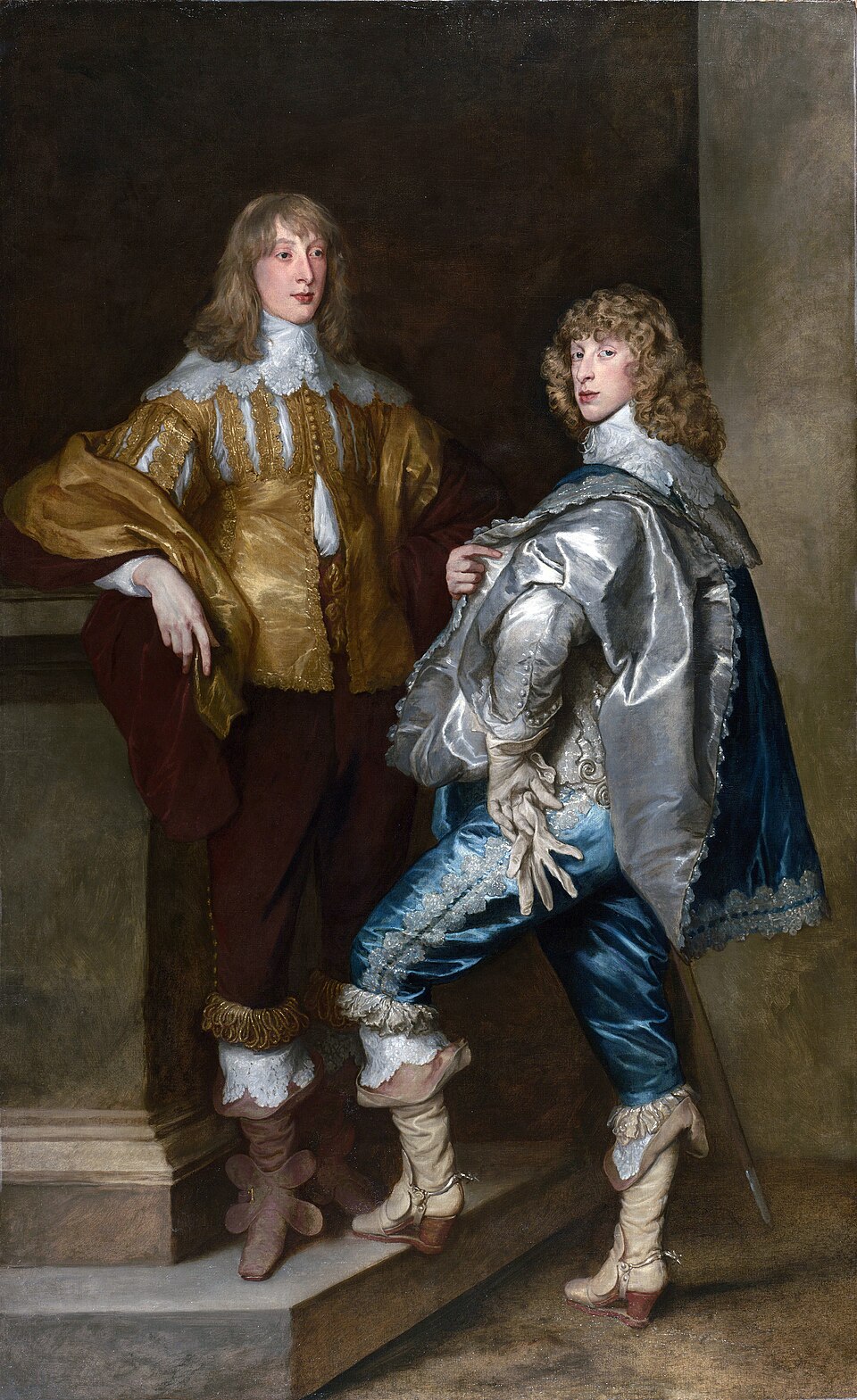
Two teenage brothers in shimmering silk pose life-size, one gazing past us, the other staring straight out with a hand on his hip. Van Dyck painted them just before a grand tour of Europe; within a few years both had died fighting for their king.
The story behind the painting
Anthony van Dyck painted this large double portrait around 1638. It shows the two youngest sons of Esmé Stewart, 3rd Duke of Lennox: Lord John Stewart, born in 1621, and Lord Bernard Stuart, born in 1622, aged about 17 and 16. The National Gallery uses the French-influenced spelling Stuart for the family name. The picture was commissioned shortly before the brothers left in 1639 for a three-year Grand Tour of Europe, and both are dressed for a journey. Van Dyck also painted their older brother James, later 4th Duke of Lennox and 1st Duke of Richmond, in a portrait now in the Metropolitan Museum of Art.
What to look for
The canvas is about 237.5 by 146.1 cm, so the brothers are life-size. Both wear rich silk and satin with lace collars. John, on the left, is in warm gold and brown; Bernard, on the right, in cooler silver and blue, and the muted brown background makes the fabrics glow. John stands on a step, leaning on a stone plinth, looking into the distance. Bernard has stepped up with his left leg, his left hand on his hip so that the elbow juts out at an awkward angle. He looks straight at us, lifting his cape to show its silk lining, his embroidered jacket and breeches, spurred boots and a sword.
Meaning and intent
The brothers stand close together, which suggests their close bond, yet their opposite postures and diverging gazes hint at some unresolved tension between them. The portrait shows young aristocrats at the threshold of adult life, confident and fashionable, setting out to see the world. Knowing what came next gives the image a sharp poignancy. Both brothers were killed fighting for Charles I in the English Civil War: John at the Battle of Cheriton in 1644, and Bernard the following year, commanding the Life Guards at the Battle of Rowton Heath. The elegance of 1638 becomes a farewell.
Legacy
The painting stayed with the Stewart family until 1672, when Charles Stewart, 3rd Duke of Richmond and 6th Duke of Lennox, died without heirs. It passed through his sister Katherine O'Brien, 7th Baroness Clifton, and later her granddaughter Theodosia Hyde, and remained in the family until it was sold around 1904 to the dealer Sir George Donaldson. The banker Sir Ernest Cassel then owned it, and it descended to his great-granddaughters Patricia Knatchbull and Lady Pamela Hicks. The National Gallery in London acquired it in 1988. Thomas Gainsborough made a copy for John Bligh, 3rd Earl of Darnley, now in the Saint Louis Art Museum.
Le saviez-vous ?
- Painted around 1638, before the brothers' Grand Tour of 1639.
- Life-size, about 237.5 x 146.1 cm.
- Both brothers died fighting for Charles I, in 1644 and 1645.
- In the National Gallery, London, since 1988.
À propos de l'artiste
Antoine van Dyck (1599-1641)
National Gallery · baroque · double portrait
Autres œuvres de Antoine van Dyck
%20-%20Google%20Art%20Project.jpg) Triple portrait de Charles Ier - Anthony van Dyck (1635)
Triple portrait de Charles Ier - Anthony van Dyck (1635)%20with%20M.%20de%20St%20Antoine%20-%20Google%20Art%20Project.jpg) Charles Ier à cheval avec Monsieur de Saint Antoine - Anthony van Dyck (1636)
Charles Ier à cheval avec Monsieur de Saint Antoine - Anthony van Dyck (1636)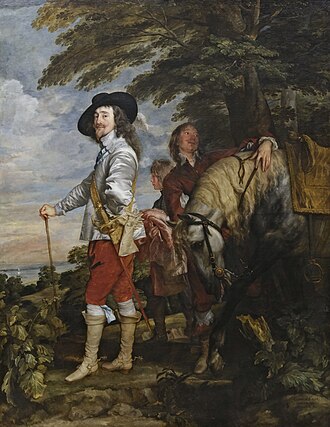 Charles Ier à la chasse - Anthony van Dyck (1635)
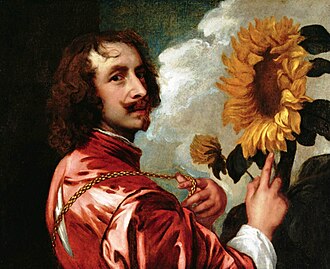 Autoportrait au tournesol - Anthony van Dyck (1632)
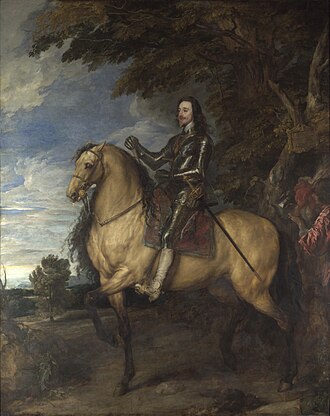 Portrait équestre de Charles Ier - Anthony van Dyck (1637)
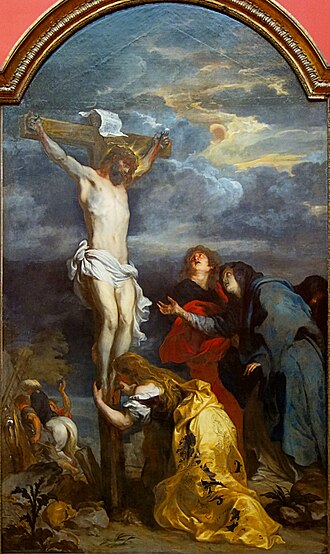 Le Christ en croix - Anthony van Dyck
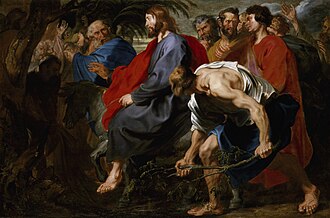 L'Entrée du Christ à Jérusalem - Anthony van Dyck (1617)
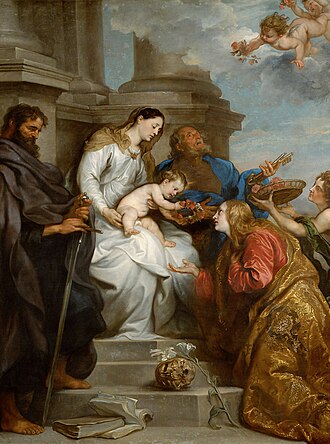 La Vierge à l'Enfant avec les saints Rosalie, Pierre et Paul - Anthony van Dyck (1629)
Œuvres d'artistes liés
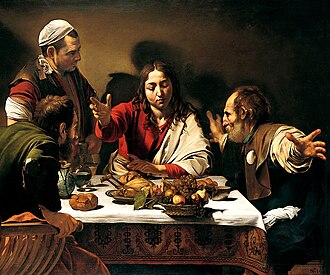 Le Souper à Emmaüs - Caravaggio (1601)
 La Vocation de saint Matthieu - Caravaggio (1609)
 Les Ménines - Diego Velázquez (1656)
 La Reddition de Bréda - Diego Velázquez (1635)
.jpg) L'Érection de la croix - Peter Paul Rubens (1609)
L'Érection de la croix - Peter Paul Rubens (1609) L'Enlèvement des filles de Leucippe - Peter Paul Rubens (1618)
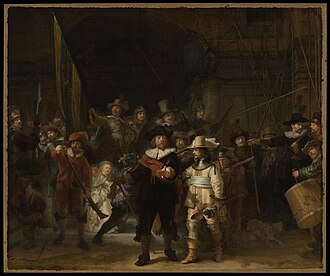 La Ronde de nuit - Rembrandt van Rijn (1642)
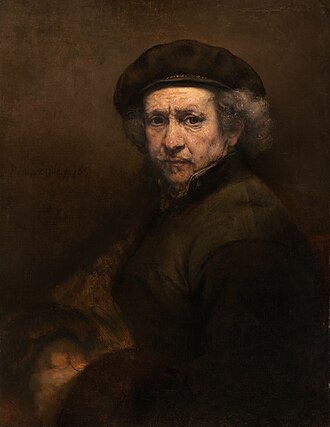 Autoportrait - Rembrandt van Rijn (1659)
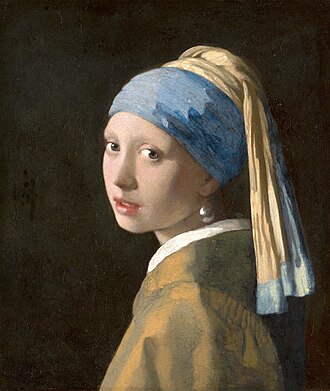 La Jeune Fille à la perle - Johannes Vermeer (1665)
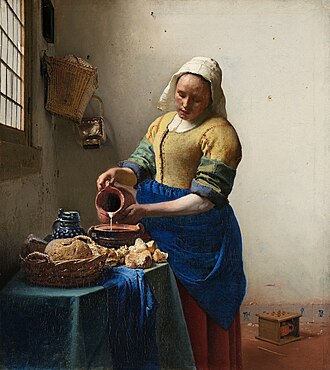 La Laitière - Johannes Vermeer (c. 1658)