Garçon avec un panier de fruits
Caravaggio · 1590s
.jpg)
A youth with a bare shoulder holds a basket brimming with grapes, figs and peaches, his head tilted, his lips parted. Caravaggio made fruit and skin equally real under a single ray of light.
The story behind the painting
Boy with a Basket of Fruit, generally ascribed to Caravaggio, dates from about 1593, when the young painter had just arrived in Rome from Milan and was finding his way in a competitive art world. The model was his friend, the Sicilian painter Mario Minniti, then about 16 years old. Since Minniti only reached Rome in 1593, the painting cannot be earlier. It may come from the time Caravaggio worked in the workshop of the Cavalier d'Arpino, painting flowers and fruits, or from just after January 1594, when he and Minniti left to sell pictures through a dealer named Costantino. It belonged to d'Arpino until Cardinal Scipione Borghese seized his collection in 1607, and it remains today in the Galleria Borghese in Rome.
What to look for
Follow the light. A window high on the left lets a ray slide across the wall, touching the boy, the basket, the shirt sleeve, the bare shoulder and the languid face, while the hair and the basket's shadow on the wall supply the darks. Now go close to the fruit: the compact apples, the round, moist grapes, the soft fleshy figs, peaches among still fresh leaves. Then look for small signs of time. The fruits show flaws and imperfections, and a yellowing leaf bends down outside the basket. Finally, study the boy's face, tilted, with flushed cheeks and parted red lips. The scholar Moir saw in all this an emphasis on the tangibility of objects.
Meaning and intent
Writers have read the painting in many ways. For Gregori, its subject is exactly what appears to the eye: a young seller with a basket full of fruit, made true by brilliant colour. Bologna compared Caravaggio's direct observation of nature to the work of new scientists like Galileo. Hermann Fiore recalled the ancient Roman custom of xenia, gifts of fruit offered to guests, and suggested the youth may personify the god Vertumnus. Others find erotic overtones in the languid expression and bare shoulder, reading the basket as a sign of desire. Yet the theme of transience is present too: the fruit offered, and the youth himself, are fleeting, like the yellowing leaf at the basket's edge.
Legacy
The painting is believed to come before more complex works from the same years that also used Minniti as a model, such as The Fortune Teller and Cardsharps, the latter of which brought Caravaggio to the notice of his first important patron, Cardinal Francesco Maria del Monte. It stands at a moment when still life in Rome was just taking shape, drawing on Northern European and Lombard examples such as the market scenes of the Campi brothers. What sets Caravaggio apart, the source says, is his focus on the human figure together with nature, looking with great realism at each object and its tactile presence. Vittorio Sgarbi has noted qualities that could point to other painters in the Arpino workshop.
Le saviez-vous ?
- The model was Mario Minniti, about 16 years old.
- The painting cannot be earlier than 1593, when Minniti arrived in Rome.
- Cardinal Scipione Borghese seized it from the Cavalier d'Arpino in 1607.
- Vittorio Sgarbi notes qualities that could point to other painters in the Arpino workshop.
À propos de l'artiste
Caravaggio (1571-1610)
portrait · Peinture baroque italienne · Galerie Borghèse · panier · collection Borghèse
Autres œuvres de Caravaggio
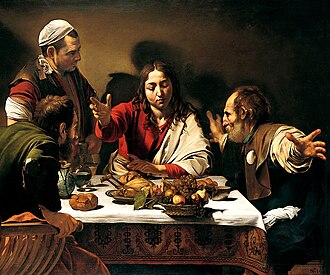 Le Souper à Emmaüs - Caravaggio (1601)
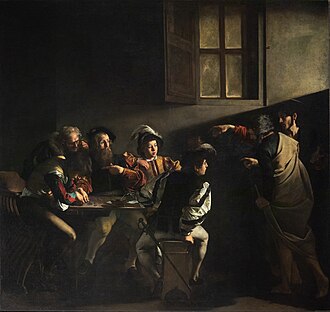 La Vocation de saint Matthieu - Caravaggio (1609)
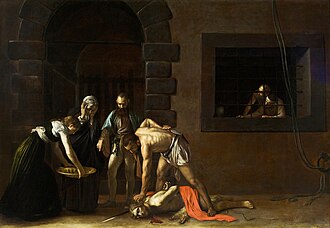 La Décollation de saint Jean-Baptiste - Caravaggio (1608)
 Le Souper à Emmaüs - Caravaggio (1601)
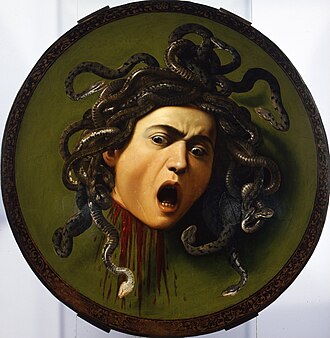 Méduse - Caravaggio (1597)
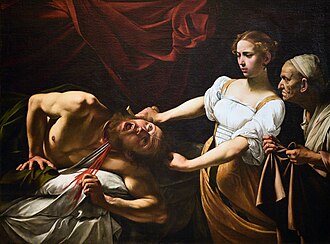 Judith décapitant Holopherne - Caravaggio (1598)
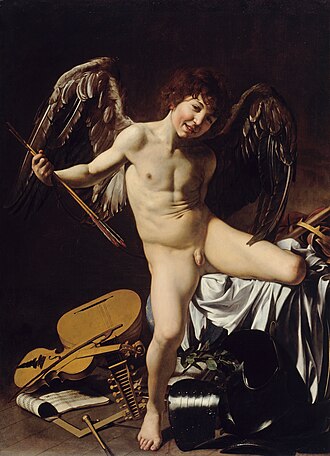 L'Amour victorieux - Caravaggio (1600s)
%2C%201595%20circa%2C%20534.jpg) Le Petit Bacchus malade - Caravaggio (1595)
Le Petit Bacchus malade - Caravaggio (1595)
Œuvres d'artistes liés
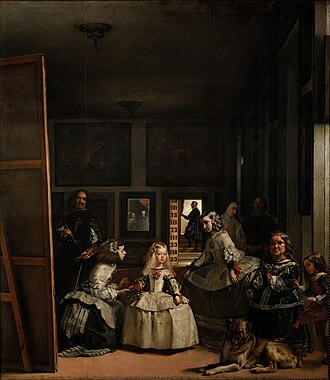 Les Ménines - Diego Velázquez (1656)
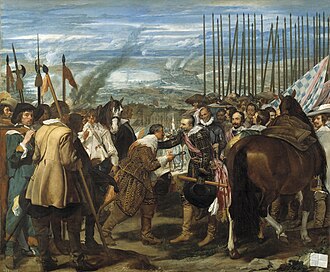 La Reddition de Bréda - Diego Velázquez (1635)
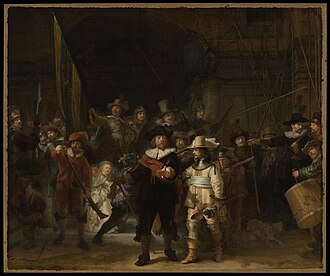 La Ronde de nuit - Rembrandt van Rijn (1642)
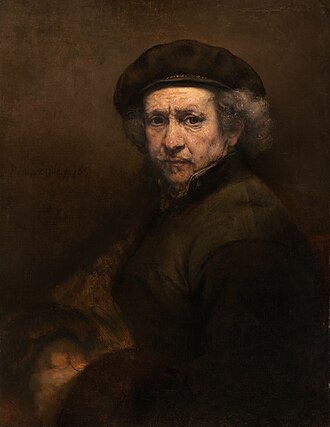 Autoportrait - Rembrandt van Rijn (1659)
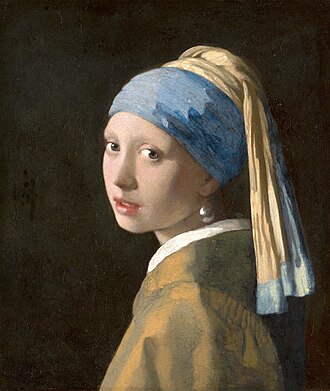 La Jeune Fille à la perle - Johannes Vermeer (1665)
 La Laitière - Johannes Vermeer (c. 1658)