Garçon mordu par un lézard
Caravaggio · 1590s
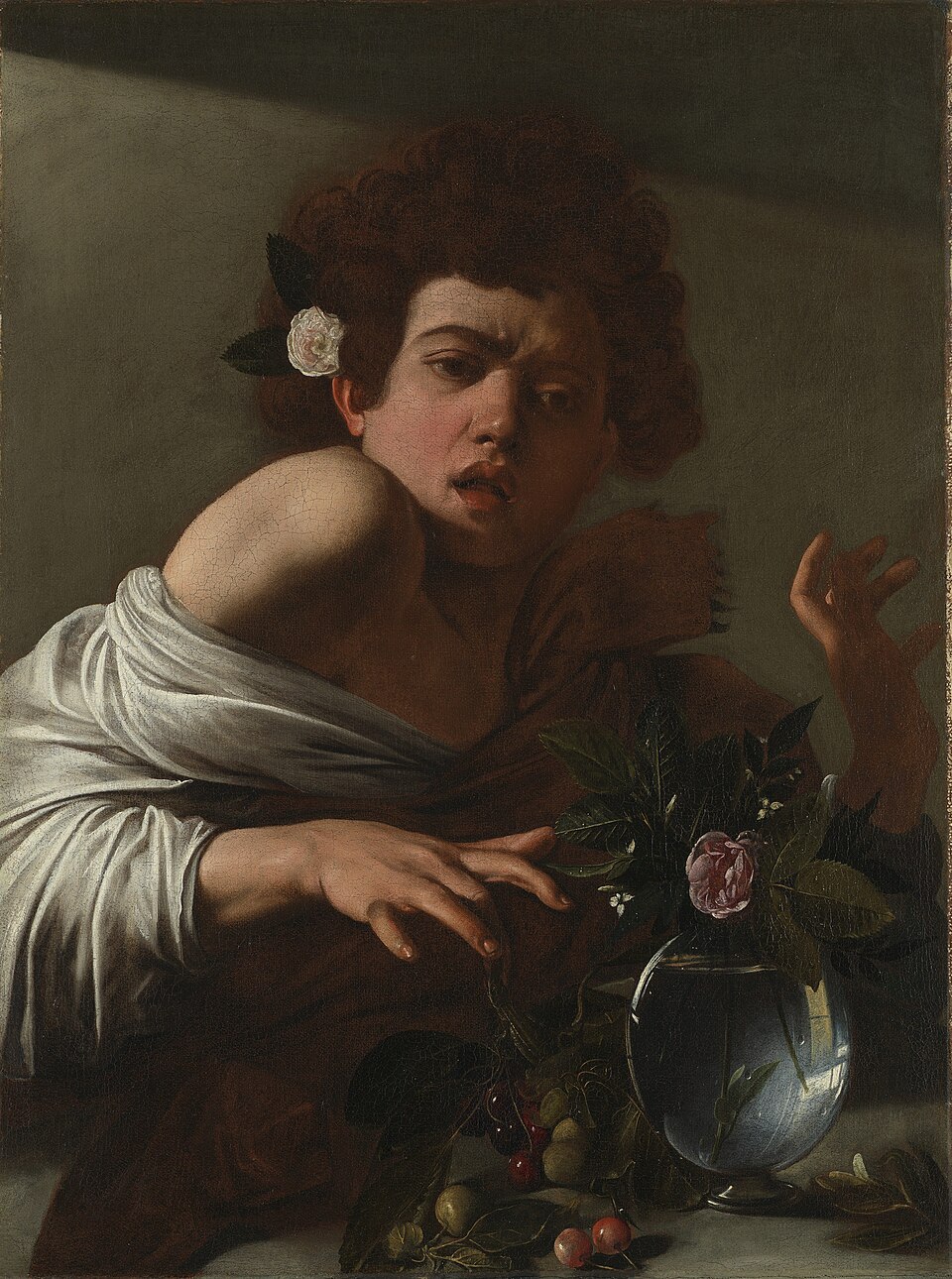
A boy reaches into a pile of fruit and recoils in shock: a lizard has bitten his finger. Caravaggio tried to freeze a split second of pain and surprise in paint.
The story behind the painting
Boy Bitten by a Lizard exists in two versions, both believed to be by Caravaggio: one in the Fondazione Roberto Longhi in Florence, the other in the National Gallery, London, the version described by the Wikidata record. Both are thought to date from 1594-1596. Roberto Longhi favoured the later end of that range, since the paintings show the signs of works made in the household of Caravaggio's sophisticated patron Cardinal Francesco Maria del Monte, whose Palazzo Madama the painter entered only in 1595. Who posed is still debated. One theory names Mario Minniti, Caravaggio's companion, because of the curly dark hair and pursed lips. Michael Fried instead proposed a disguised self-portrait, noting that the hands echo those of a painter holding a palette.
What to look for
Catch the instant. The boy's hand has just been bitten, and his whole body pulls back: one hand stretched out, the other raised, his shoulder lifting, his face caught between surprise and fear. Find the small lizard clinging to his finger among the fruit. Then look at what surrounds him. The arrangement of fruit is carefully placed, and the source connects it to the Four Temperaments. Notice too how theatrical the pose feels. Caravaggio insisted on painting from life, and a model could not truly be surprised for hours on end, so the gesture has a held, staged quality. That tension between a fleeting moment and a long sitting is part of what makes the picture fascinating to study.
Meaning and intent
The painting may carry layered meanings. Leonard J. Slatkes suggested its symbolism derives from the Apollo Sauroktonos theme, where a poisonous salamander triumphs over the god, with the salamander standing for fire in Caravaggio's time and the fruit evoking the Four Temperaments. The creature also had phallic connotations, and the picture might have been inspired by an epigram by Martial in which a lizard crawls toward a treacherous boy, wanting to die between his fingers. Above all, though, it is an experiment: an attempt to observe and record acute emotions, surprise and fear, with the directness of real life. In that sense the bite is also a lesson about how painting can capture feeling.
Legacy
Within Caravaggio's early work this picture marks a turning point. It shows a way out of the airless stillness of very early paintings such as Boy Peeling a Fruit and Sick Bacchus, and beyond the implied but frozen violence of Cardsharps. Critics would later say that painting only from life suited realistic, static compositions better than scenes of movement, a problem Caravaggio overcame fully only in his late period. The motif of a bitten finger itself has an ancestor: Roberto Longhi first suggested that Caravaggio borrowed it from Boy Bitten by a Crab, a drawing by the Renaissance artist Sofonisba Anguissola. A small picture, then, links two remarkable artists across generations.
Le saviez-vous ?
- Two versions exist: one in Florence's Fondazione Roberto Longhi, one in the National Gallery, London.
- Both versions are thought to date from 1594-1596.
- Michael Fried proposed the painting is a disguised self-portrait.
- The bitten-finger motif may come from a drawing by Sofonisba Anguissola.
À propos de l'artiste
Caravaggio (1571-1610)
scène de genre · garçon · Peinture baroque italienne · National Gallery · fruit comestible
Autres œuvres de Caravaggio
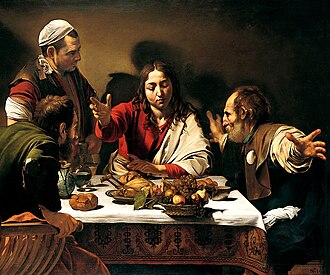 Le Souper à Emmaüs - Caravaggio (1601)
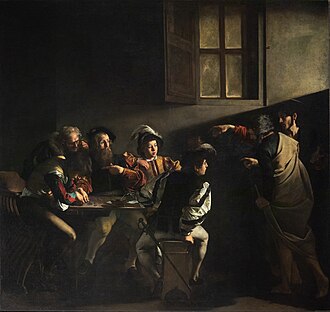 La Vocation de saint Matthieu - Caravaggio (1609)
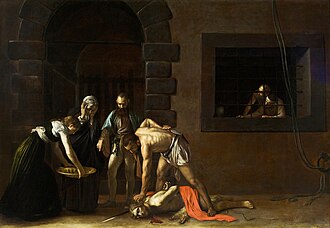 La Décollation de saint Jean-Baptiste - Caravaggio (1608)
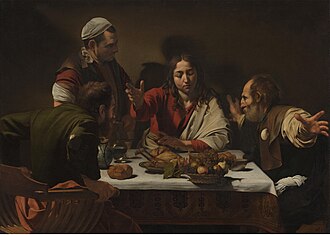 Le Souper à Emmaüs - Caravaggio (1601)
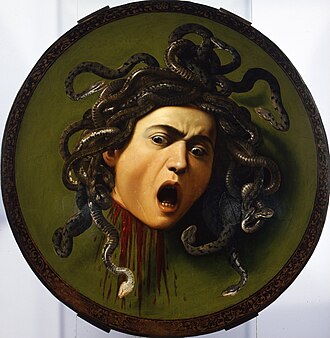 Méduse - Caravaggio (1597)
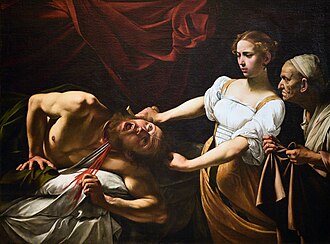 Judith décapitant Holopherne - Caravaggio (1598)
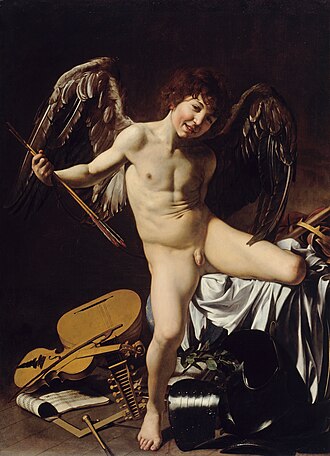 L'Amour victorieux - Caravaggio (1600s)
%2C%201595%20circa%2C%20534.jpg) Le Petit Bacchus malade - Caravaggio (1595)
Le Petit Bacchus malade - Caravaggio (1595)
Œuvres d'artistes liés
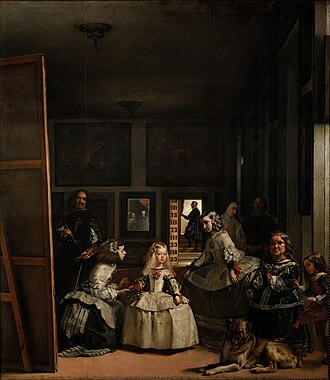 Les Ménines - Diego Velázquez (1656)
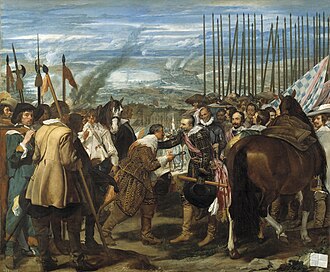 La Reddition de Bréda - Diego Velázquez (1635)
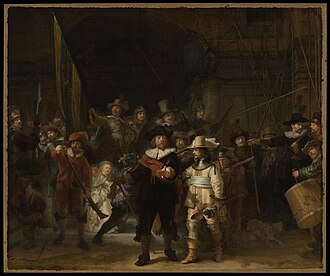 La Ronde de nuit - Rembrandt van Rijn (1642)
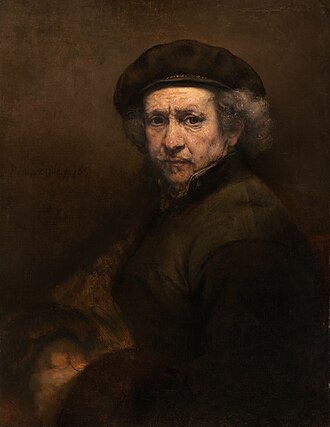 Autoportrait - Rembrandt van Rijn (1659)
 La Jeune Fille à la perle - Johannes Vermeer (1665)
 La Laitière - Johannes Vermeer (c. 1658)