Mujer con periquito
Pierre-Auguste Renoir · 1871
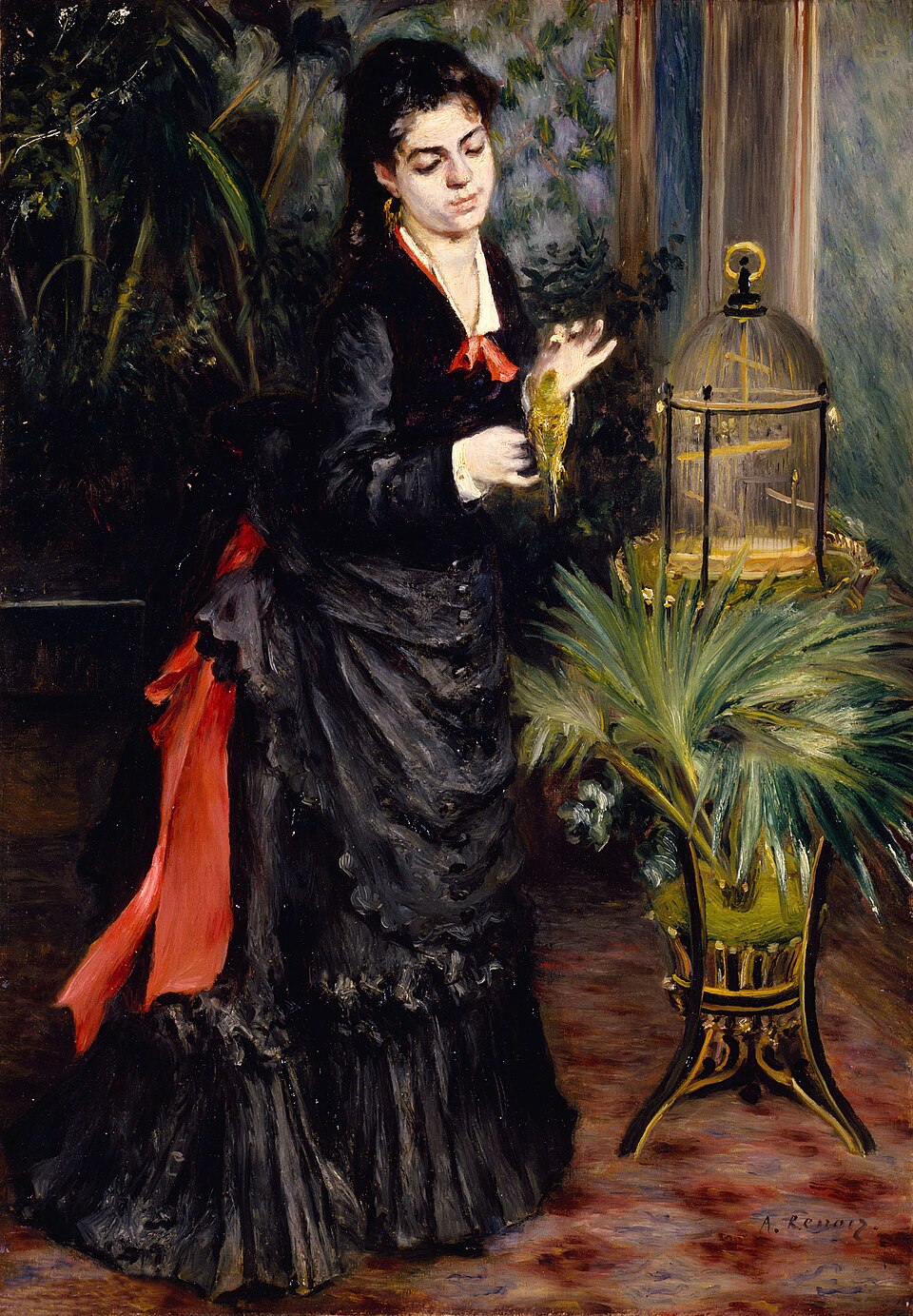
A young woman in a black dress bends toward a small bird in a dim, heavy room. She is Lise Tréhot, Renoir's companion and model, and this may be one of the last times he painted her.
The story behind the painting
Renoir painted Woman with Parakeet in 1871, after he came back from serving in the Franco-Prussian War and probably after the Paris Commune. The date was long debated, and earlier publications placed it in 1865. In a 1912 letter to Joseph Durand-Ruel, Renoir himself said it showed Lise Tréhot and was made no later than 1871. Lise posed for him in more than twenty paintings between 1866 and 1872. The work never hung at the Salon: there was no Salon in 1871 because of the war, and in 1872 his entry was rejected.
What to look for
Look at Lise's black taffeta dress with its white cuffs and red sash, likely the same dress she wears in Lise in a White Shawl. The ruffled red trim echoes the bright feathers of the parakeet, as if woman and bird shared the same plumage. The room is a typical Third Republic interior, with dark heavy colours and greenery pressing close around her. The brushwork is broad and loosely handled, which is why the picture is counted as an early work of Impressionism. The canvas measures about 92 by 65 cm.
Meaning and intent
Women with birds were a common subject at the time, painted by Courbet and Manet before Renoir. Such images could suggest a woman who only mimics others, or link the caged bird to a caged woman. Here that comparison is quieter. The rich but stifling room limits Lise's space the way the gilded cage limits the bird, yet the parakeet may also play the old role of confidant. Unlike the other painters, Renoir places his model in a believable modern room and shows her plain and unpretentious in looks and dress.
Legacy
The picture is believed to be among the final images of Lise before she ended her relationship with Renoir and married the architect Georges Brière de L'Isle. The dealer Ambroise Vollard, a friend of the painter, was probably its first owner. After several owners it reached Justin K. Thannhauser's gallery in 1927. Thannhauser later gave it to the Solomon R. Guggenheim Museum in New York, where it has belonged since 1978 and hangs on semi-permanent view in the Thannhauser Gallery.
¿Sabías que…?
- Painted in 1871; older books dated it 1865.
- The model is Lise Tréhot, who posed for Renoir in over twenty works.
- Never shown at the Paris Salon.
- In the Guggenheim's Thannhauser Collection since 1978.
Sobre el artista
Pierre-Auguste Renoir (1841-1919)
Más obras de Pierre-Auguste Renoir
 Baile en el Moulin de la Galette - Pierre-Auguste Renoir (1876)
 El almuerzo de los remeros - Pierre-Auguste Renoir (1881)
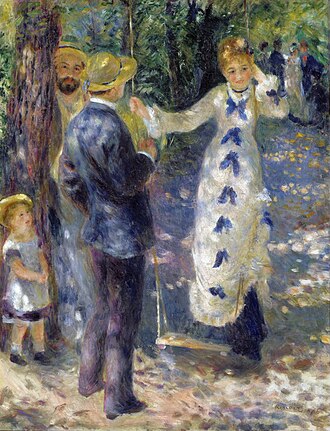 El columpio - Pierre-Auguste Renoir (1876)
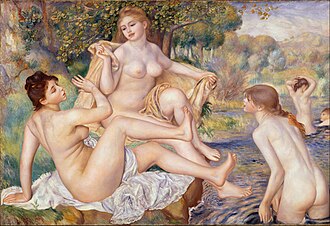 Las grandes bañistas - Pierre-Auguste Renoir (1884)
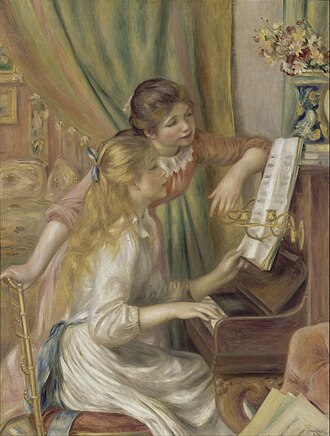 Muchachas al piano - Pierre-Auguste Renoir (1892)
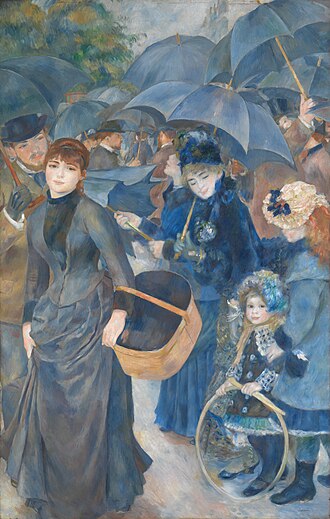 Los paraguas - Pierre-Auguste Renoir (1880s)
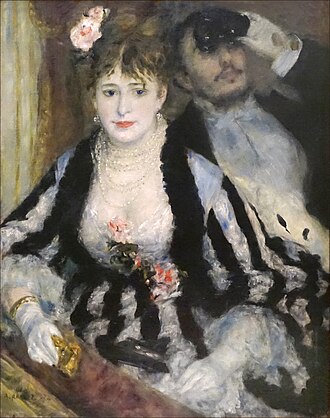 El palco - Pierre-Auguste Renoir (1874)
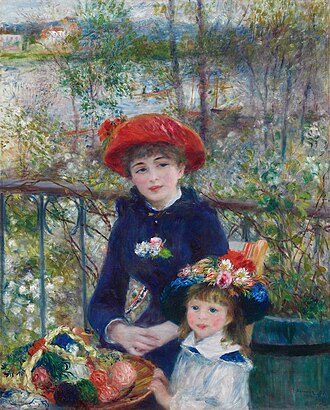 En la terraza - Pierre-Auguste Renoir (1881)
Obras de artistas relacionados
 Impresión, sol naciente - Claude Monet (1872)
 Nenúfares - Claude Monet (1906)
 Almuerzo sobre la hierba - Édouard Manet (1863)
 Olympia - Édouard Manet (1863)
 La cuna - Berthe Morisot (1872)
 Summer's Day - Berthe Morisot (1879)
 El ajenjo - Edgar Degas (1875)
 Die Bellelli Familie - Edgar Degas (1858)
 El canal del Loing - Alfred Sisley (1892)
 The Watering Pond at Marly with Hoarfrost - Alfred Sisley (1876)
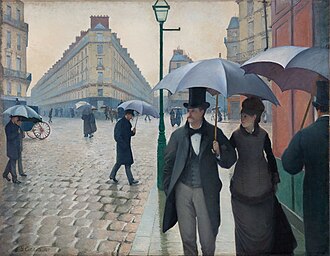 Calle de Paris, dia de lluvia - Gustave Caillebotte (1877)
 Los acuchilladores de parqué - Gustave Caillebotte (1875)