Vista de Haarlem con campos de blanqueo
Jacob Ruysdael · 1670
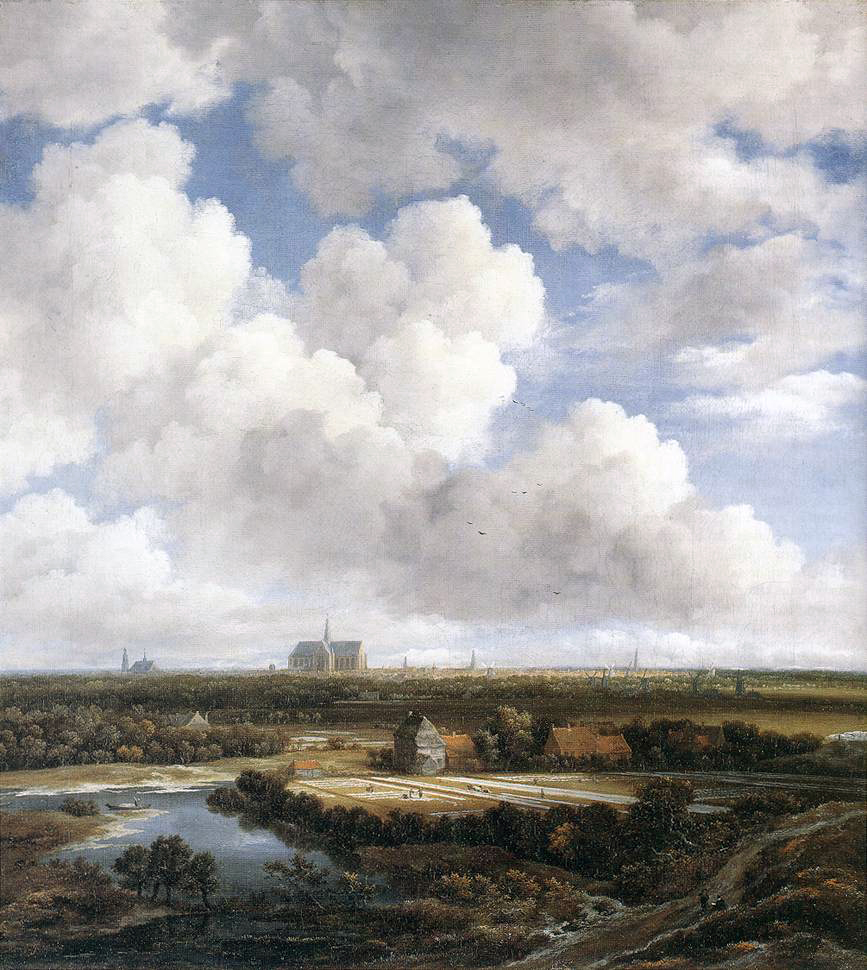
Two thirds of this canvas belong to the sky. Beneath the clouds, strips of white linen lie bleaching in the sun, and far off rises the great church of Haarlem.
The story behind the painting
Jacob van Ruisdael painted this view around 1670 to 1675, one of his Haarlempjes, little views of Haarlem. It came shortly after the Eighty Years' War and the independence of the Dutch Republic, when paintings of the land helped a young nation see itself. In the 17th century Haarlem was known internationally for linen bleaching, and its bleached linen was so prized that it was sold as toiles de Hollande wherever it was woven. Some art historians believe, without confirmation, that the owner of these bleaching fields commissioned the painting.
What to look for
The horizon sits low, so the cloud-filled sky takes up about two thirds of the canvas. On the left of the foreground two small rowing boats cross a marsh; on the right are bleaching fields, cottages and small figures at work on the linen. Billowing clouds let patches of sunlight fall on the land, and Ruisdael used them on purpose, lighting the fields and leading your eye back to the towering Church of St. Bavo, the Grote Kerk. Windmills dot the skyline around the town.
Meaning and intent
The picture expresses Ruisdael's pride as a Dutch citizen and a native of Haarlem. Painting a specific industry tied to a specific place was rare at the time. The windmills recall the polder mills that pumped water from the lowlands to win new land for farming and bleaching. Art historian Wilfred Wiegand proposed a deeper reading: linen as a symbol of purity, recalling the shroud of Christ and the fine white linen of the saints in Revelation, so the work may speak of the purity of the soul and of Haarlem.
Legacy
Ruisdael never dated his Haarlempjes and kept painting them after moving to Amsterdam. Followers such as Jan Vermeer van Haarlem and Jan van Kessel emulated the style, sometimes reproducing his views, and later painters including Jacob Maris of the Hague School drew inspiration from them. The writer W. G. Sebald mentions such a view in his 1995 book The Rings of Saturn. The painting is now in the Kunsthaus Zurich.
¿Sabías que…?
- Painted around 1670 to 1675.
- One of Ruisdael's Haarlempjes, little views of Haarlem.
- The sky fills about two thirds of the canvas.
- Now in the Kunsthaus Zurich.
Sobre el artista
Jacob Ruysdael (1628-1682)
pintura del paisaje · Kunsthaus Zürich
Más obras de Jacob Ruysdael
 El molino de Wijk bij Duurstede - Jacob van Ruisdael (1670)
 El cementerio judío - Jacob van Ruisdael (1650s)
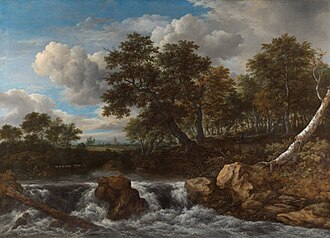 Paisaje con cascada - Jacob van Ruisdael (1668)
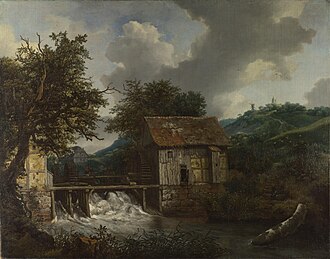 Dos molinos y una compuerta abierta cerca de Singraven - Jacob van Ruisdael (1650)
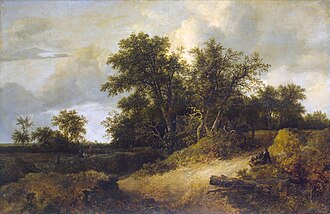 Duna paisaje - Jacob van Ruisdael (1646)
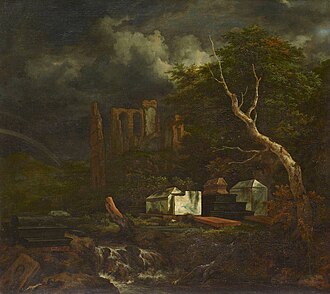 El cementerio judío, - Jacob van Ruisdael (1653)
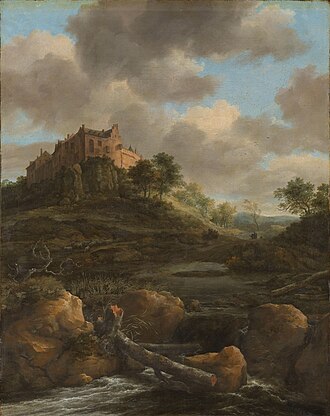 Castillo Bentheim - Jacob van Ruisdael (1650s)
Vista de Egmond aan Zee - Jacob van Ruisdael (1650)
Obras de artistas relacionados
 La ronda de noche - Rembrandt van Rijn (1642)
 Autorretrato - Rembrandt van Rijn (1659)
 La joven de la perla - Johannes Vermeer (1665)
 La lechera - Johannes Vermeer (c. 1658)
 La fiesta de San Nicolás - Jan Steen (1660s)
 Joven comiendo ostras - Jan Steen (1658)
 El alegre bebedor - Frans Hals (1620s)
 Caballero sonriente - Frans Hals (1624)
 Patio de una casa de Delft - Pieter de Hooch (1658)
 Mujer pelando manzanas - Pieter de Hooch (1663)