Autorretrato como un muchacho
Rembrandt van Rijn · 1634
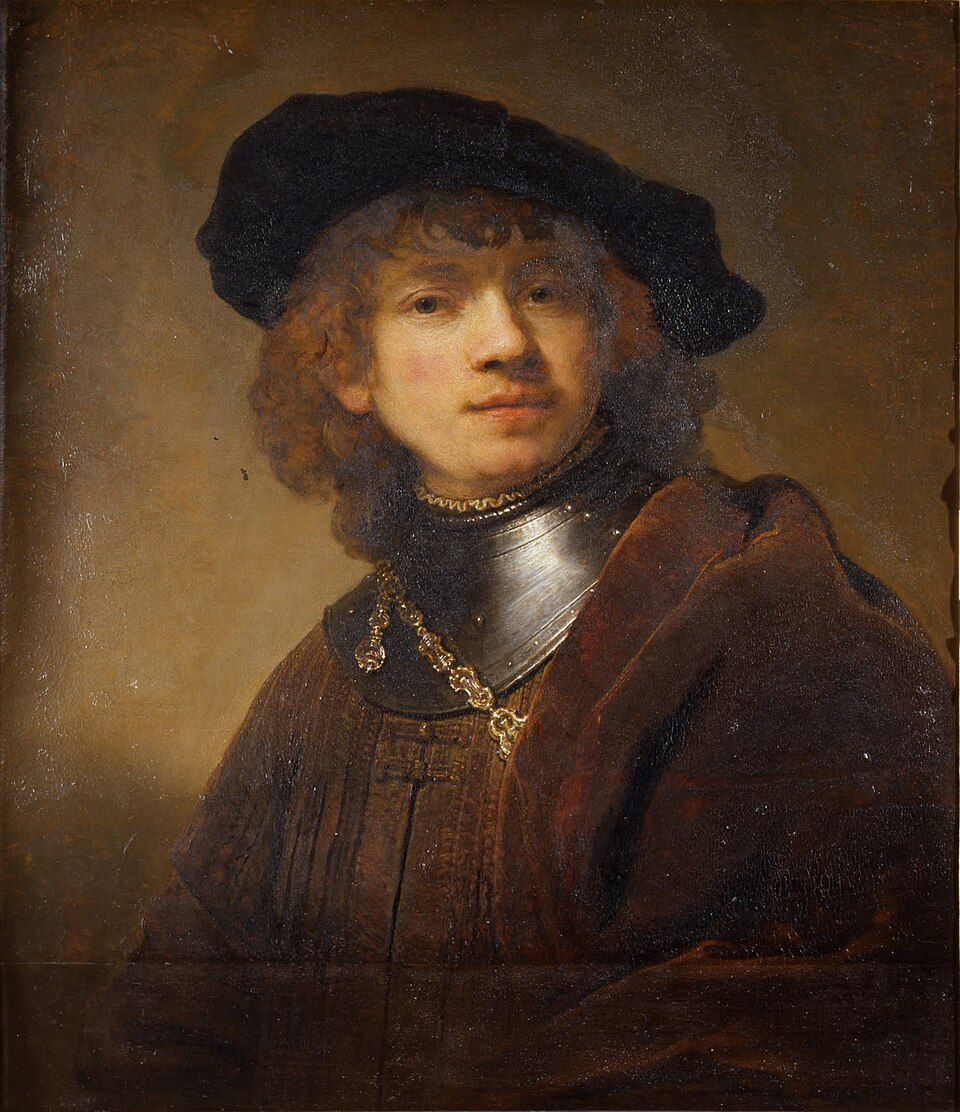
For two centuries this young man in a beret was loved as Rembrandt looking at himself. Today scholars doubt both the self-portrait and the hand, yet a restoration in Florence found a signature hidden under old varnish.
The story behind the painting
The painting first appears in the collection of Johann Wilhelm, Elector Palatine, who reigned from 1690 to 1716 and was married to Anna Maria Luisa de' Medici, the last of the Medici family. Like his father-in-law, he collected artists' self-portraits. He gave this picture to the Gerini family, Florentine grandees and patrons of art. It was exhibited in Florence as a Rembrandt self-portrait in 1724 and described the same way in the illustrated Gerini catalogue of 1759.
What to look for
A young man looks out under a beret, wearing fanciful dress that suggests the 16th rather than the 17th century, as in many of Rembrandt's real self-portraits. At his throat sits a gorget, the piece of armour that soldiers of the day really wore, and which appears in several of Rembrandt's tronie self-portraits. Notice that the face has no moustache. The most recent restoration, by Daniele Rossi, revealed a signature that had been hidden under old varnish.
Meaning and intent
A tronie is a study of a face in costume rather than a portrait of a named sitter, and the title now reflects that. The Rembrandt Research Project and other modern scholars doubt that Rembrandt painted it at all, though it might be an unfinished Rembrandt portrait finished by another artist. A self-portrait seems even less likely, because the face resembles the certain examples so little. It used to be dated about 1634 from the sitter's age and the missing moustache, but on style alone about 1639 to 1640 seems more likely.
Legacy
The picture was once so admired that in the Palazzo Gerini a fresco by Giuseppe Zocchi, an allegory of the arts, shows the figure of Painting looking at the Gerini catalogue, held by two putti and open at the page that reproduces this very painting. Painting a reproductive print in fresco was highly unusual, a sign of the work's prestige. In 1818 it entered the famous collection of artists' self-portraits at the Uffizi in Florence, where it still hangs.
¿Sabías que…?
- Long regarded as one of Rembrandt's self-portraits.
- Modern scholars doubt both the self-portrait and the attribution.
- Dated about 1634 in the past, about 1639-1640 on style.
- In the Uffizi collection since 1818.
Sobre el artista
Rembrandt van Rijn (1606-1669)
varón · pintura del Siglo de oro neerlandés · autorretrato · Galería Uffizi · Rembrandt
Más obras de Rembrandt van Rijn
 La ronda de noche - Rembrandt van Rijn (1642)
 Autorretrato - Rembrandt van Rijn (1659)
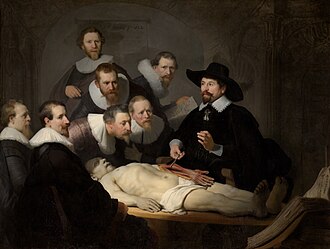 Lección de anatomía del Dr. Nicolaes Tulp - Rembrandt van Rijn (1632)
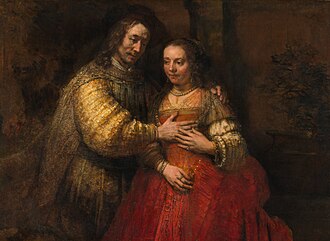 La novia judía - Rembrandt van Rijn (1660s)
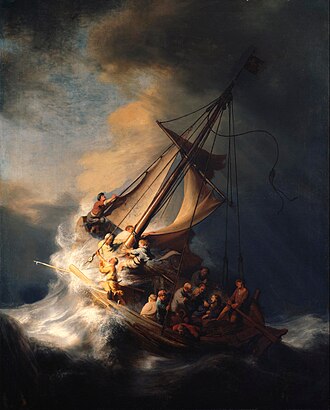 La tormenta en el mar de Galilea - Rembrandt van Rijn (1633)
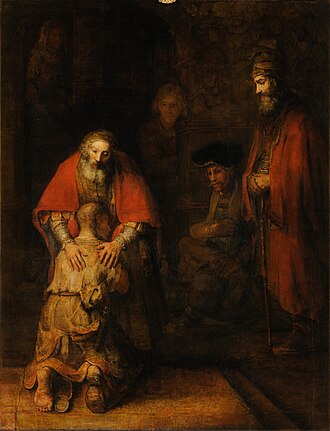 El retorno del hijo pródigo - Rembrandt van Rijn (1668)
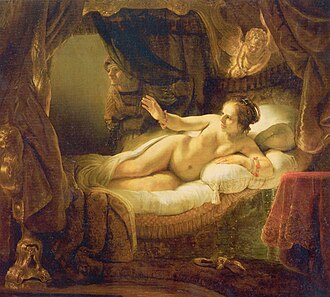 Dánae - Rembrandt van Rijn (1636)
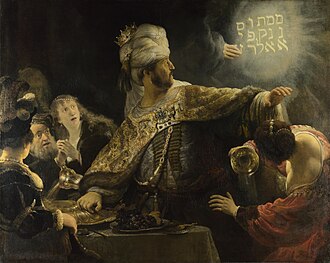 Banquete de Belsasar - Rembrandt van Rijn (1636)
Obras de artistas relacionados
 La joven de la perla - Johannes Vermeer (1665)
 La lechera - Johannes Vermeer (c. 1658)
 La fiesta de San Nicolás - Jan Steen (1660s)
 Joven comiendo ostras - Jan Steen (1658)
 El alegre bebedor - Frans Hals (1620s)
 Caballero sonriente - Frans Hals (1624)
 El molino de Wijk bij Duurstede - Jacob van Ruisdael (1670)
 El cementerio judío - Jacob van Ruisdael (1650s)
 Patio de una casa de Delft - Pieter de Hooch (1658)
 Mujer pelando manzanas - Pieter de Hooch (1663)