La lección de música
Johannes Vermeer · 1662
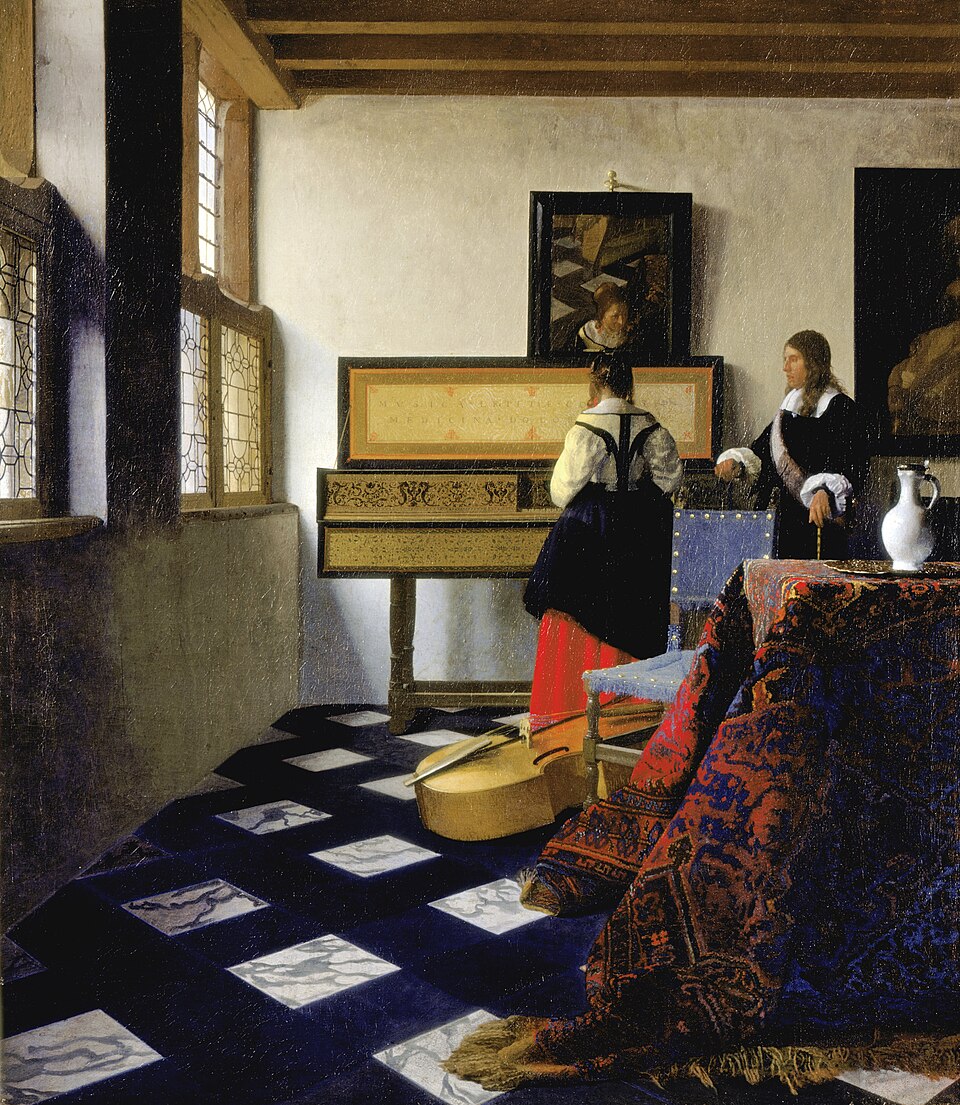
A young woman plays the virginal with her back to us, while her teacher stands close, lips slightly parted as if singing along. In Vermeer's quiet room, music seems to carry something more.
The story behind the painting
The Music Lesson, also called Woman Seated at a Virginal or A Lady at the Virginals with a Gentleman, shows a young female pupil at a virginal with a male teacher beside her. Wikidata dates it to 1662. The pigment analysis treats it as a mature work, in which Vermeer's handling of colour and choice of materials show his mastery. It is also one of the few paintings that stayed in Vermeer's home until his death in 1675, when his family was forced to sell them. The picture draws on objects Vermeer returned to again and again: a draped rug, a white water jug, musical instruments, a tiled floor and windows that let in light and shadow. Familiar things, arranged once more, become the setting for a new small drama.
What to look for
Let the light lead you in from the windows on the left, falling across the room toward the far wall where the young woman sits at her virginal. Beside her stands the teacher, his mouth slightly open, as though he is singing along with the music she plays. In the foreground, a rug is draped over a table, and a white water jug catches the light. Notice the floor: its tiles are painted largely in dark tones, and analysis shows this bluish-black was made with bone black mixed with natural ultramarine. The painting is dominated by such dark areas, which make the bright window light and the pale wall all the more luminous. A mirror is also listed among the objects in the scene.
Meaning and intent
The teacher's parted lips suggest he is singing with his pupil, and that hints at a bond between the two figures. Love and music joined together was a common theme in Dutch art of this period, and Vermeer lets it hover without spelling it out. Nothing dramatic happens. A lesson is under way, a melody fills the room, and yet the closeness of the two figures invites us to wonder what else is passing between them. The recurring objects, the rug, the jug, the instruments, ground the moment in an ordinary household, so that the feeling seems to rise quietly out of everyday life. It is a picture about listening, both to music and to the unspoken.
Legacy
After Vermeer's death the picture was sold in Delft in May 1696 with the collection of Jacob Dissous, which included many Vermeers. The Venetian painter Giovanni Antonio Pellegrini acquired it in 1718, and his collection later passed to Joseph Smith. In 1762 King George III bought Smith's paintings, and The Music Lesson entered the Royal Collection. At first it was thought to be by Frans van Mieris the Elder, because the signature was misread; Théophile Thoré attributed it to Vermeer only in 1866. It has been kept at both Windsor Castle and Buckingham Palace. In 2013 it appeared in the National Gallery exhibition Vermeer and Music, and that year the documentary Tim's Vermeer followed Tim Jenison's attempt to recreate it, a claim critic Jonathan Jones derided.
¿Sabías que…?
- Dated 1662 by Wikidata
- Size: 74.1 × 64.6 cm
- Part of the Royal Collection since 1762, bought by George III
- Attributed to Vermeer only in 1866, by Théophile Thoré
Sobre el artista
Johannes Vermeer (1632-1675)
escena de género · pintura del Siglo de oro neerlandés · espejo · ventana
Más obras de Johannes Vermeer
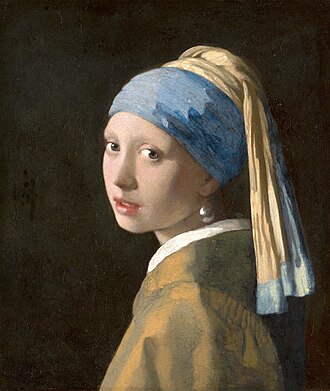 La joven de la perla - Johannes Vermeer (1665)
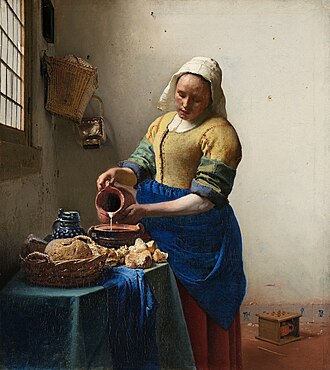 La lechera - Johannes Vermeer (c. 1658)
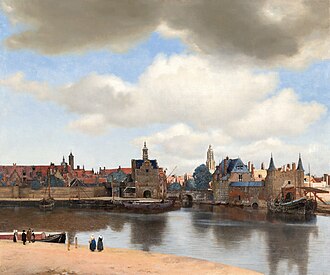 Vista de Delft - Johannes Vermeer (1660s)
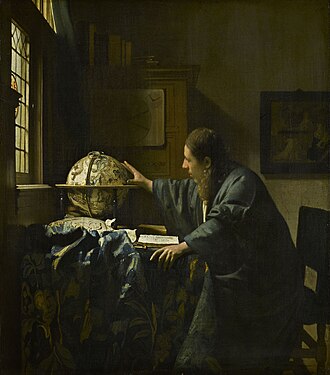 El astrónomo - Johannes Vermeer (1664)
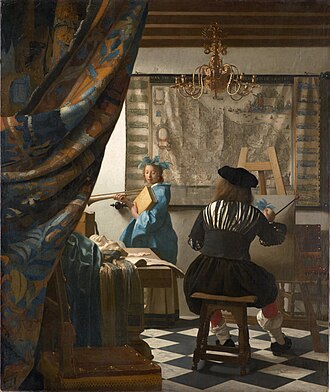 El arte de la pintura - Johannes Vermeer (1660s)
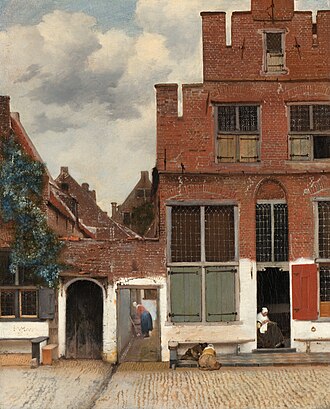 La callejuela - Johannes Vermeer (1658)
.jpg) Muchacha leyendo una carta - Johannes Vermeer (1650s)
Muchacha leyendo una carta - Johannes Vermeer (1650s)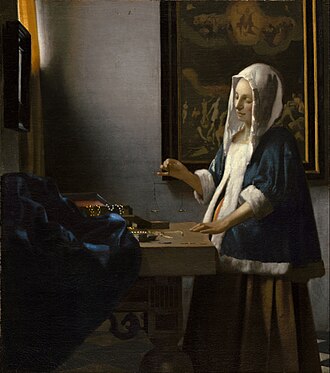 La tasadora de perlas - Johannes Vermeer (1665)
Obras de artistas relacionados
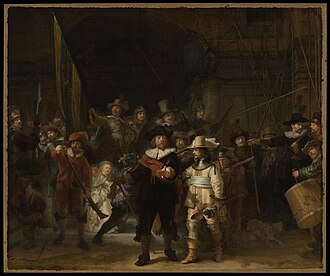 La ronda de noche - Rembrandt van Rijn (1642)
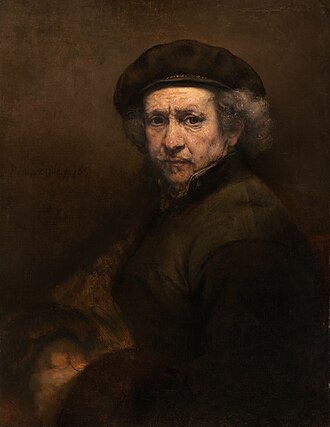 Autorretrato - Rembrandt van Rijn (1659)
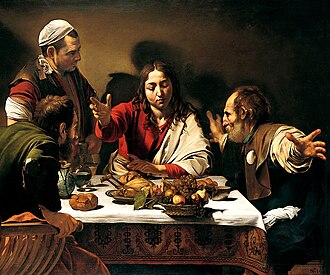 La cena de Emaús - Caravaggio (1601)
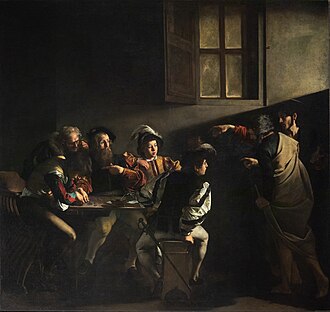 La vocación de San Mateo - Caravaggio (1609)
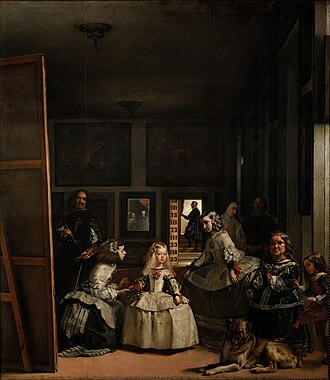 Las meninas - Diego Velázquez (1656)
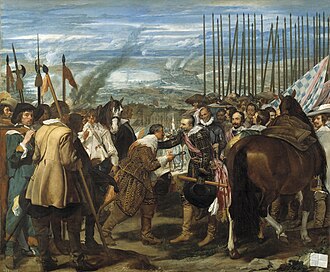 La rendición de Breda - Diego Velázquez (1635)