El carro de heno
Jerónimo Bosch · 1510s
.jpg)
A great wagon of hay rolls across the world, surrounded by people grabbing, quarrelling and sinning, while demons pull it towards Hell. Only one angel looks up to see Christ watching from the sky.
The story behind the painting
The Haywain Triptych is a panel painting by Hieronymus Bosch in the Museo del Prado. Dendrochronological research dates it to around 1516, consistent with Wikidata's 1510s. The central panel, signed Jheronimus Bosch, measures 135 by 200 cm, and the wings 147 by 66 cm. Its history is eventful. It was one of six works acquired by Philip II of Spain in 1570 and sent to El Escorial four years later. Later sold to the Marquis of Salamanca, it was divided into three paintings. In 1848 Isabella II bought the central panel for Aranjuez, the right wing returned to the Escorial, and the left went to the Prado, where the triptych was reunited in 1914. A copy exists at the Escorial.
What to look for
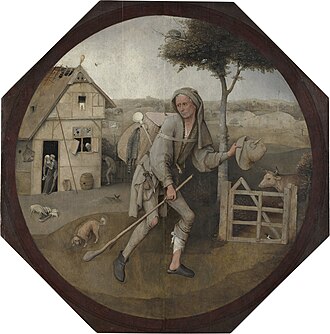
Begin outside. Closed, the shutters show, unusually in full colour rather than grisaille, a wayfarer using a stick to fend off a dog, with small scenes of a robbery, a hanged man and two dancing shepherds around him. Inside, the left panel tells a sequence from top to bottom: rebel angels cast out of Heaven, turning into insects as they fall; God creating Eve from Adam's rib; the serpent offering the apple; and the angel driving Adam and Eve from Eden. In the centre the haywain is surrounded by fools committing sins. Find the angel on top of the wagon praying, and Christ in the sky above. The wagon is dragged by infernal beings into Hell, on the right.
Meaning and intent
The triptych follows a narrative similar to The Garden of Earthly Delights, but its sins range more widely than the lust that dominates the Garden. Christ appears in the sky of the central panel, yet only the praying angel looks up; none of the other figures notice him looking down on the world. The crowd bends to the right, carrying the eye with it on a journey from present-day sin into the torments of Hell. The right side of the procession runs straight on with the wagon, a clear progress towards damnation. On the outside, the wayfarer may represent a person who follows his road despite temptation and the evil around him.
Legacy
Scientists of the Bosch Research and Conservation Project studied the triptych thoroughly and published their findings in a book. They found a rather limited palette, including azurite, lead-tin yellow, vermilion and ochres. The painting's long journey through royal collections, its division into three separate works in the nineteenth century, and its reunion in 1914 are part of its story too. Today in Madrid it can again be read as Bosch intended, from the fall of the angels to Hell, a large moral picture of a world chasing something as fleeting as hay, while heaven watches unnoticed.
¿Sabías que…?
- Dated around 1516 by dendrochronology; Wikidata gives the 1510s.
- The central panel is signed Jheronimus Bosch and measures 135 by 200 cm.
- Acquired by Philip II in 1570, later split in three, and reunited at the Prado in 1914.
- The outer shutters show a wayfarer in full colour instead of grisaille.
Sobre el artista
Jerónimo Bosch (1450-1516)
arte religioso · Museo del Prado
Más obras de Jerónimo Bosch
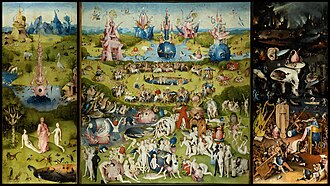 El jardín de las delicias - Hieronymus Bosch
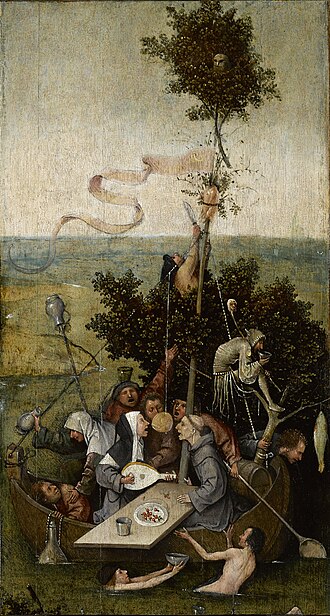 La nave de los locos - Hieronymus Bosch (1500s)
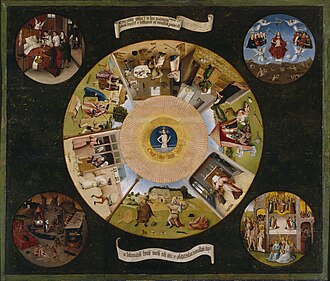 Mesa de los pecados capitales - Hieronymus Bosch (1500)
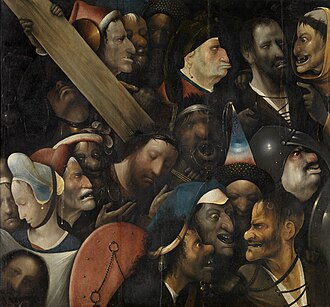 Cristo con la Cruz a cuestas - Hieronymus Bosch (1510s)
 El vendedor ambulante - Hieronymus Bosch (1500)
 La muerte de un avaro - Hieronymus Bosch (1500s)
 Ecce Homo - Hieronymus Bosch (1490s)
.jpg) Extracción de la piedra de la locura - Hieronymus Bosch (1500s)
Extracción de la piedra de la locura - Hieronymus Bosch (1500s)
Obras de artistas relacionados
 La Gioconda - Leonardo da Vinci (1503-1519)
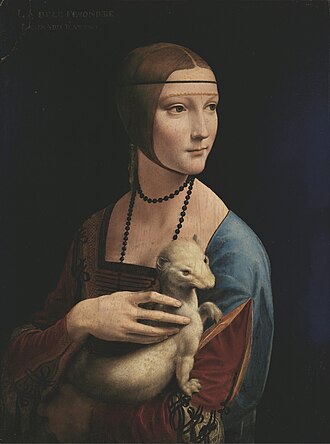 La dama del armiño - Leonardo da Vinci (1490)
.jpg) Venus de Urbino - Titian (1538)
Venus de Urbino - Titian (1538)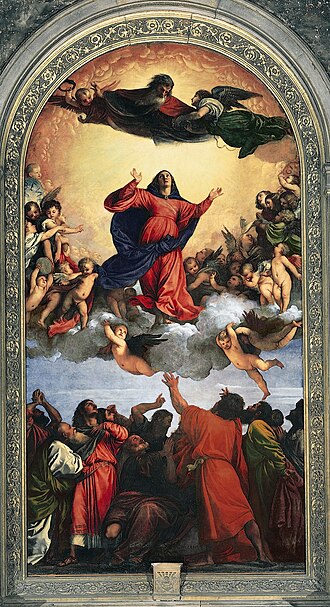 La Asunción de la Virgen - Titian (1510s)
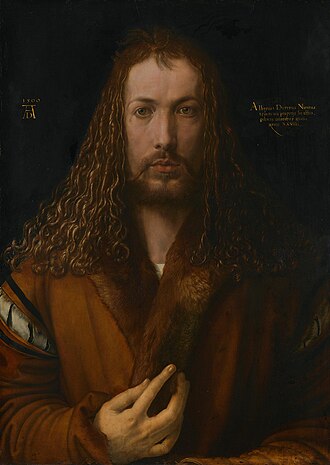 Autorretrato de Durero - Albrecht Dürer (1500)
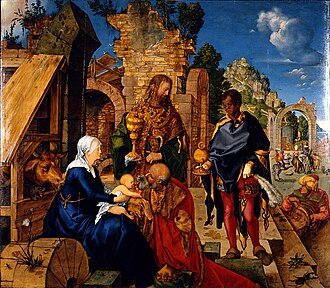 Adoración de los Magos - Albrecht Dürer (1504)
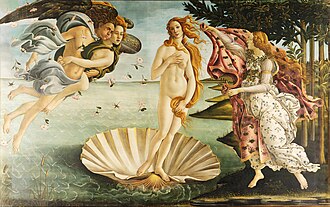 El nacimiento de Venus - Sandro Botticelli (c. 1485)
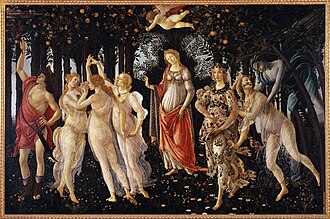 La primavera - Sandro Botticelli (1480s)
%20-%20Google%20Art%20Project.jpg) Cazadores en la nieve - Pieter Bruegel the Elder (1565)
Cazadores en la nieve - Pieter Bruegel the Elder (1565)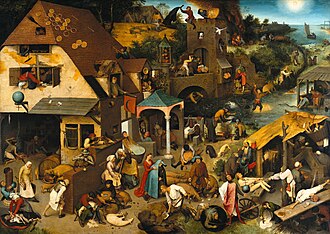 Los proverbios flamencos - Pieter Bruegel the Elder (1551)