The Farewell of Telemachus and Eucharis
Jacques-Louis David · 1818
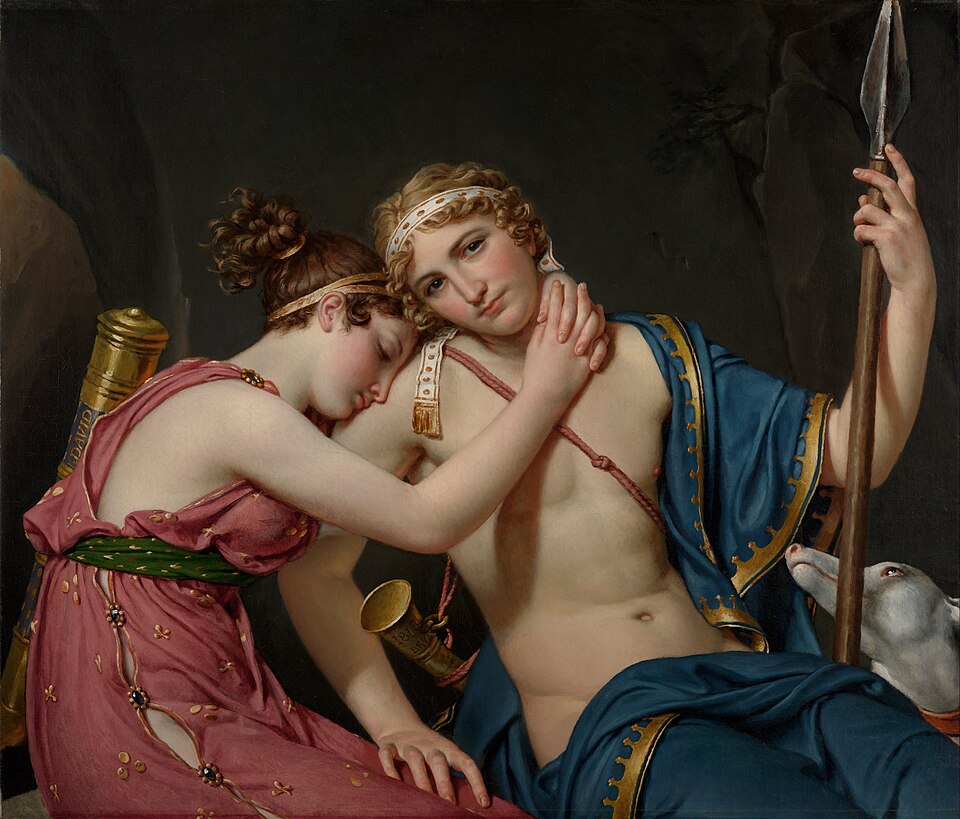
A young hunter and a nymph hold each other one last time before he leaves to find his father. David painted this tender farewell in 1818, in exile in Brussels, and it was never shown in Paris.
The story behind the painting
After the Bourbons returned to the French throne, David went into exile in Brussels in 1816, and there he began this picture. He may have started it on his own initiative, or an unknown patron may have suggested the subject. Between 1817 and early 1818 the Count von Schönborn heard of the project, visited David's new studio and agreed to buy it. A Brussels newspaper, L'Oracle, announced that the painting was destined for a great lord from Bavaria, keeping his name hidden. The couple come from François Fénelon's 1699 novel The Adventures of Telemachus, inspired by Homer's Odyssey. It is David's last painting of a couple from mythology, and a pendant to his Love and Psyche.
What to look for
David cropped the figures closely and left the surroundings almost empty, so the eye stays on the two faces. Both were painted from live models. Eucharis gently touches Telemachus's face, while he looks out with longing and sorrow; a dog at his side gazes up at him and leads our gaze there too. Vivid primary colours stand out against a dark background, and gold details pick out the quiver and the horn that show they are hunters. Eucharis wears hunting dress like Artemis, goddess of the hunt and chastity, while Telemachus is only partly clothed, recalling the nude heroes of classical art.
Meaning and intent
The painting does not illustrate a single episode of the novel. The art historian Mary Vidal sees it as an image of courtly and heartfelt affection and an allegory of life's journey. In Fénelon's story Telemachus must choose between duty and passion; here, Vidal argues, we see the pain of giving up youthful desire, as he makes the heroic choice to go in search of his father. Unlike Love and Psyche, which centres on desire, this picture is about longing and emotional bond, and its classical allusions suggest a genuine connection between the two. Some recent writers call it proto-Romantic for the complexity of its feelings.
Legacy
The picture was first shown at the Société Royale des beaux-arts in Ghent in June 1818; planned for about a week, it stayed until 20 June at the request of the academy president. From 23 June to 12 July it was seen in Brussels in a charity exhibition for hospices. David's student Joseph Denis Odevaere praised its brilliance and subtlety of colour. The German writer Georg Christian Braun found the tight cropping ill-suited to history painting. In 1822 another student, Sophie Frémiet, made a replica under David's guidance, shown in Paris in 1846. The original is now in the J. Paul Getty Museum in Los Angeles.
¿Sabías que…?
- Painted in 1818 during David's exile in Brussels.
- Bought by the Count von Schönborn-Wiesentheid.
- Exhibited in Ghent and Brussels, never in Paris.
- Now in the J. Paul Getty Museum, Los Angeles.
Sobre el artista
Jacques-Louis David (1748-1825)
pintura mitológica · neoclasicismo · Museo J. Paul Getty
Más obras de Jacques-Louis David
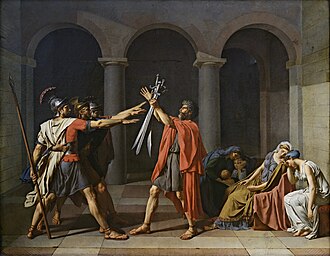 Juramento de los Horacios - Jacques-Louis David (1784)
.jpg) La intervención de las sabinas - Jacques-Louis David (1799)
La intervención de las sabinas - Jacques-Louis David (1799)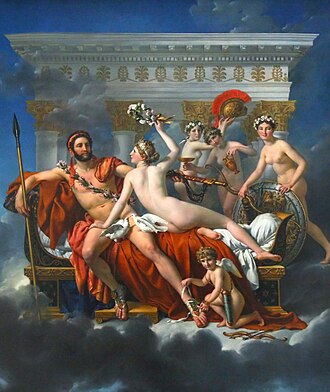 Marte desarmado por Venus y las Gracias - Jacques-Louis David (1824)
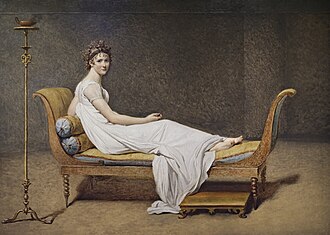 Madame Récamier - Jacques-Louis David (1800)
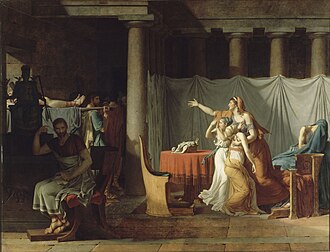 Los lictores llevan a Bruto los cuerpos de sus hijos - Jacques-Louis David (1789)
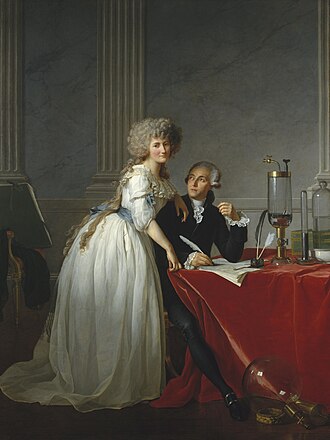 Retrato de Antoine-Laurent Lavoisier y su esposa - Jacques-Louis David (1788)
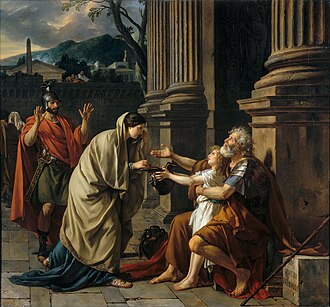 Belisario - Jacques-Louis David (1781)
Cupido y Psique - Jacques-Louis David (1817)
Obras de artistas relacionados
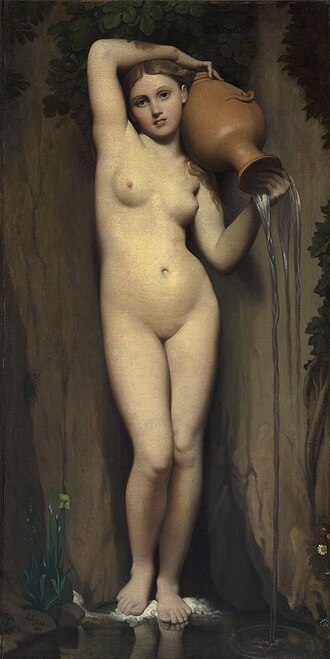 La fuente - Jean-Auguste-Dominique Ingres (1856)
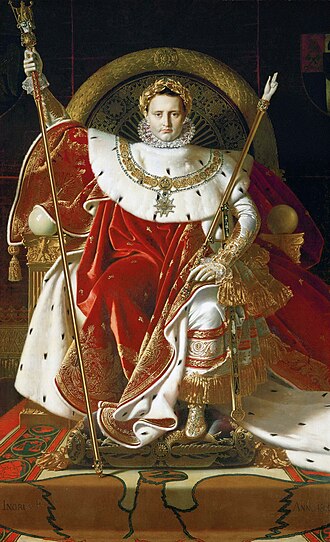 Napoleón en su trono imperial - Jean-Auguste-Dominique Ingres (1806)
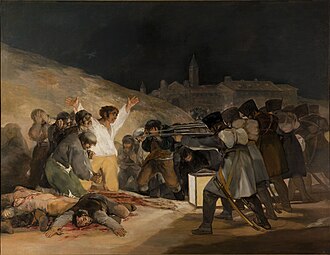 El tres de mayo de 1808 - Francisco Goya (1814)
.jpg) La Maja desnuda - Francisco Goya (1800)
La Maja desnuda - Francisco Goya (1800)