Madame Récamier
Jacques-Louis David · 1800
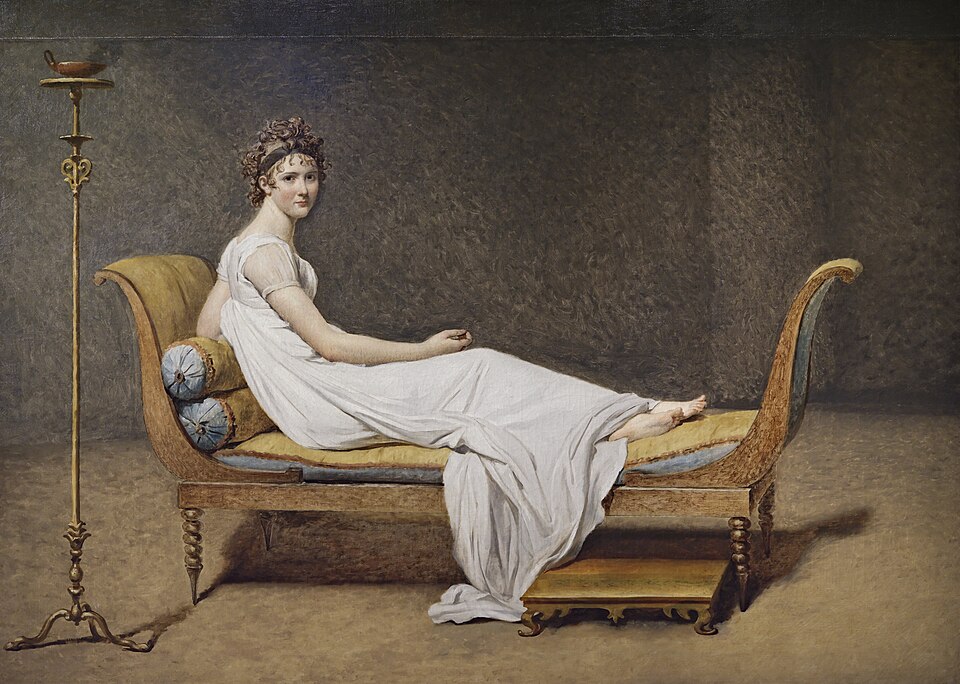
A young woman in white reclines on a sofa in an almost empty room, glancing back over her shoulder. Only her face was ever finished. A quarrel stopped David's brush, yet the unfinished canvas gave its name to a piece of furniture.
The story behind the painting
Juliette Récamier was a Parisian salon hostess, the wife of a banker, and counted among the most beautiful women of her time. David began her portrait in May 1800. Surviving letters show her promising to be at his service for the sittings, yet she was consistently late, and a quarrel broke out between painter and model. David may have abandoned the work when he learned that Récamier, grown impatient, had asked his student François Gérard to paint her instead. Gérard's portrait was completed in 1805. David's canvas stayed unfinished, much to the sitter's dismay, and was never retouched.
What to look for
Look at the distance David builds between us and her. The room is nearly bare, with Pompeian-style classical furniture and a tall bronze candelabrum whose oil lamp has just gone out, its smoke drifting into darkness. Light from above falls on her spotless white dress. The colours are muted browns, greens and greys. She reclines on a méridienne, the curve of her legs, back and arm drawing a line of grace. Her hair is cut short in the Titus style and her arms are almost bare. Only the head is complete, every lock arranged, cheeks touched with rouge; elsewhere the brushwork is loose and the priming shows through. The horizontal format was innovative at a time when portraits were mostly vertical.
Meaning and intent
David hoped to capture not only her looks but ideals of femininity and charm, in the height of Neoclassical fashion. He, like most people at the time, considered portraiture a lesser genre, yet his portraits were widely celebrated. Here the unfinished state becomes part of the effect: a cool, distant figure in a sparse space, separate from the viewer. Gérard's later portrait, by contrast, shows Récamier looking straight at us with a sweet smile, a softer and more coquettish image than David's reserved one.
Legacy
The Louvre acquired the painting in 1826, more than twenty years after it was begun, and it was warmly welcomed. The critic D. S. MacColl believed portraits like this would secure David's fame long after his grand history paintings faded. The backless couch with a high curved headrest is now called a récamier. Ingres borrowed the pose of a reclining figure looking back over her shoulder for his Grande Odalisque in 1814. Meredith Frampton echoed it in a 1928 portrait, and René Magritte parodied it by replacing the sitter with a coffin.
¿Sabías que…?
- Begun in May 1800 and never finished.
- Only the sitter's head is fully painted.
- Acquired by the Louvre in 1826.
- The sofa type is now called a récamier.
Sobre el artista
Jacques-Louis David (1748-1825)
retrato · Departamento de Pinturas del Museo del Louvre · neoclasicismo · vestido · 1795-1820 in Western fashion · cojín · reposapiés
Más obras de Jacques-Louis David
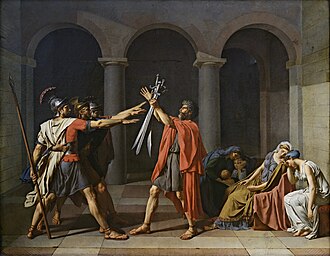 Juramento de los Horacios - Jacques-Louis David (1784)
.jpg) La intervención de las sabinas - Jacques-Louis David (1799)
La intervención de las sabinas - Jacques-Louis David (1799)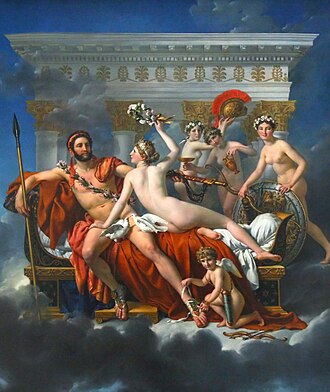 Marte desarmado por Venus y las Gracias - Jacques-Louis David (1824)
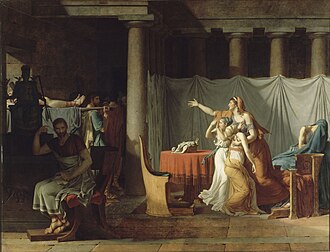 Los lictores llevan a Bruto los cuerpos de sus hijos - Jacques-Louis David (1789)
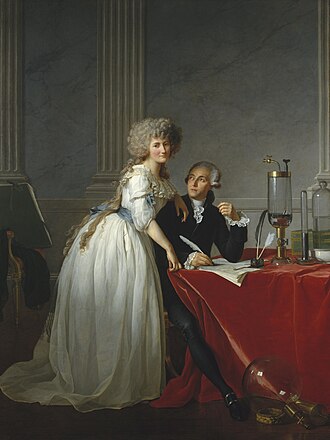 Retrato de Antoine-Laurent Lavoisier y su esposa - Jacques-Louis David (1788)
 Belisario - Jacques-Louis David (1781)
Cupido y Psique - Jacques-Louis David (1817)
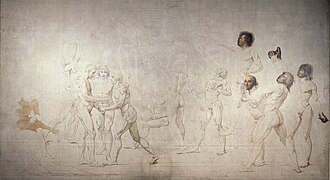 Juramento del Juego de Pelota - Jacques-Louis David (1791)
Obras de artistas relacionados
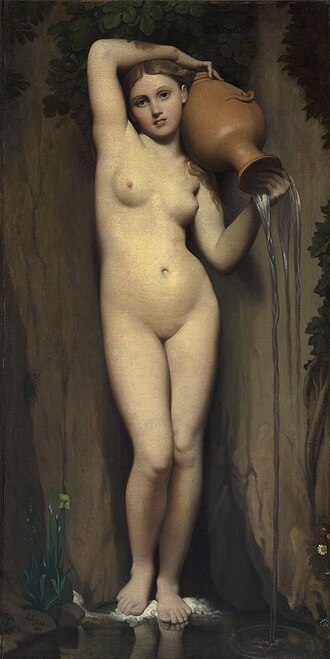 La fuente - Jean-Auguste-Dominique Ingres (1856)
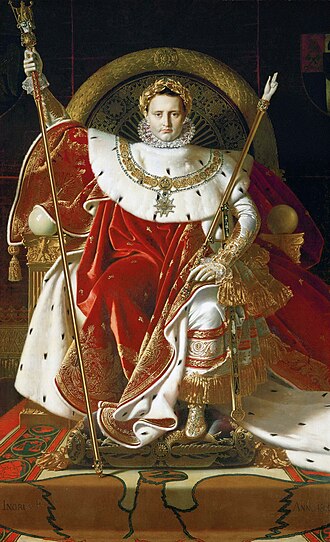 Napoleón en su trono imperial - Jean-Auguste-Dominique Ingres (1806)
 El tres de mayo de 1808 - Francisco Goya (1814)
.jpg) La Maja desnuda - Francisco Goya (1800)
La Maja desnuda - Francisco Goya (1800)