La coronación de Napoleón
Jacques-Louis David · 1807
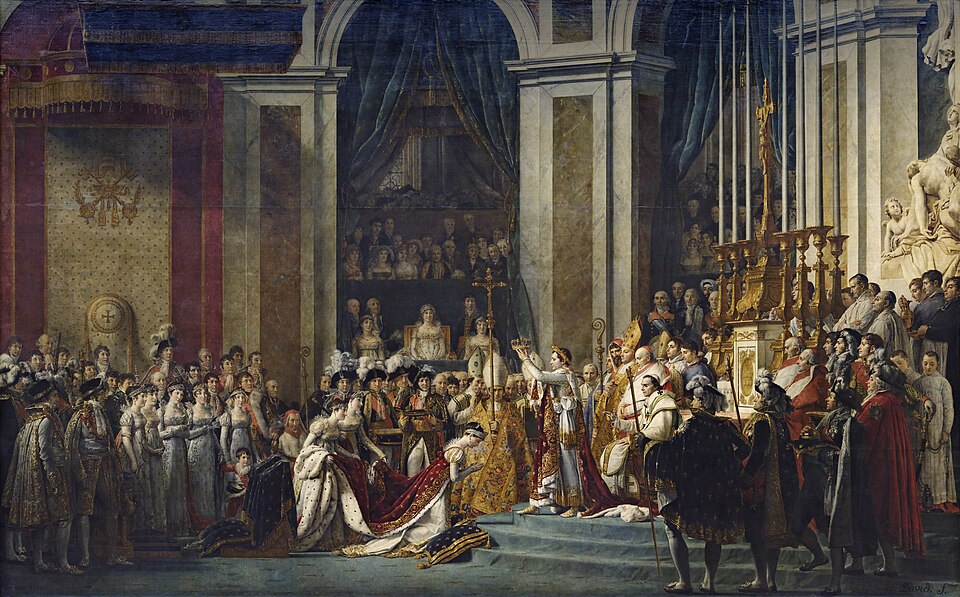
Almost ten metres wide, David's canvas fills Notre-Dame with gold, velvet and watching faces. Look closely and you can still see where Napoleon once held the crown over his own head.
The story behind the painting
Napoleon commissioned the painting orally in September 1804. Jacques-Louis David, his official painter, began on 21 December 1805 in the former chapel of the College of Cluny near the Sorbonne, used as a workshop, and with his student Georges Rouget added the finishing touches in January 1808. Wikipedia and Wikidata give 1807 as the completion date. The work was shown at the Salon of 1808 at the Louvre, from 7 February to 22 March. When Napoleon saw the finished canvas in David's workshop in 1808, he was enthralled and expressed his gratitude.
What to look for
The canvas measures about 621 by 979 cm. A vertical axis runs through the cross, and a diagonal from the pope to the empress. All eyes turn toward Napoleon, standing in robes like those of Roman emperors. Josephine kneels to receive her crown from her husband, not from the pope. Pius VII raises his hand in blessing. In the stands sits Napoleon's mother, Maria Letizia, though she did not actually attend. David painted himself there too. Under the surface, the outline of Napoleon crowning himself is still visible.
Meaning and intent
The composition follows the rules of neoclassicism and places Napoleon at the centre of everything. Napoleon closely supervised the final design, and Pius VII was adjusted to show a gesture of blessing, stressing his purely ceremonial role. Napoleon had invited the pope to reinforce the legitimacy of his regime after the Concordat of 1801. Josephine's silk robe may have been meant to support the Lyon silk makers harmed by the Revolution. Placing Maria Letizia in a place more important than the pope, at her request, shows how far the image was shaped as much as recorded.
Legacy
The painting stayed with David until 1819, went to the Royal Museums, sat in storage until 1837, then hung at Versailles on the orders of Louis-Philippe, and moved to the Louvre in 1889. In 1808 American entrepreneurs commissioned a full size replica, which David painted from memory and finished only in 1822 in exile in Brussels. It returned to France in 1947 and now hangs at Versailles, its only change a pink dress for one of Napoleon's sisters. Louis-Leopold Boilly painted the public viewing it in 1810, and Ridley Scott's 2023 film Napoleon recreated the scene.
¿Sabías que…?
- Commissioned orally by Napoleon in September 1804.
- About 6 metres high and almost 10 metres wide.
- Napoleon's mother is shown, though she did not attend.
- A replica painted from memory hangs at Versailles.
Sobre el artista
Jacques-Louis David (1748-1825)
Departamento de Pinturas del Museo del Louvre · pintura de historia · Napoleón Bonaparte
Más obras de Jacques-Louis David
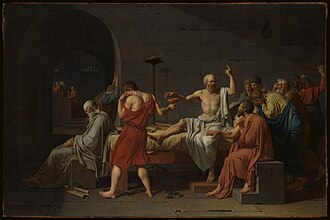 La muerte de Sócrates - Jacques-Louis David (1787)
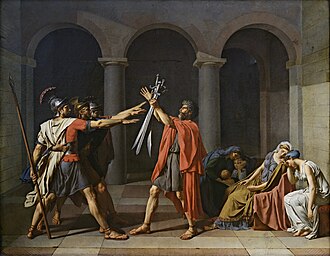 Juramento de los Horacios - Jacques-Louis David (1784)
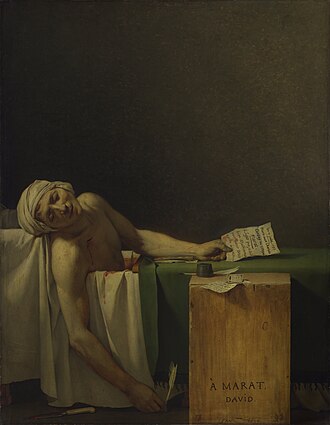 La muerte de Marat - Jacques-Louis David (1793)
.jpg) La intervención de las sabinas - Jacques-Louis David (1799)
La intervención de las sabinas - Jacques-Louis David (1799)%20-%20National%20Gallery%20of%20Art%20(Samuel%20H.%20Kress%20Foundation).jpg) Retrato de Napoleón en su gabinete de trabajo - Jacques-Louis David (1812)
Retrato de Napoleón en su gabinete de trabajo - Jacques-Louis David (1812)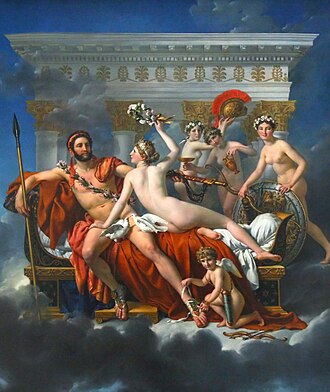 Marte desarmado por Venus y las Gracias - Jacques-Louis David (1824)
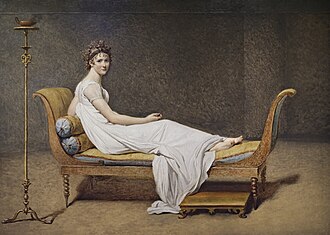 Madame Récamier - Jacques-Louis David (1800)
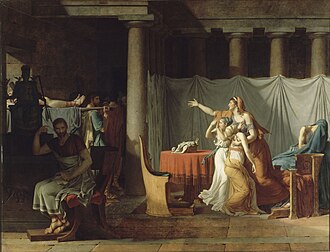 Los lictores llevan a Bruto los cuerpos de sus hijos - Jacques-Louis David (1789)
Obras de artistas relacionados
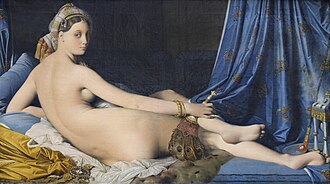 La gran odalisca - Jean-Auguste-Dominique Ingres (1814)
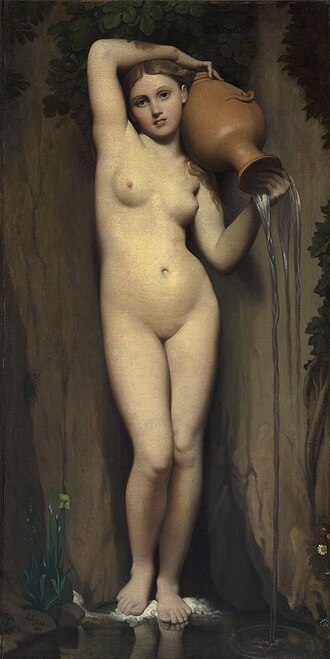 La fuente - Jean-Auguste-Dominique Ingres (1856)
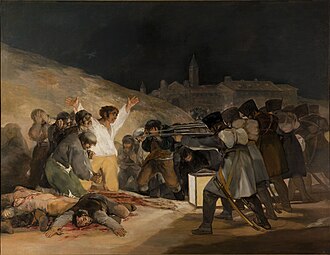 El tres de mayo de 1808 - Francisco Goya (1814)
.jpg) La Maja desnuda - Francisco Goya (1800)
La Maja desnuda - Francisco Goya (1800)