The Descent from the Cross
Rembrandt van Rijn · 1634
.jpg)
At night, by torch and candlelight, Christ's twisted body is carried down from the cross while his mother faints into the arms of others. Rembrandt staged the old scene as a crowd of private griefs, each face lit differently.
The story behind the painting
Rembrandt painted this Descent from the Cross in 1634, oil on canvas, and it now belongs to the Hermitage Museum in Saint Petersburg. Like many artists before and after him, he portrayed the scene many times. He grew up in a religiously divided family: his mother was Roman Catholic and his father belonged to the Dutch Reformed Church, though there is no evidence that Rembrandt himself belonged to any church. In his youth the Netherlands went through the third wave of the Protestant Reformation and a Jesuit campaign to revive Catholic faith, and this scene belonged to the beliefs of both sides.
What to look for
The scene is crowded, yet every face has its own expression. The women weep openly, while the men show a tense, silent grief. Mary has fainted and is held up by bystanders. Christ is painted realistically, his body slumped and twisted in an unsettling way, with the marks of the crown of thorns and the wounds in his hands and feet. His body is very rounded, which has raised the question of whether Rembrandt was influenced by Rubens. The brightest light falls on Christ, the darkest areas are the inky background, and torches and candles of different strengths light the night.
Meaning and intent
The light sorts the crowd into three groups: Christ and the men carrying him, women laying out what seems to be a burial cloth, and Mary with those supporting her. The source reads this as a way of giving order to the scene, showing what has happened, what will happen next and the effect it has on the people present. Death, preparation and grief appear side by side. The play between brightly lit faces and the dark makes the event feel close and intimate rather than ceremonial, a private night of mourning instead of a public spectacle.
Legacy
In the Second World War, facing the possibility of a siege of Leningrad, the Hermitage evacuated its treasures, including this painting. Canvases were taken out of their frames and packed into crates, while works too large or fragile to pack were moved to reinforced vaults and cellars. After the siege the museum was repaired, restocked with its masterpieces and reopened in 1945. The source calls the painting intriguing for its unusual figural composition and its variety of lighting effects, and links its subject to Rembrandt's family situation as well as to its endangered history.
¿Sabías que…?
- Painted by Rembrandt in 1634, oil on canvas.
- The scene is set at night, lit by torches and candles.
- Mary is shown fainting from grief.
- Evacuated from the Hermitage during the Second World War.
Sobre el artista
Rembrandt van Rijn (1606-1669)
arte religioso · Jesús de Nazaret · Museo del Hermitage · descendimiento de la Cruz
Más obras de Rembrandt van Rijn
 La ronda de noche - Rembrandt van Rijn (1642)
 Autorretrato - Rembrandt van Rijn (1659)
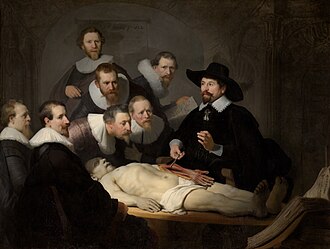 Lección de anatomía del Dr. Nicolaes Tulp - Rembrandt van Rijn (1632)
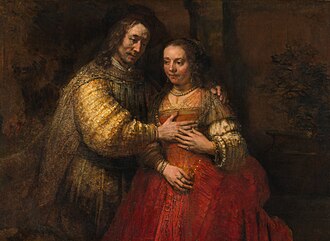 La novia judía - Rembrandt van Rijn (1660s)
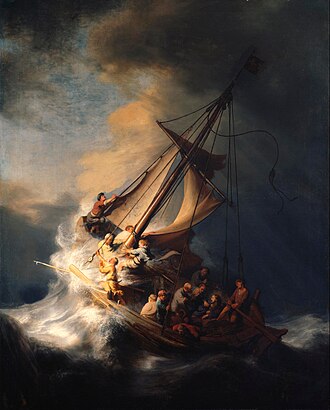 La tormenta en el mar de Galilea - Rembrandt van Rijn (1633)
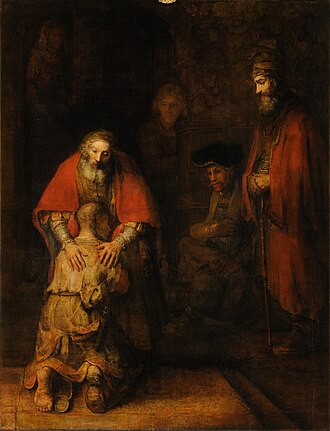 El retorno del hijo pródigo - Rembrandt van Rijn (1668)
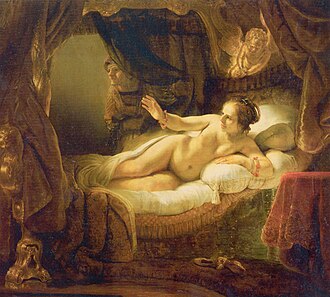 Dánae - Rembrandt van Rijn (1636)
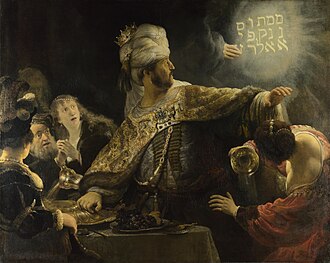 Banquete de Belsasar - Rembrandt van Rijn (1636)
Obras de artistas relacionados
 La joven de la perla - Johannes Vermeer (1665)
 La lechera - Johannes Vermeer (c. 1658)