La muerte de Séneca
Jacques-Louis David · 1773
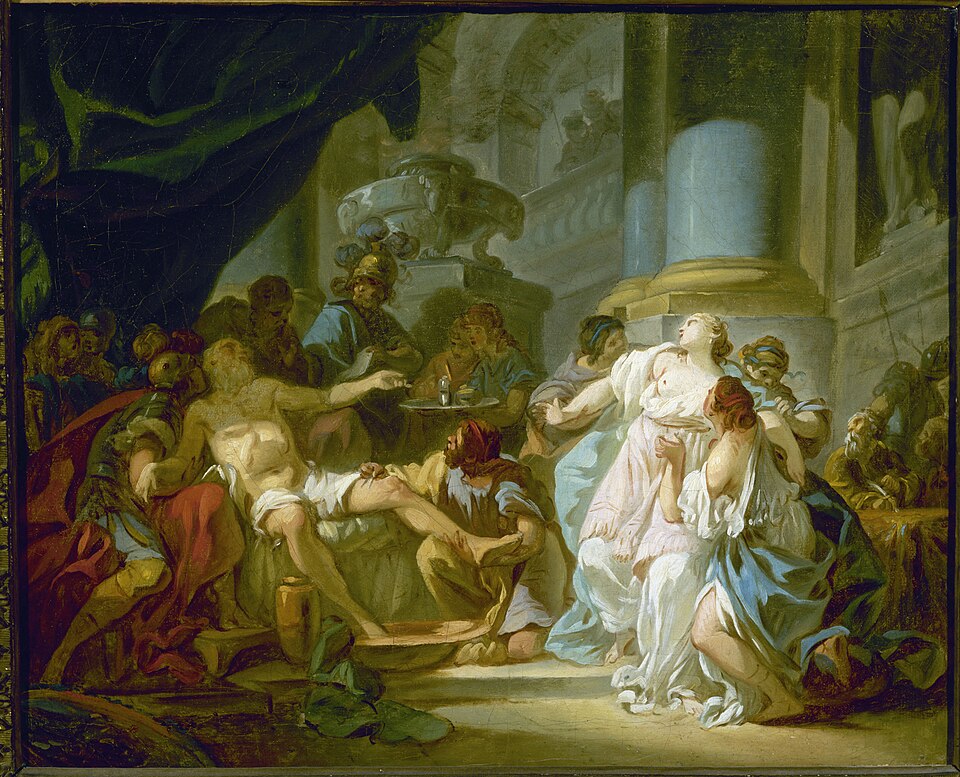
A philosopher bleeds calmly while his wife is carried away and a disciple writes down his last words. Young David poured drama and colour into this scene, and lost the Prix de Rome again.
The story behind the painting
In 1773 the Academy set the subject for the Prix de Rome: the death of Seneca as told by Tacitus. It was David's third attempt at the prize. The jury gave it instead to Pierre Peyron, whose version had fewer details, a darker palette and a look closer to antiquity. David won the prize the following year. For David, the loss was one more step on a long road to Rome.
What to look for
Seneca, the Roman Stoic, accepts the unjust sentence of the emperor Nero. His veins are cut, and to hasten death he asks for his ankles to be cut too while his friend and doctor Statius Annaeus gives him hemlock. On the right his wife Paulina, who tried to die with him, is taken away; Nero ordered her saved once she was already unconscious. A centurion sent by Nero watches, and a disciple records the last words. The canvas is small, about 43 by 53 cm.
Meaning and intent
The gesturing figures recall Boucher, and the lavish Rococo composition sits uneasily with the austere subject. In Tacitus, Seneca leaves his friends the example of his life as his best legacy. Peyron's stricter classicism, which beat David here, also partly inspired David's next work, Erasistratus Discovering the Cause of Antiochus' Disease, in 1774. David's version is crowded and theatrical where the subject asked for restraint. The jury, judging a Stoic subject, preferred restraint.
Legacy
This was David's third and penultimate Prix de Rome submission, a record of a painter not yet himself. The painting now hangs in the Petit Palais, the Musée des Beaux-Arts de la Ville de Paris, as part of the Dutuit collection. Set beside his later severe history paintings, it shows how far his style would travel after this defeat, from Rococo movement and colour toward the stricter classicism of rivals like Peyron.
¿Sabías que…?
- Painted in 1773 for the Prix de Rome.
- David's third attempt; Peyron won.
- Subject from Tacitus's Annals.
- In the Petit Palais, Paris.
Sobre el artista
Jacques-Louis David (1748-1825)
pintura de historia · neoclasicismo · Musée des Beaux-Arts de la ville de Paris
Más obras de Jacques-Louis David
 La muerte de Sócrates - Jacques-Louis David (1787)
 Juramento de los Horacios - Jacques-Louis David (1784)
 La muerte de Marat - Jacques-Louis David (1793)
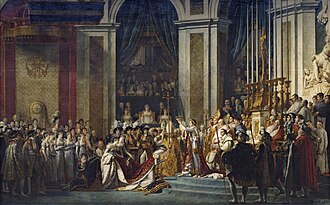 La coronación de Napoleón - Jacques-Louis David (1807)
.jpg) La intervención de las sabinas - Jacques-Louis David (1799)
La intervención de las sabinas - Jacques-Louis David (1799)%20-%20National%20Gallery%20of%20Art%20(Samuel%20H.%20Kress%20Foundation).jpg) Retrato de Napoleón en su gabinete de trabajo - Jacques-Louis David (1812)
Retrato de Napoleón en su gabinete de trabajo - Jacques-Louis David (1812)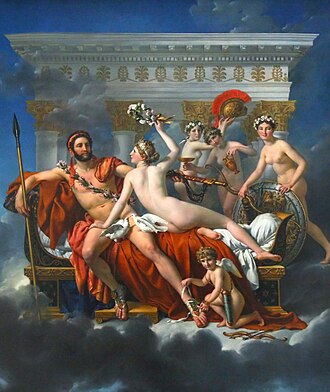 Marte desarmado por Venus y las Gracias - Jacques-Louis David (1824)
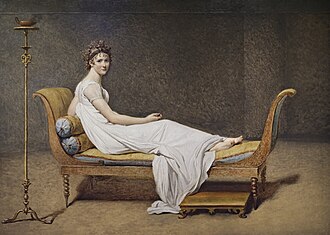 Madame Récamier - Jacques-Louis David (1800)
Obras de artistas relacionados
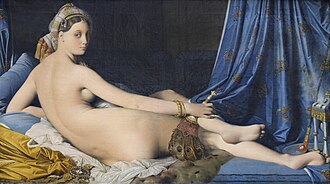 La gran odalisca - Jean-Auguste-Dominique Ingres (1814)
 La fuente - Jean-Auguste-Dominique Ingres (1856)
 El tres de mayo de 1808 - Francisco Goya (1814)
.jpg) La Maja desnuda - Francisco Goya (1800)
La Maja desnuda - Francisco Goya (1800)