El payaso
Pierre-Auguste Renoir · 1868
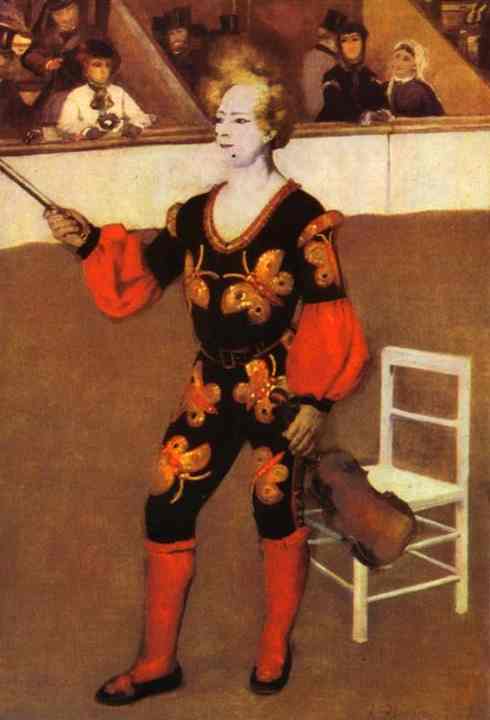
A circus clown stands tall with a violin and bow in hand, nearly two metres of canvas. Renoir painted him for a Paris café wall in 1868, but the owner went bankrupt, and the painting stayed with the artist.
The story behind the painting
In 1868 the owner of a café on the boulevard des Filles-du-Calvaire in Paris commissioned Renoir to paint a decoration for the wall. Renoir took his inspiration from the nearby Cirque d'hiver, the Winter Circus, opened in 1852 by Napoleon III. He was promised payment for the work, but the owner declared bankruptcy, so the canvas remained in Renoir's possession. The man portrayed in the painting is identified as John Price.
What to look for
The canvas is large, about 194 by 130 cm, and the clown holding a violin and a bow is painted with real strength. Other parts are weaker, such as the carelessly painted spectators in the background. The French titles name him a clown at the circus and a musical clown. The performer stands in a pose against an unfinished background, and the whole picture was meant to be seen on the wall of a busy café.
Meaning and intent
Renoir's treatment here recalls the large portraits of Édouard Manet, such as his 1862 painting of Victorine Meurent in a bullfighter's costume, which also shows a performer in a somewhat similar pose against an incomplete background. The source does not say more about Renoir's aims, but the choice of a real circus artist from the neighbourhood links the painting to the shows that were playing just down the street from the café it was made for.
Legacy
In November 1905 the dealer Ambroise Vollard sold the painting to Alexandre Berthier, fourth Prince of Wagram, in Paris, then took it back because payment was not made. It passed to Karl Sternheim in Munich and was owned until 1919 by Thea Sternheim at La Hulpe in Belgium. On 11 February 1919 it went to Helene Kröller-Müller in The Hague. It is one of the few works by Renoir in a Dutch collection, the Kröller-Müller Museum.
¿Sabías que…?
- Commissioned in 1868 for a café wall in Paris.
- Stayed with Renoir after the café owner went bankrupt.
- The model is identified as John Price.
- In the Kröller-Müller Museum since Helene Kröller-Müller bought it in 1919.
Sobre el artista
Pierre-Auguste Renoir (1841-1919)
silla · Museo Kröller-Müller · circo · violín
Más obras de Pierre-Auguste Renoir
 Baile en el Moulin de la Galette - Pierre-Auguste Renoir (1876)
 El almuerzo de los remeros - Pierre-Auguste Renoir (1881)
 El columpio - Pierre-Auguste Renoir (1876)
 Las grandes bañistas - Pierre-Auguste Renoir (1884)
 Muchachas al piano - Pierre-Auguste Renoir (1892)
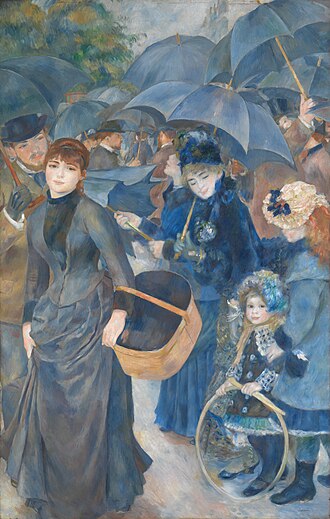 Los paraguas - Pierre-Auguste Renoir (1880s)
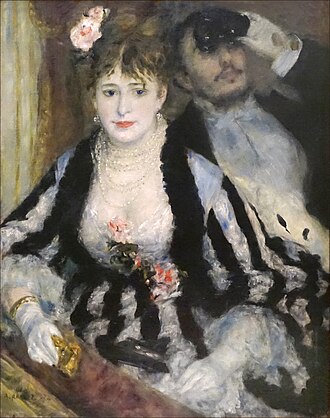 El palco - Pierre-Auguste Renoir (1874)
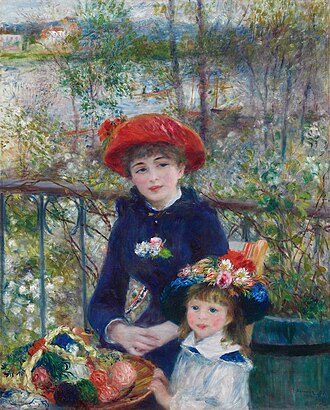 En la terraza - Pierre-Auguste Renoir (1881)
Obras de artistas relacionados
 Impresión, sol naciente - Claude Monet (1872)
 Nenúfares - Claude Monet (1906)
 Almuerzo sobre la hierba - Édouard Manet (1863)
 Olympia - Édouard Manet (1863)
 La cuna - Berthe Morisot (1872)
 Summer's Day - Berthe Morisot (1879)
 El ajenjo - Edgar Degas (1875)
 Die Bellelli Familie - Edgar Degas (1858)
 El canal del Loing - Alfred Sisley (1892)
 The Watering Pond at Marly with Hoarfrost - Alfred Sisley (1876)
 Calle de Paris, dia de lluvia - Gustave Caillebotte (1877)
 Los acuchilladores de parqué - Gustave Caillebotte (1875)