Autorretrato
Rembrandt van Rijn · 1652
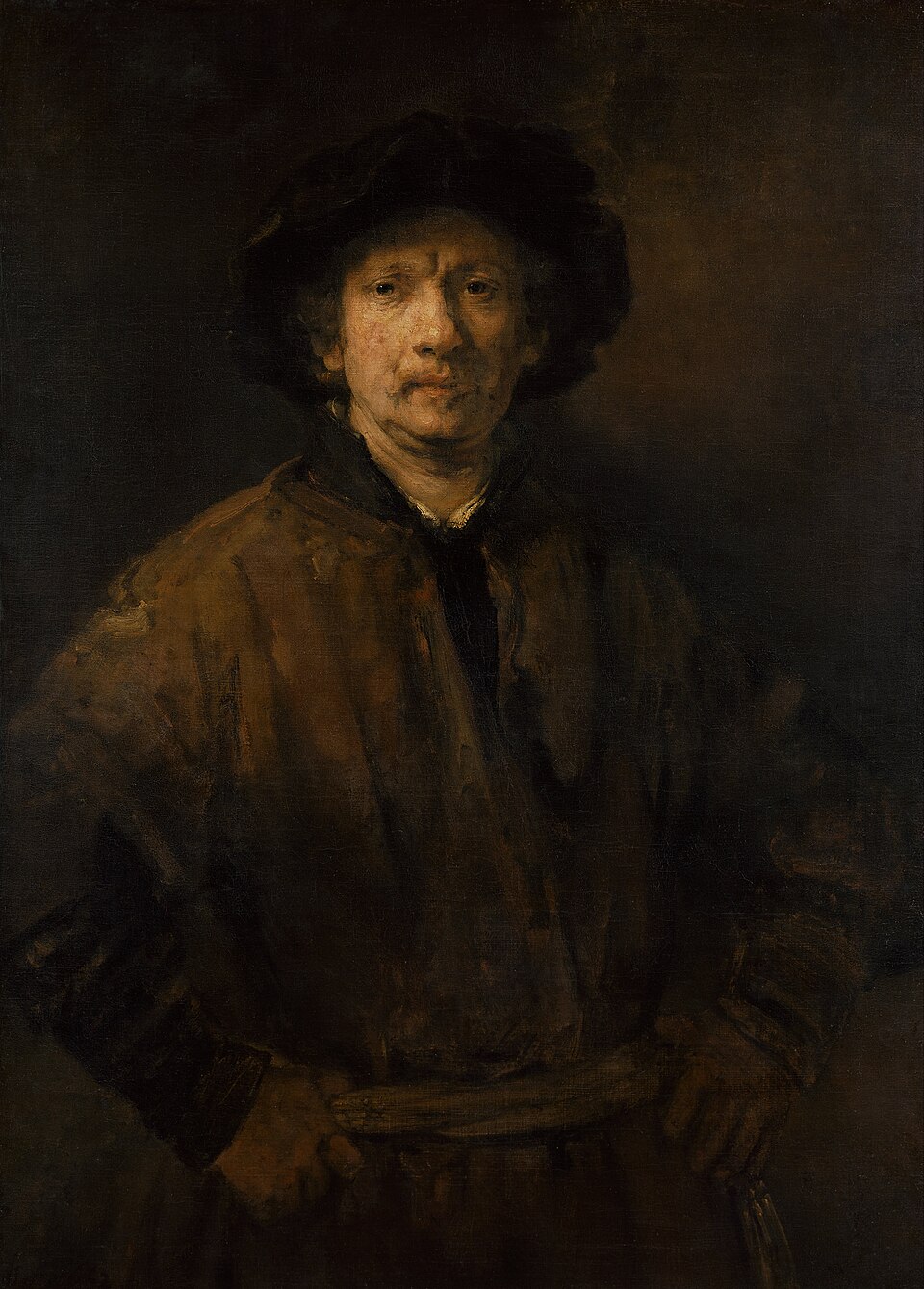
After seven years without a single self-portrait, Rembrandt planted his hands on his hips and faced us head on, in plain working clothes. It was 1652, the year his money troubles began.
The story behind the painting
Known as the Large Self-Portrait, this canvas of 1652 is one of Rembrandt's more than forty painted self-portraits, and the first he had made since 1645. During those seven years he turned instead to landscapes and intimate domestic subjects. It was painted in the year his financial difficulties began. The picture opened a prolific stretch in which he painted on average one self-portrait a year until his death in 1669. It hangs in the Kunsthistorisches Museum in Vienna, and the art historian Christopher White called it one of the most magisterial and sombre of the late pictures.
What to look for
The composition is new for him: a direct frontal pose, hands on hips, an air of self-confidence. Gone is the sumptuous finery of earlier self-portraits. He wears a freely painted brown robe, probably casual working attire, tied with a sash over a black doublet with an upturned collar, and a black beret derived from sixteenth-century artists' portraits. A drawing from around 1650 shows him in much the same pose and clothes, inscribed by another hand as his studio dress. In the shadows of the eye sockets and under the moustache, a separate grey underlayer of paint shows through.
Meaning and intent
Many see the late self-portraits as a deepening personal interest in self-depiction. Ernst van de Wetering proposed another view: that they were painted for connoisseurs who collected self-portraits of prominent artists. Either way, this painting presents the artist not as a gentleman in finery but as a working painter standing his ground. The local underlayer used here, an imprimatura prepared for specific areas, was also practised by Vermeer, though its purpose is not fully understood, and it adds to the sombre depth of the face.
Legacy
The Vienna museum also holds a smaller self-portrait of around 1655 that shares the frontal angle, lighting and informal clothes, though the face looks older. A portrait of Rembrandt's son Titus, by another artist working in his style, repeats the pose and placement of the figure in this picture, a sign of how strongly the image impressed those around him. The Large Self-Portrait began the long final series of self-examinations that many now treat as one of the great achievements of Rembrandt's late career.
¿Sabías que…?
- Painted in 1652, his first self-portrait since 1645.
- Shows Rembrandt frontally, hands on hips, in working clothes.
- Began a stretch of roughly one self-portrait a year.
- Held in the Kunsthistorisches Museum, Vienna.
Sobre el artista
Rembrandt van Rijn (1606-1669)
varón · pintura del Siglo de oro neerlandés · autorretrato · Museo de Historia del Arte de Viena · de pie · Rembrandt
Más obras de Rembrandt van Rijn
 La ronda de noche - Rembrandt van Rijn (1642)
 Autorretrato - Rembrandt van Rijn (1659)
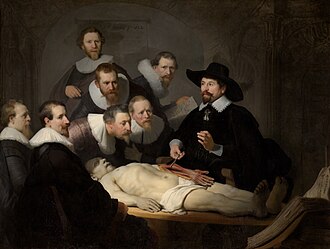 Lección de anatomía del Dr. Nicolaes Tulp - Rembrandt van Rijn (1632)
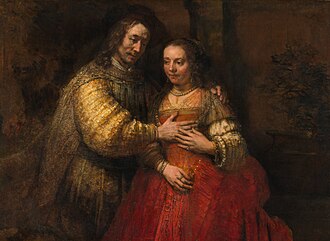 La novia judía - Rembrandt van Rijn (1660s)
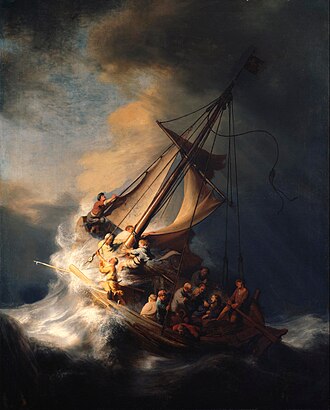 La tormenta en el mar de Galilea - Rembrandt van Rijn (1633)
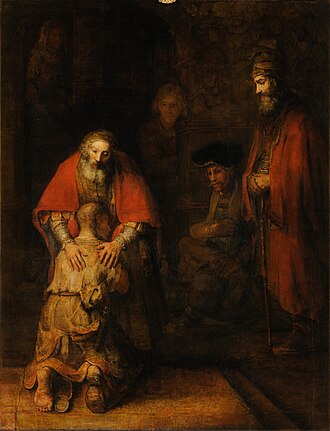 El retorno del hijo pródigo - Rembrandt van Rijn (1668)
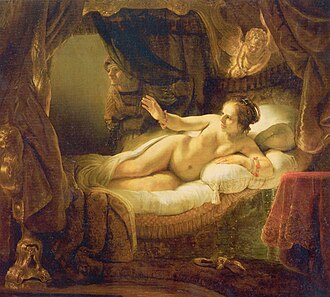 Dánae - Rembrandt van Rijn (1636)
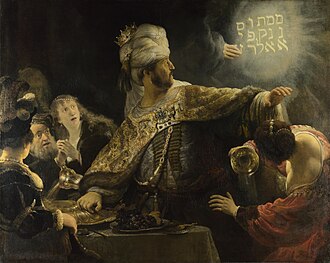 Banquete de Belsasar - Rembrandt van Rijn (1636)
Obras de artistas relacionados
 La joven de la perla - Johannes Vermeer (1665)
 La lechera - Johannes Vermeer (c. 1658)
 La fiesta de San Nicolás - Jan Steen (1660s)
 Joven comiendo ostras - Jan Steen (1658)
 El alegre bebedor - Frans Hals (1620s)
 Caballero sonriente - Frans Hals (1624)
 El molino de Wijk bij Duurstede - Jacob van Ruisdael (1670)
 El cementerio judío - Jacob van Ruisdael (1650s)
 Patio de una casa de Delft - Pieter de Hooch (1658)
 Mujer pelando manzanas - Pieter de Hooch (1663)