Autorretrato
Jacques-Louis David · 1794
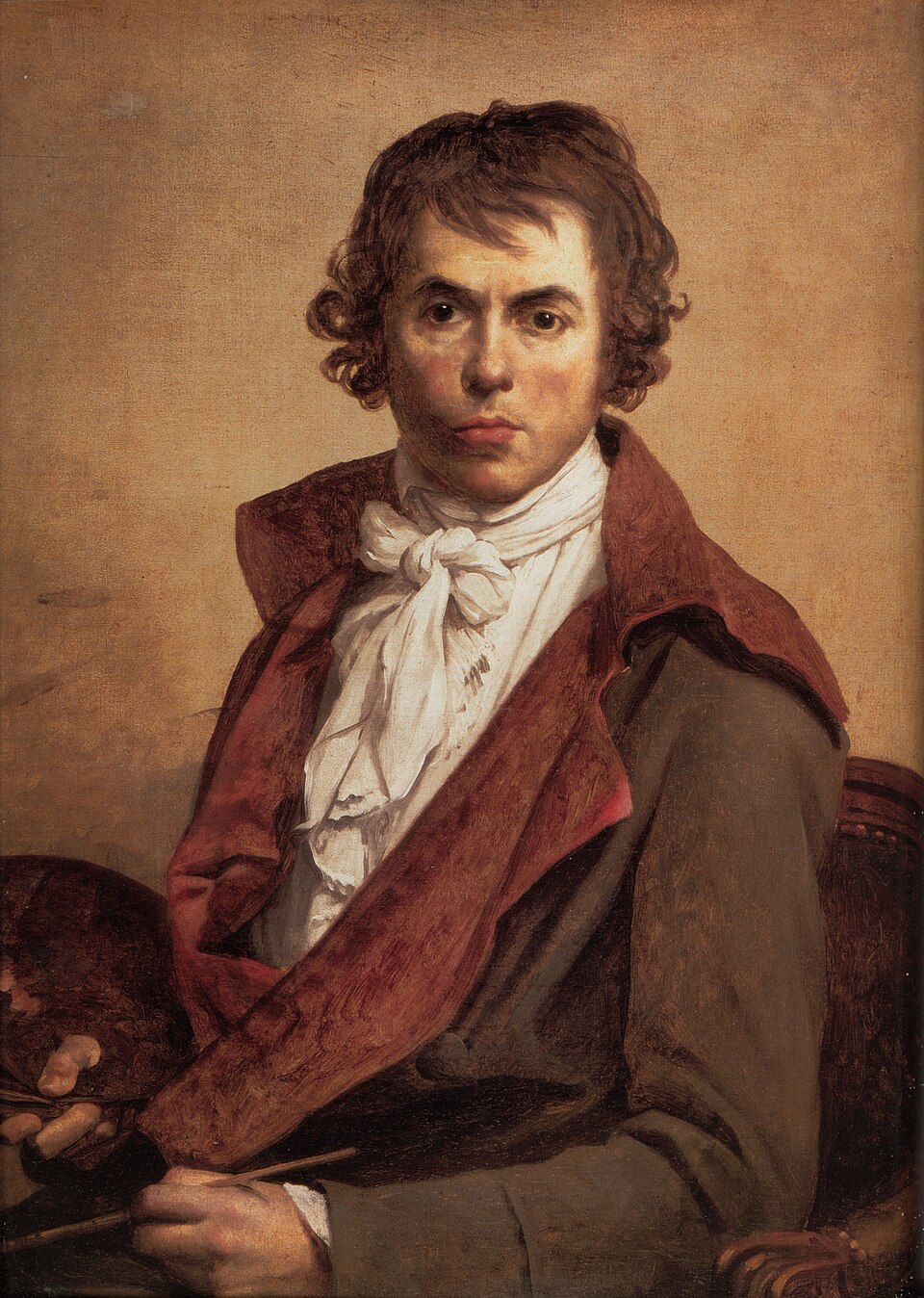
In 1794, after his friend Robespierre went to the guillotine, Jacques-Louis David sat in a prison cell with a mirror and painted himself holding a brush. It was his third and last self-portrait.
The story behind the painting
David was an active Jacobin and a close friend of Maximilien Robespierre. On 27 July 1794, at the start of the Coup of 9 Thermidor, he escaped arrest because he was absent from the National Assembly, while Robespierre and many followers were taken and guillotined the next morning. David was arrested on 2 August and imprisoned the same day in the Hotel des Fermes. On the way there his pupil Pierre-Maximilien Delafontaine went with him, and it was Delafontaine who gave him the mirror he used to paint this portrait. He was forty-six years old.
What to look for
David sits in an armchair, its back just visible, against a plain yellow-gray background, lit from the right. He wears a dark overcoat with wide chestnut lapels and a white shirt tied with a white scarf, typical 1790s fashion. He stares straight out because he was looking into the mirror, and the mirror flips other things too: he was right-handed, yet here the brush is in his left hand and the palette in his right. The tumor caused by a fencing injury, really on his left cheek, appears on the right and is half hidden in shadow. He looks younger than in a self-portrait made three years earlier.
Meaning and intent
Art historians read David's few self-portraits as exercises in self-identity, and this one came at the moment his political career ended. Showing his hands with brush and palette may have been a strategy to stress that he was a painter, not a political activist, and so avoid execution; the rosy cheeks, messy hair and romantic style seem to present a simple, naive artist. The neutral background gives a sense of confinement. The tumor splits his face: one side droops into a furrowed brow and slight frown, the other looks gentle. Douglas Cooper saw in this the two Davids, the activist and the innocent painter.
Legacy
David never exhibited any of his self-portraits in public. He gave this one to his former student Jean-Baptiste Isabey, and it entered the Louvre in 1852, where it remains. In 1950 the engraver Rene Cottet put a reversed version of the face on a French postage stamp, part of a series on the Revolution of 1789 that also honoured Georges Danton, Maximilien Robespierre, Andre Chenier, Lazare Carnot and Lazare Hoche. The painter who had once arrested his own reflection in a prison mirror ended up beside his old allies on the nation's mail.
¿Sabías que…?
- Painted in 1794 in the Hotel des Fermes prison.
- David's third and last self-portrait.
- The mirror reversed his hands and the tumor on his cheek.
- Given to his pupil Isabey, in the Louvre since 1852.
Sobre el artista
Jacques-Louis David (1748-1825)
Departamento de Pinturas del Museo del Louvre · sentado · autorretrato · sillón · paleta · pincel · apoyabrazos
Más obras de Jacques-Louis David
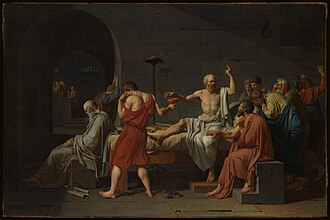 La muerte de Sócrates - Jacques-Louis David (1787)
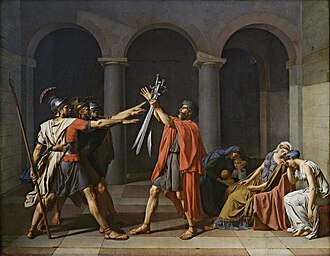 Juramento de los Horacios - Jacques-Louis David (1784)
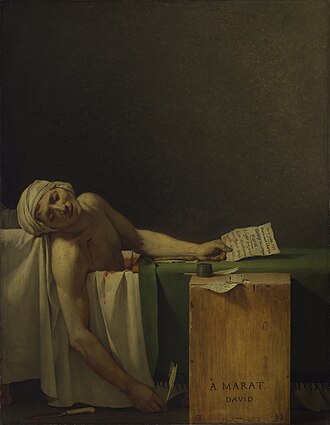 La muerte de Marat - Jacques-Louis David (1793)
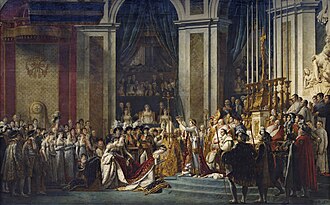 La coronación de Napoleón - Jacques-Louis David (1807)
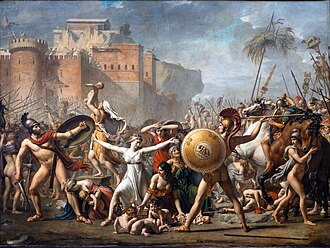 La intervención de las sabinas - Jacques-Louis David (1799)
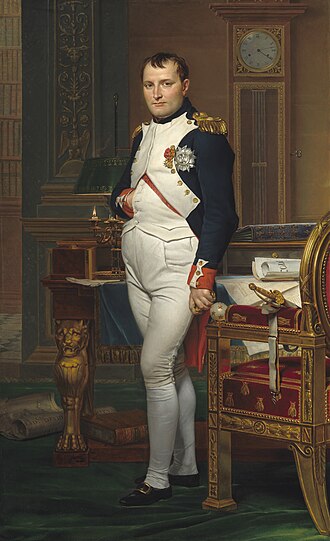 Retrato de Napoleón en su gabinete de trabajo - Jacques-Louis David (1812)
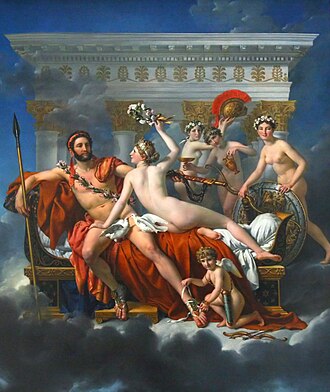 Marte desarmado por Venus y las Gracias - Jacques-Louis David (1824)
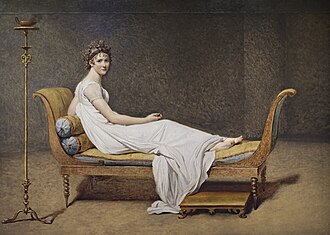 Madame Récamier - Jacques-Louis David (1800)
Obras de artistas relacionados
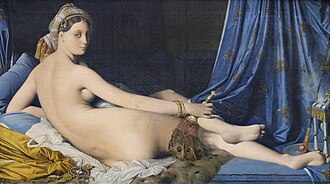 La gran odalisca - Jean-Auguste-Dominique Ingres (1814)
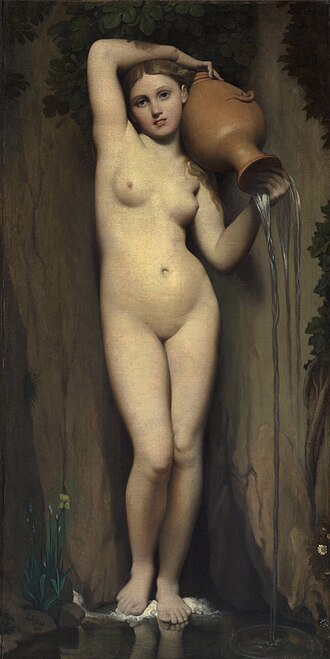 La fuente - Jean-Auguste-Dominique Ingres (1856)
 El tres de mayo de 1808 - Francisco Goya (1814)
 La Maja desnuda - Francisco Goya (1800)