Madame Duvaucey
Jean Auguste Dominique Ingres · 1807
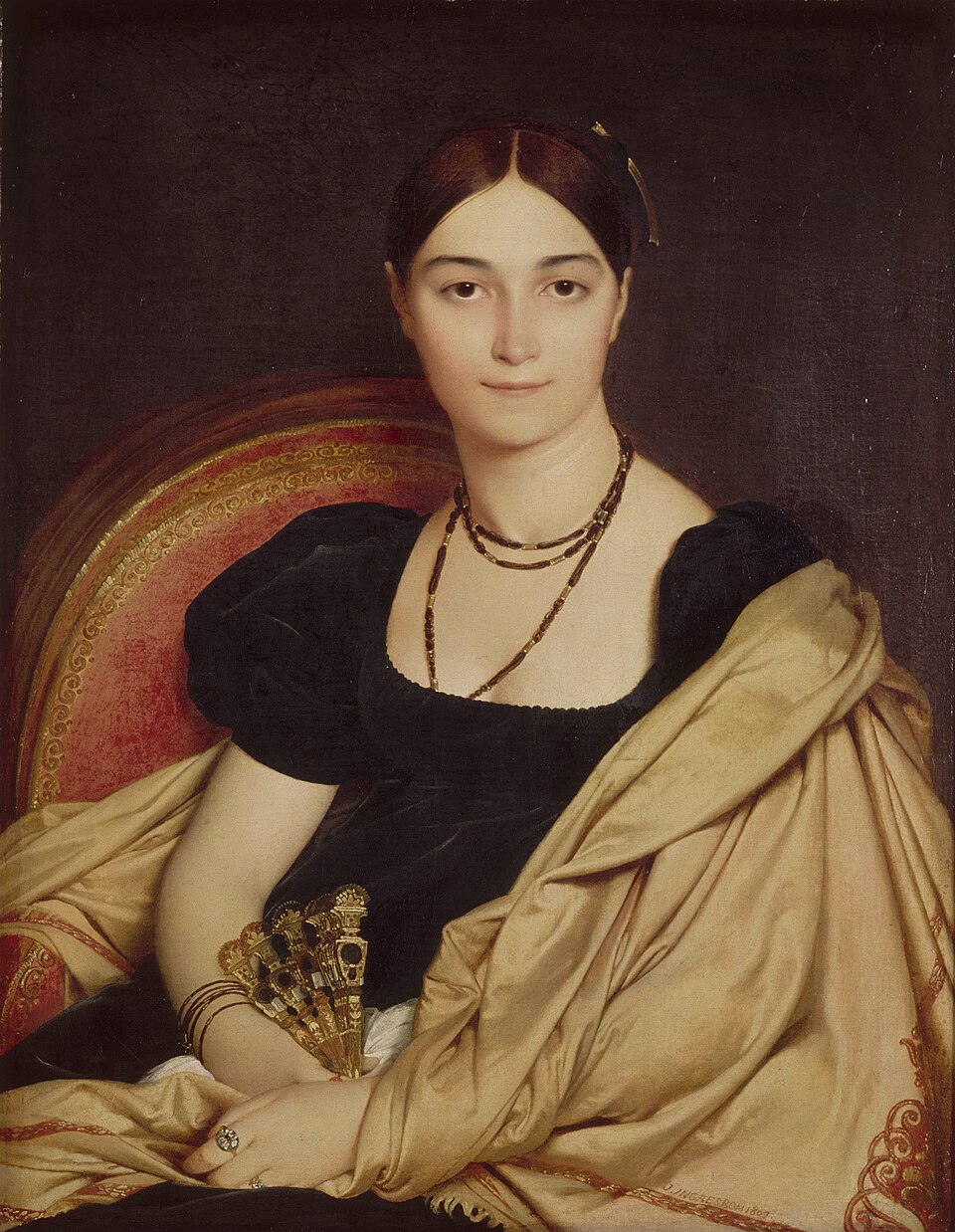
She looks straight at us with a sly, suggestive smile, wrapped in a silk shawl, fan in hand. Ingres painted her in Rome in 1807. Forty years later she came to his door in Paris, in urgent need of money, to sell it.
The story behind the painting
The portrait shows Antonia Duvaucey de Nittis, the lover of Charles-Jean-Marie Alquier, who was then the French ambassador to the Holy See. Ingres painted it in 1807, and it is the first female portrait he made during his stay in Rome. The Wikipedia article spells her name Duvaucey, while Wikidata's English title has Devaucay. Ingres was paid for the commission, but the sources say little more about how the sittings went, keeping the focus on the finished picture and its fate.
What to look for
Madame Duvaucey sits in a flat pictorial space against a flat grey background, gazing straight at the viewer. She is framed by the inward curves of a rose and gold Louis XVI chair and by an embroidered pale yellow and red silk shawl. She holds an expensive-looking fan and wears three partly visible rings, a thin, elegant necklace and bracelets. As often in Ingres' female portraits, her anatomy seems almost boneless: her left arm, on our right, is far longer than her right, and her elongated neck hardly seems strong enough to hold her head. Wikidata gives the size as 76 by 59 cm.
Meaning and intent
The painting is praised for its enigmatic charm, described as not a portrait that gives pleasure but one that gives rise to dreams. Her almost arabesque features look ahead to Ingres' later Odalisque paintings, and Théophile Gautier likened her to the ancient Chimera in Empire dress. When it was shown at the Salon of 1833, and again in 1855, one critic complained of its dry, shadowless quality and defective anatomy, yet it was his most acclaimed work at the 1833 Salon. Ingres was praised for his line and his religion of form, and the portrait is now seen as groundbreaking in the development of portraiture.
Legacy
Forty years after it was painted, Madame Duvaucey urgently needed money and visited Ingres in Paris to sell the portrait. Ingres recognised her and found a buyer, named in the Wikipedia article as Fredric Reisit, whose collection became the Musée Condé at Chantilly. The painting is still there today, in the same collection, so the woman who once smiled at Ingres in Rome now meets visitors in a château north of Paris.
¿Sabías que…?
- Painted in Rome in 1807, Ingres' first female portrait there.
- The sitter was the lover of the French ambassador to the Holy See.
- His most acclaimed work at the Salon of 1833.
- Now in the Musée Condé, Chantilly.
Sobre el artista
Jean Auguste Dominique Ingres (1780-1867)
mujer · retrato · sentado · vestido · neoclasicismo · 1795-1820 in Western fashion · Museo Condé · abanico · pulsera · anillo · chal
Más obras de Jean Auguste Dominique Ingres
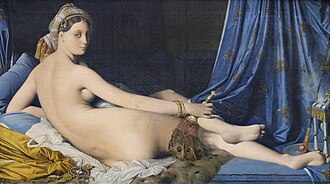 La gran odalisca - Jean-Auguste-Dominique Ingres (1814)
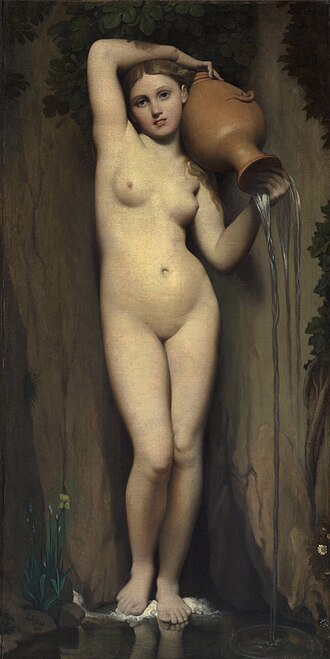 La fuente - Jean-Auguste-Dominique Ingres (1856)
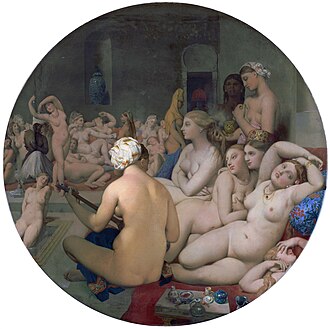 El baño turco - Jean-Auguste-Dominique Ingres (1862)
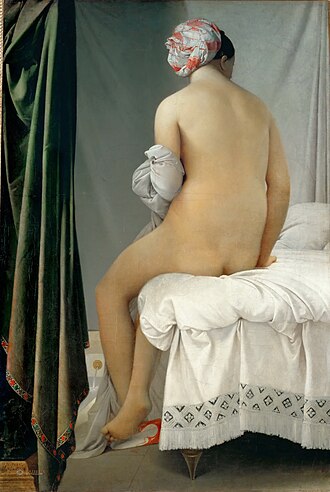 La bañista de Valpinçon - Jean-Auguste-Dominique Ingres (1808)
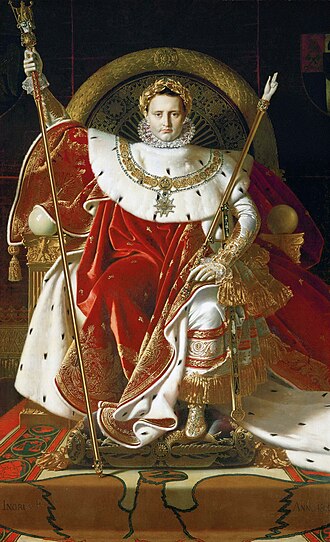 Napoleón en su trono imperial - Jean-Auguste-Dominique Ingres (1806)
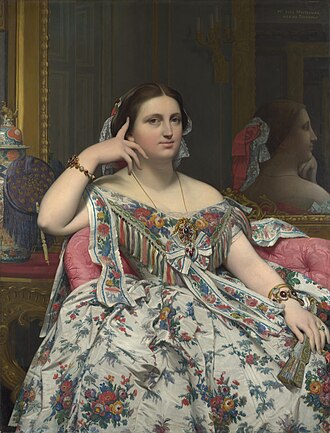 Madame Moitessier - Jean-Auguste-Dominique Ingres (1856)
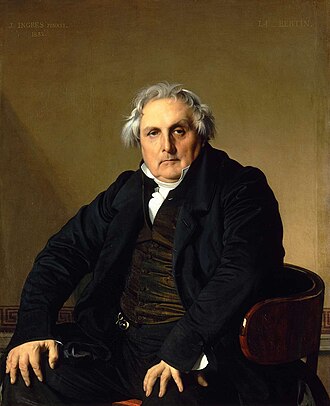 Monsieur Bertin - Jean-Auguste-Dominique Ingres (1832)
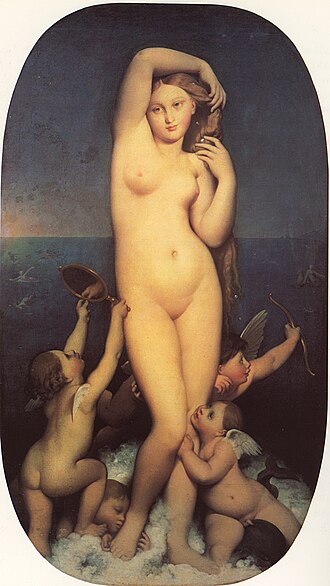 Venus Anadiómena - Jean-Auguste-Dominique Ingres (1808)
Obras de artistas relacionados
 La muerte de Sócrates - Jacques-Louis David (1787)
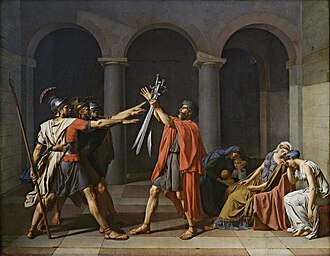 Juramento de los Horacios - Jacques-Louis David (1784)
 El tres de mayo de 1808 - Francisco Goya (1814)
 La Maja desnuda - Francisco Goya (1800)