Monsieur Bertin
Jean Auguste Dominique Ingres · 1832
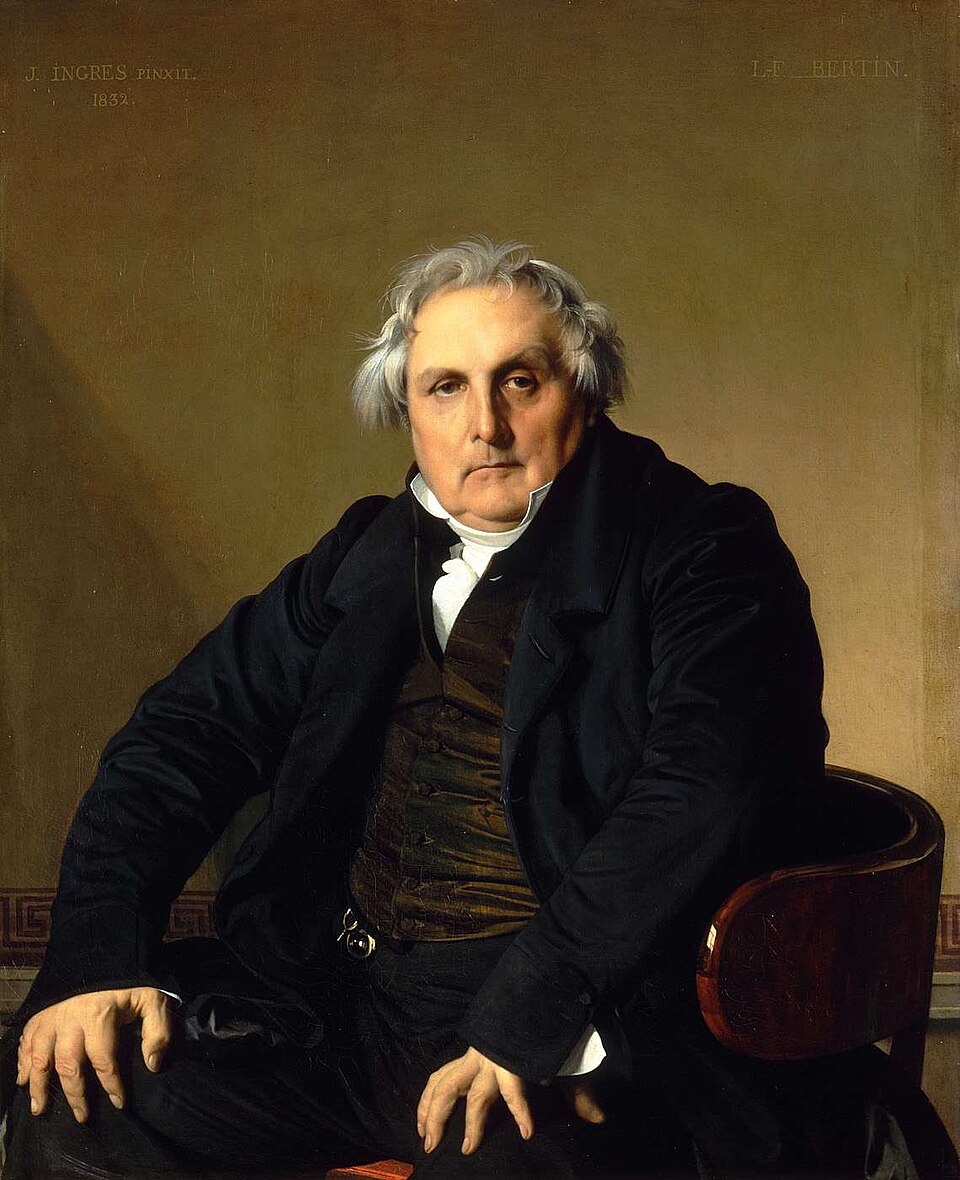
A heavy man in black leans forward, hands spread on his knees, and stares straight at us. Ingres wept over this portrait before he found the pose. Many now call it his finest portrait of a man.
The story behind the painting
Louis-François Bertin was 66 when Ingres painted him in 1832. He directed the Journal des débats, collected art and supported writers and painters. Ingres disliked portraits, calling them a distraction from history painting, but Bertin's personality intrigued him. The painter agonised over the pose through at least seven surviving studies and broke down in tears more than once. Bertin consoled him, telling him to take his time and that he would never tire of sitting. Early biographers disagree about where the final pose came from: Henri Delaborde said Ingres saw it while Bertin argued politics after dinner, while Amaury Duval said it was noticed at a café. The painting was finished during a month at Bertin's country house near Bièvres.
What to look for
Bertin sits in three-quarter view against a brown ground lit from the right. His bulk is squeezed into a tight black jacket, black trousers and a brown satin waistcoat, with a starched white collar. Grey hair, a gold watch, glasses in his pocket. Look at the hands: coiled, stubby fingers spread across his thighs, which an artist in 1959 compared to crab claws emerging from dark caverns of sleeves. The palette is almost monochrome, broken only by the whites of collar and cuffs, reds in the cushion and the light gleaming on the chair, which reflects a window we cannot see. The ageing skin and thinning hair are painted without flattery.
Meaning and intent
Ingres presents Bertin as a personification of the confident, commercially minded leaders of Louis Philippe's reign: imposing, self-assured, yet warm and wry. The art historian Robert Rosenblum noted how the tight space sharpens his nearly ferocious presence; the chair and clothes seem too small to hold him. The pose also reverses the usual roles. The painter becomes the cool observer, while Bertin, normally calm, appears restless and impatient, as if mirroring Ingres' own irritation at portraiture. He leans in as though about to speak, both paternal and formidable.
Legacy
The portrait was praised at the Paris Salon of 1833 and became a critical and popular success, though Bertin's family worried about caricature and disapproved. It sealed Ingres' reputation and influenced academic painters such as Léon Bonnat as well as modernists including Pablo Picasso and Félix Vallotton. Modern art historians regard it as Ingres' finest male portrait, an unflinching image of ageing that still shows resolve and determination. It has been on permanent display at the Louvre since 1897.
¿Sabías que…?
- Painted in 1832, when the sitter was 66.
- At least seven preparatory studies survive.
- Praised at the Paris Salon of 1833.
- In the Louvre since 1897.
Sobre el artista
Jean Auguste Dominique Ingres (1780-1867)
retrato · Departamento de Pinturas del Museo del Louvre · neoclasicismo · pared · pantalón · chaqueta
Más obras de Jean Auguste Dominique Ingres
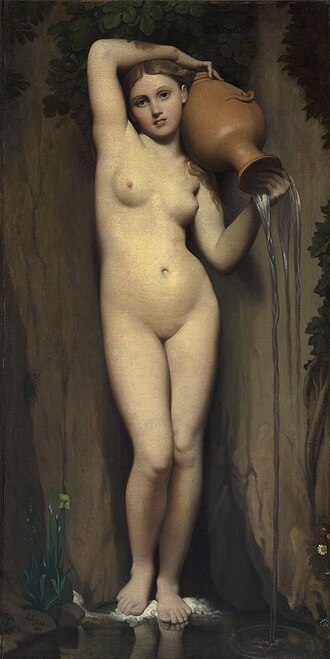 La fuente - Jean-Auguste-Dominique Ingres (1856)
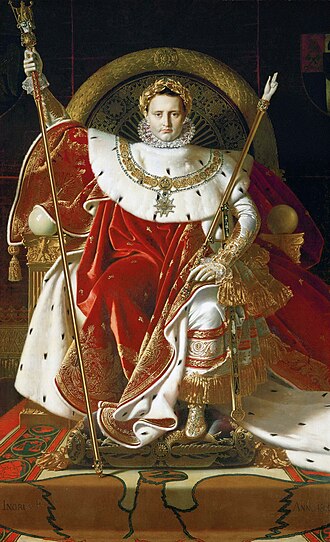 Napoleón en su trono imperial - Jean-Auguste-Dominique Ingres (1806)
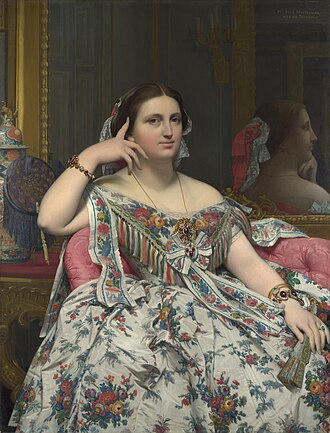 Madame Moitessier - Jean-Auguste-Dominique Ingres (1856)
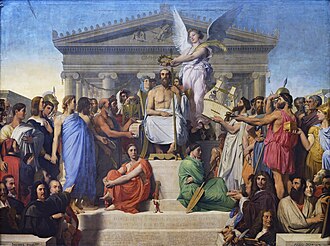 La apoteosis de Homero - Jean-Auguste-Dominique Ingres (1827)
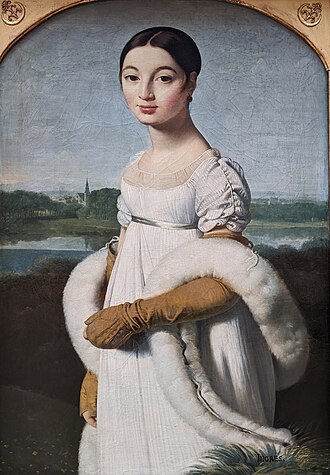 Mademoiselle Caroline Rivière - Jean-Auguste-Dominique Ingres (1806)
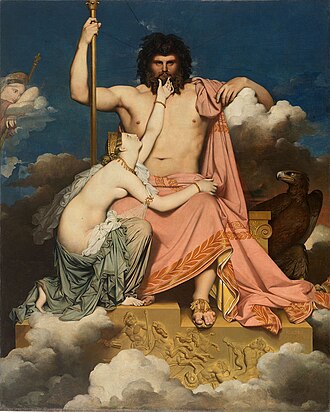 Júpiter y Tetis - Jean-Auguste-Dominique Ingres (1811)
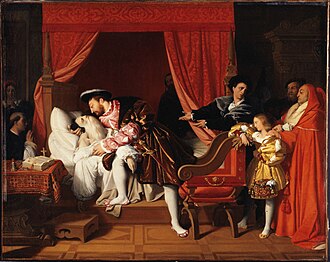 The Death of Leonardo da Vinci - Jean-Auguste-Dominique Ingres (1818)
 Condesa de Haussonville - Jean-Auguste-Dominique Ingres (1845)
Obras de artistas relacionados
 Juramento de los Horacios - Jacques-Louis David (1784)
.jpg) La intervención de las sabinas - Jacques-Louis David (1799)
La intervención de las sabinas - Jacques-Louis David (1799) El tres de mayo de 1808 - Francisco Goya (1814)
.jpg) La Maja desnuda - Francisco Goya (1800)
La Maja desnuda - Francisco Goya (1800)