El baño turco
Jean Auguste Dominique Ingres · 1862
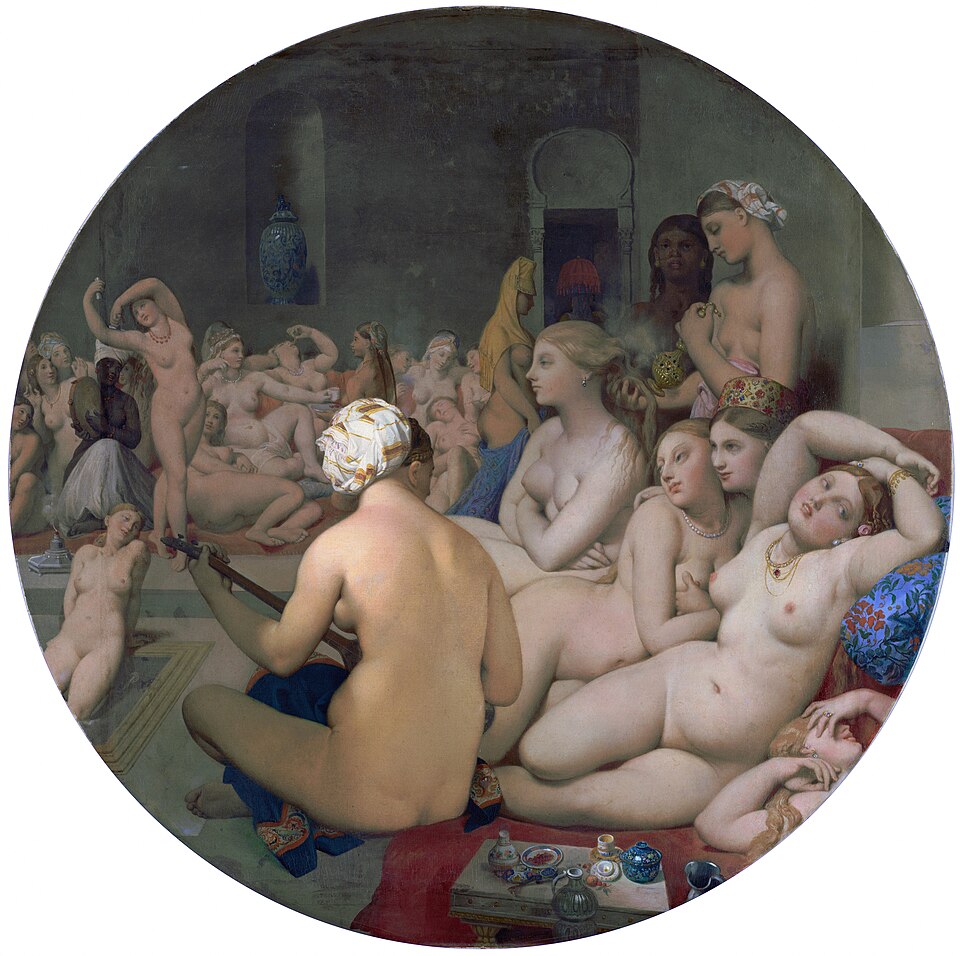
A round window onto an imagined harem bath, crowded with pale nude figures. Ingres signed it at 82, proud to show he still had the fire of a young man, and its first buyer gave it back within days.
The story behind the painting
Ingres first completed The Turkish Bath between 1852 and 1859, then modified it in 1862, when he was around 82. He changed the original rectangular format into a tondo, a round picture; a photograph of the earlier state by Charles Marville survives. He did not use live models, but sketches and his own earlier paintings, reusing bather and odalisque figures he had drawn or painted singly. Long before, leaving for Italy in 1806, he had copied into his notebooks a text on the baths of a seraglio, and in 1825 a passage from Lady Mary Wortley Montagu's letters describing the women's bath at Adrianople. Ingres never travelled beyond Europe.
What to look for
The central figure playing a long-necked lute, likely a saz or bağlama, comes almost unchanged from The Valpinçon Bather of 1808. The woman in the background with her arm out holding a cup recalls his portrait of Madame Moitessier (1856). The face of the woman with raised arms at the near right resembles an 1818 sketch of his wife, Delphine Ramel. Other poses come from engravings in a seventeenth-century book, Histoire générale des Turcs. Notice the palette, from pale white to pink, ivory, light greys and browns, the vases, running water, fruit and jewels, and the inscription of his age, AETATIS LXXXII.
Meaning and intent
The figures form what has been called a great curvaceous fugue, a circular arrangement that heightens the eroticism, and the tondo turns the viewer into someone peering through an oculus. Ingres relished making an erotic work in old age and in 1867 said he still had all the fire of a man of thirty. For him the Oriental theme was mostly a pretext for the female nude in a passive, sexual setting, and the women look more European than Middle Eastern. Ruth Yeazell notes the scene bears little resemblance to the public bath Lady Montagu described. In 1973 Sylvia Sleigh answered with her own Turkish Bath, reversing the genders with male nudes.
Legacy
The first buyer, a relation of Napoleon III, returned it days later because his wife found it unsuitable. In 1865 Khalil Bey, a former Turkish diplomat, bought it for his collection of erotic paintings. The source says Degas demanded it be shown at the Exposition Universelle of 1855, a date that sits awkwardly with its 1862 completion. Paul Claudel compared it to a cake full of maggots. The Louvre refused it twice before accepting it in 1911 through the Société des amis du Louvre. It echoes in Vallotton, Picasso's Les Demoiselles d'Avignon and Lempicka, and Herman Braun-Vega made fifteen variations in New York in 1972.
¿Sabías que…?
- Begun 1852-1859 and turned into a tondo in 1862.
- Signed with Ingres's age, 82.
- Built from earlier figures, including The Valpinçon Bather.
- Entered the Louvre in 1911.
Sobre el artista
Jean Auguste Dominique Ingres (1780-1867)
mujer · escena de género · Departamento de Pinturas del Museo del Louvre · desnudo · desnudo · danza · espalda
Más obras de Jean Auguste Dominique Ingres
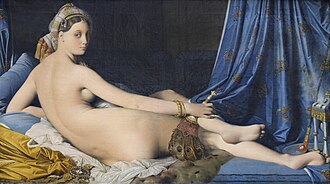 La gran odalisca - Jean-Auguste-Dominique Ingres (1814)
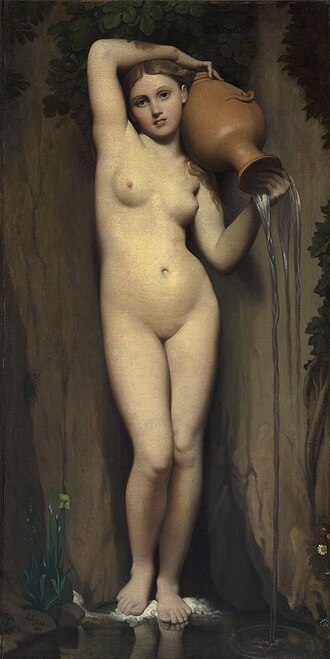 La fuente - Jean-Auguste-Dominique Ingres (1856)
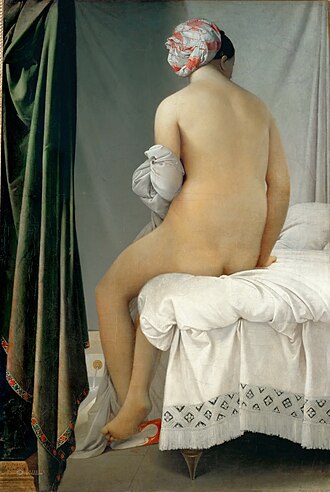 La bañista de Valpinçon - Jean-Auguste-Dominique Ingres (1808)
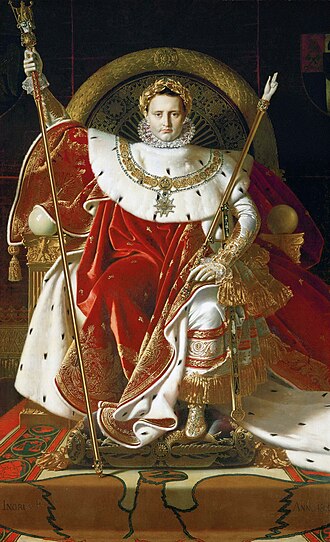 Napoleón en su trono imperial - Jean-Auguste-Dominique Ingres (1806)
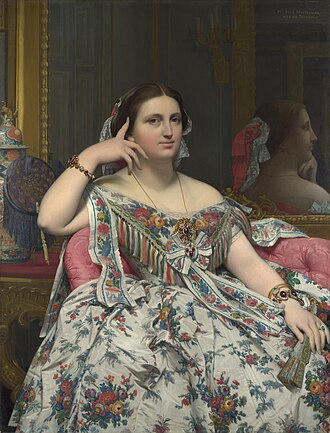 Madame Moitessier - Jean-Auguste-Dominique Ingres (1856)
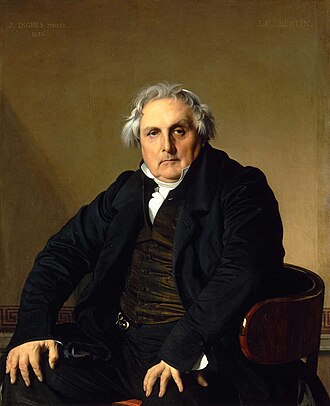 Monsieur Bertin - Jean-Auguste-Dominique Ingres (1832)
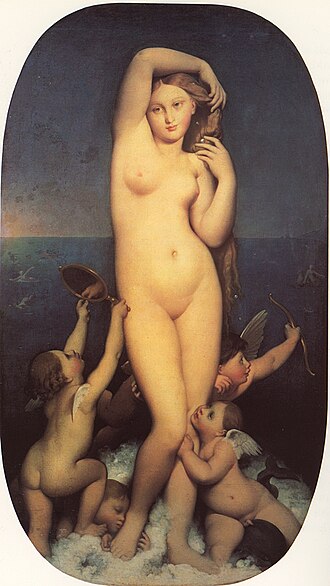 Venus Anadiómena - Jean-Auguste-Dominique Ingres (1808)
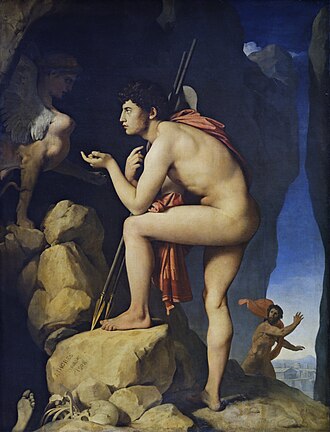 Edipo y la esfinge - Jean-Auguste-Dominique Ingres (1808)
Obras de artistas relacionados
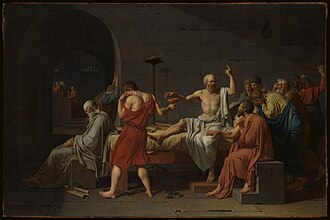 La muerte de Sócrates - Jacques-Louis David (1787)
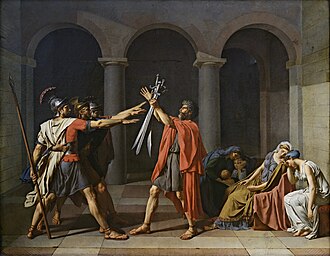 Juramento de los Horacios - Jacques-Louis David (1784)
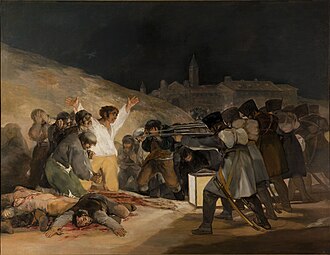 El tres de mayo de 1808 - Francisco Goya (1814)
.jpg) La Maja desnuda - Francisco Goya (1800)
La Maja desnuda - Francisco Goya (1800)