Portrait of a Young Man
Frans Hals · 1650
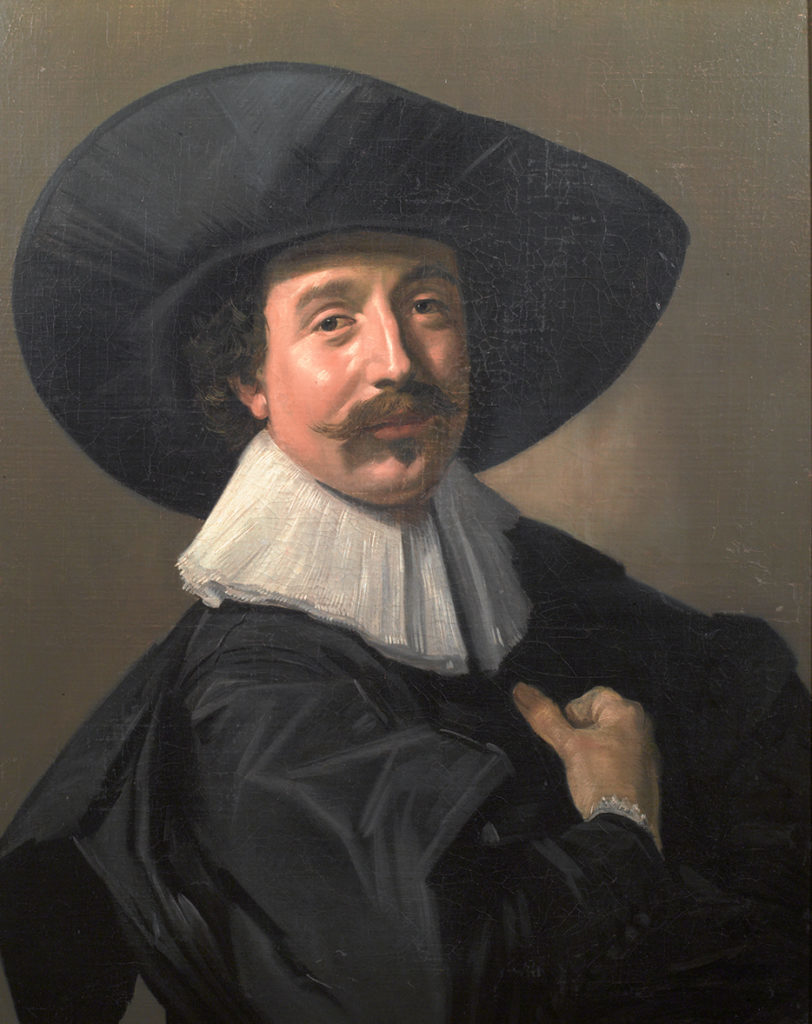
A smiling man in a wide black hat leans toward us as if resting on a windowsill. His portrait was taken to Russia, sent back, stolen in 1979 and only returned to Gotha forty years later.
The story behind the painting
Nobody knows who this man is, and the painting has no original title, signature or date. Duke Ernest II of Saxe-Gotha-Altenburg acquired it for the Gotha ducal collection in 1804, where it was first given to Thomas de Keyser. Later scholars, from Schneider in 1854 to Valentiner in 1923, gave it to Frans Hals. The date is unsettled: Hofstede de Groot proposed about 1630 to 1635, Valentiner 1631 to 1633 or a little earlier, and Katja Kleinert 1625 to 1630. Wikidata, by contrast, records the year 1650.
What to look for
The half-length sitter looks about thirty, with rosy cheeks, a straight nose, a moustache and a small tuft under the lip. He turns three-quarters right, smiles, presses his right hand to his chest and seems to rest his elbow on the picture frame, as if stepping out of his space into ours. He wears a black doublet, a plain black silk cloak, a white falling collar of pleated linen and a wide-brimmed felt hat against a grey ground. The cloak is dashed off in broad, unblended strokes, the loose manner that gives Hals his vitality.
Meaning and intent
In the Netherlands of that time black clothing was chic among professionals and magistrates, suggesting seriousness and sobriety, while a big black hat signalled self-assurance. Hals was famous for painting black; Van Gogh later wrote to his brother Theo that Hals had twenty-seven shades of it. The falling collar was an alternative to the stiff millstone ruff, and the modest lace at the wrist is the kind Mennonites typically wore. Hofstede de Groot wondered whether this might be a self-portrait, and Kleinert notes how dynamic it feels for a portrait of its day.
Legacy
In 1945 Soviet authorities removed the painting from storage at Reinhardsbrunn and sent it to Russia; it came back to Gotha in 1958. On 14 December 1979 burglars stole it from Friedenstein Palace with four other old master paintings, the most significant art theft in the GDR. The trail went cold until a lawyer contacted Gotha's mayor in 2018, and the five works were returned on 12 September 2019. After the recovery, tests at the Rathgen laboratory in Berlin led the museum to confirm it as Hals's own work, although Seymour Slive had once called the attribution doubtful.
¿Sabías que…?
- Hung in the ducal collection at Gotha since 1804.
- Stolen on 14 December 1979 and returned on 12 September 2019.
- Dated about 1625 to 1635 by scholars; Wikidata gives 1650.
- Restored by Fuhyi Kuo after its return.
Sobre el artista
Frans Hals (1591-1666)
Más obras de Frans Hals
 El alegre bebedor - Frans Hals (1620s)
 Caballero sonriente - Frans Hals (1624)
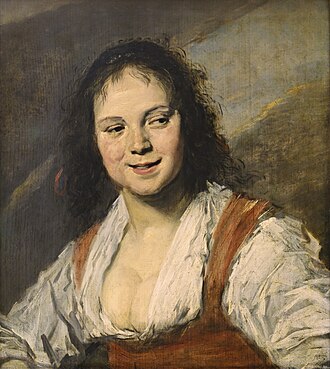 La gitana - Frans Hals (1628)
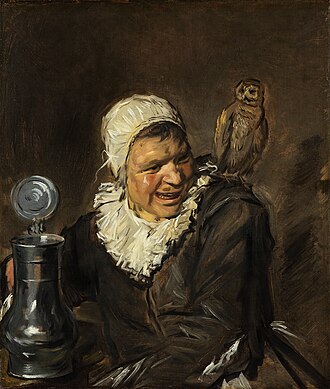 Malle Babbe - Frans Hals (1640s)
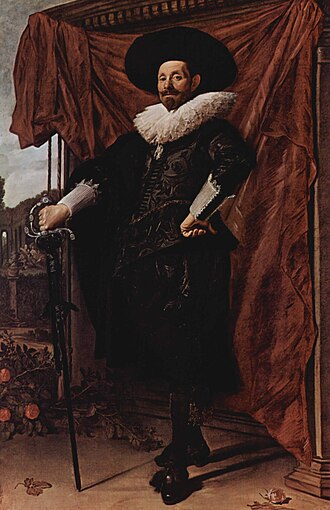 Retrato de Willem van Heythuysen - Frans Hals (1625)
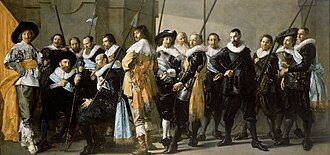 La compañía del capitán Reijnier Reael y el teniente Cornelis Michielsz Blaeuw - Frans Hals (1630s)
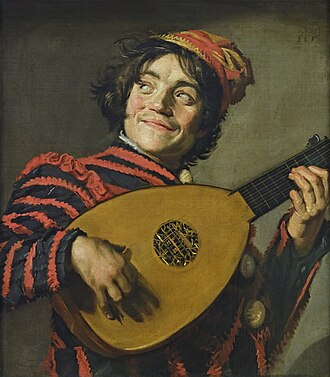 El tocador de laúd - Frans Hals (1623)
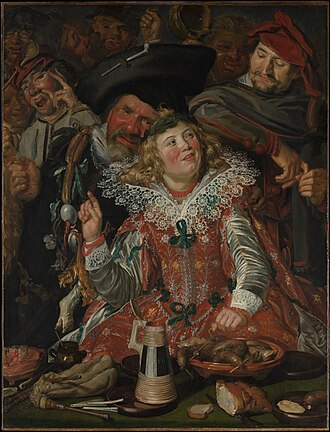 Juerguistas en el martes de Carnaval - Frans Hals (1610s)
Obras de artistas relacionados
 La ronda de noche - Rembrandt van Rijn (1642)
 Autorretrato - Rembrandt van Rijn (1659)
 La joven de la perla - Johannes Vermeer (1665)
 La lechera - Johannes Vermeer (c. 1658)
 La fiesta de San Nicolás - Jan Steen (1660s)
 Joven comiendo ostras - Jan Steen (1658)
 El molino de Wijk bij Duurstede - Jacob van Ruisdael (1670)
 El cementerio judío - Jacob van Ruisdael (1650s)
 Patio de una casa de Delft - Pieter de Hooch (1658)
 Mujer pelando manzanas - Pieter de Hooch (1663)