Filemón y Baucis
Rembrandt van Rijn · 1658
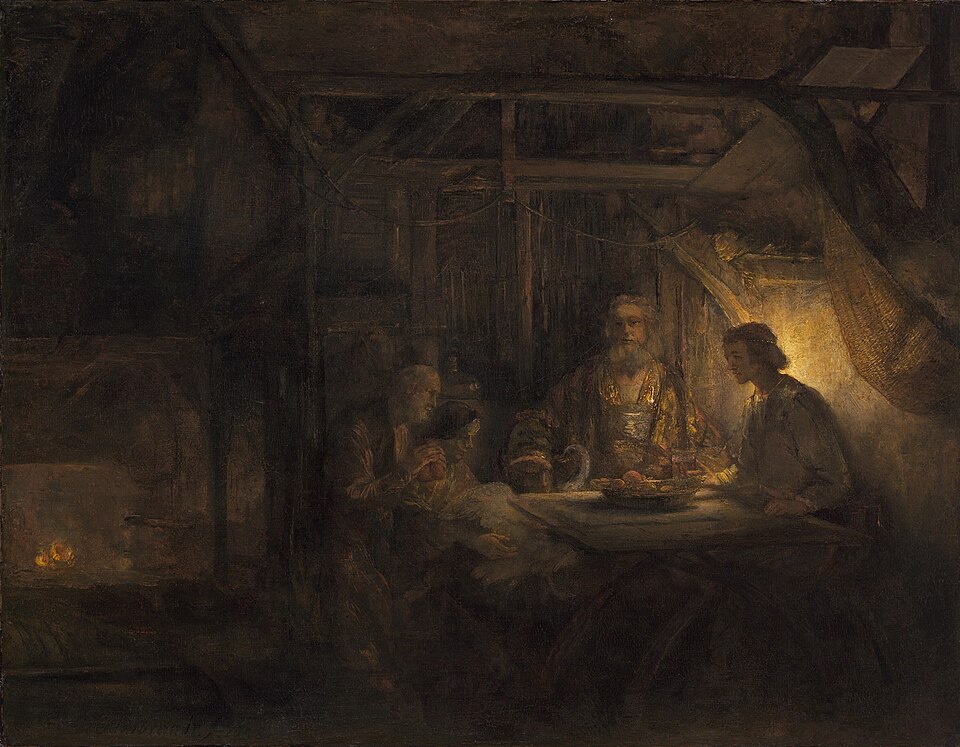
Two gods in disguise sit at a poor couple's table, and the old woman reaches for her only goose to feed them. Rembrandt paints the instant the guests reveal who they are, with light glowing behind one of them.
The story behind the painting
The scene comes from Ovid's Metamorphoses. Jupiter and Mercury, disguised as mortals, ask for hospitality from Philemon and Baucis, an elderly couple living in poverty in a cottage. The couple try to kill their only goose to give the strangers a meal, but Jupiter stops them, and the gods later reward them richly. Rembrandt painted it in oil on panel in 1658. A preparatory drawing from around 1655 is kept in the Kupferstichkabinett in Berlin. Rembrandt drew on earlier versions by Adam Elsheimer, from around 1608 to 1609, and by Peter Paul Rubens, from around 1620 to 1625.
What to look for
Four figures sit around a table. Philemon and Baucis kneel at the left: Philemon holds his hat in his hands while Baucis tries to catch the goose. In the centre Jupiter, wearing a purple and gold cloak, looks at the couple. His head is lit by a light source placed behind Mercury on the right. Mercury himself is seen in profile, his silhouette standing out against the wall. Look at how calm and majestic Jupiter appears compared with the small movements around him. Sadly the panel is in very poor condition, with many unsuccessful attempts at restoration.
Meaning and intent
Rembrandt chose the moment the goose is spared and the gods make themselves known. The backlit head echoes Elsheimer and Rembrandt's own Supper at Emmaus, from around 1628 to 1630, though here without the same spiritual reach. The play between Baucis and the goose as Philemon recognises the gods is shared with Rubens, but is much quieter in Rembrandt's final painting than in Rubens or in his own drawing. Jupiter's calm, majestic attitude recalls the Christian God, and his pose may come from Christ in Leonardo's Last Supper. Divine revelation, rather than a purely pagan tale, becomes the centre of the work.
Legacy
The attribution is not entirely certain. Some experts give the painting to Rembrandt, while others think it could be by one of his pupils; an analysis by artificial intelligence assigned it to Rembrandt or to his pupil Arent de Gelder. The panel passed through the hands of the British engraver William Baillie, the American financier Charles Yerkes, the banker Otto Hermann Kahn and the collector Joseph E. Widener, who gave it to the National Gallery of Art in Washington in 1942. Wikidata also records it in the Charles Sedelmeyer collection. It measures about 54.5 by 68.5 cm.
¿Sabías que…?
- Oil on panel, 1658, from Ovid's Metamorphoses.
- A preparatory drawing of about 1655 is in Berlin.
- Some experts think it may be by a pupil.
- Given to the National Gallery of Art, Washington, in 1942.
Sobre el artista
Rembrandt van Rijn (1606-1669)
pintura mitológica · Galería Nacional de Arte · Charles Sedelmeyer collection · Zeus
Más obras de Rembrandt van Rijn
 La ronda de noche - Rembrandt van Rijn (1642)
 Autorretrato - Rembrandt van Rijn (1659)
 Lección de anatomía del Dr. Nicolaes Tulp - Rembrandt van Rijn (1632)
 La novia judía - Rembrandt van Rijn (1660s)
 La tormenta en el mar de Galilea - Rembrandt van Rijn (1633)
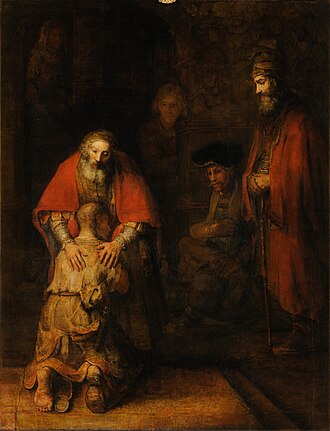 El retorno del hijo pródigo - Rembrandt van Rijn (1668)
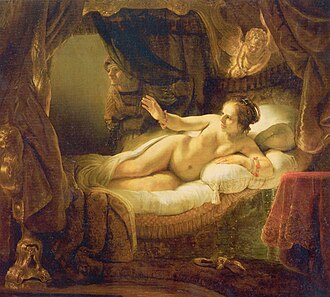 Dánae - Rembrandt van Rijn (1636)
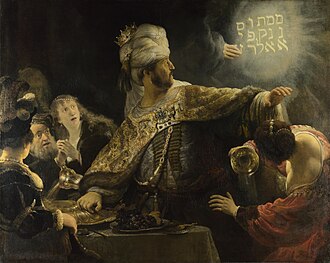 Banquete de Belsasar - Rembrandt van Rijn (1636)
Obras de artistas relacionados
 La joven de la perla - Johannes Vermeer (1665)
 La lechera - Johannes Vermeer (c. 1658)
 La fiesta de San Nicolás - Jan Steen (1660s)
 Joven comiendo ostras - Jan Steen (1658)
 El alegre bebedor - Frans Hals (1620s)
 Caballero sonriente - Frans Hals (1624)
 El molino de Wijk bij Duurstede - Jacob van Ruisdael (1670)
 El cementerio judío - Jacob van Ruisdael (1650s)
 Patio de una casa de Delft - Pieter de Hooch (1658)
 Mujer pelando manzanas - Pieter de Hooch (1663)