Mrs Siddons
Thomas Gainsborough · 1785
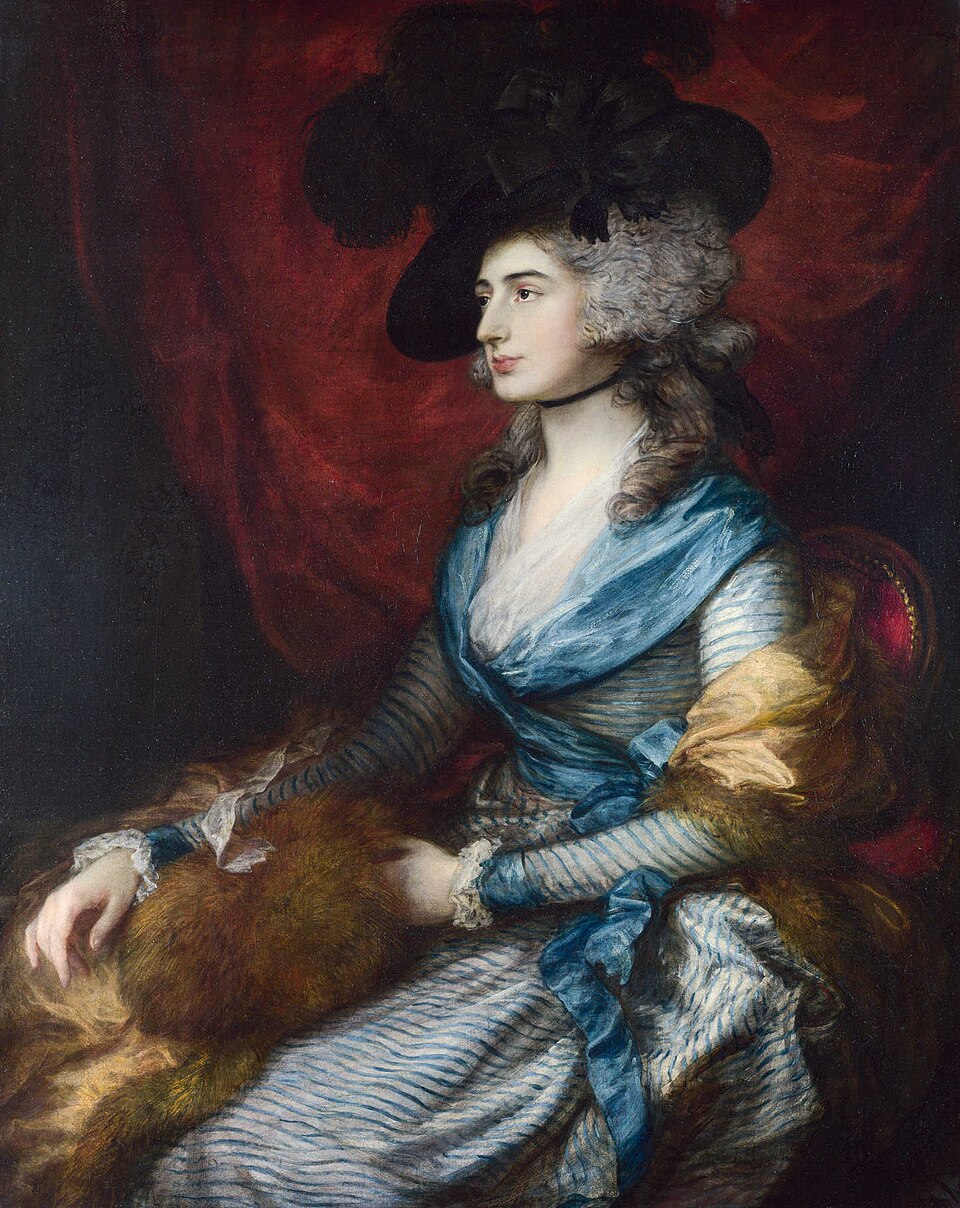
The greatest tragic actress of her day, painted not as a character but as herself. Gainsborough set her blue dress, yellow shawl and black feathered hat against a red curtain like a theatre's.
The story behind the painting
Sarah Siddons, of the theatrical Kemble family, was the leading tragedienne on the British stage of the late 18th century. Like Gainsborough, she first made her name in Bath before moving to London. Many artists portrayed her, including Joshua Reynolds and Thomas Lawrence, often in the role of one of her characters. Gainsborough painted her in 1785 without a commission and showed her in the fashionable dress of the time. Because he was boycotting the Royal Academy after its exhibition of 1784, the portrait was displayed at his own Schomberg House in London.
What to look for
The canvas, 126 by 99.5 cm, is framed on a diagonal. One half is full of dynamically arranged clothing; the other half is quiet in colour and gives the eye a place to rest. The large black hat with feathers stands out against a red curtain that recalls a theatre curtain. Gainsborough contrasts the cool blue of the dress with the yellow of the shawl, the rust and brown of the fur cuff, and the red of the curtain. Look at how the light and shadow play across her profile and costume.
Meaning and intent
Portraying Siddons as herself, rather than as a tragic heroine, puts the woman before the role. The busy half of the composition, full of moving fabric, is read in the source as an allusion to the actress's tumultuous life, set against the calm half that holds her steady. The pairing of complementary colours and the play of light are described as ways of bringing out her strong personality. The painting is counted among Gainsborough's most modern portraits for this bold use of colour.
Legacy
The portrait stayed with Siddons's family for several decades and was acquired by the National Gallery in London in 1862, where it still hangs. Its image lived on in an unexpected place: in the 1920s it inspired the logo of the film studio Gainsborough Pictures. So the profile of an 18th-century actress, painted by the man whose name the studio took, opened films for audiences in the age of cinema.
¿Sabías que…?
- Painted in 1785 without a commission.
- Shown at Schomberg House while Gainsborough boycotted the Royal Academy.
- Acquired by the National Gallery, London, in 1862.
- Inspired the logo of Gainsborough Pictures in the 1920s.
Sobre el artista
Thomas Gainsborough (1727-1788)
retrato · National Gallery de Londres
Más obras de Thomas Gainsborough
.jpg) El joven azul - Thomas Gainsborough (1770)
El joven azul - Thomas Gainsborough (1770).jpg) El Señor y la Señora Andrews - Thomas Gainsborough (1748)
El Señor y la Señora Andrews - Thomas Gainsborough (1748)%20-%20WGA8418.jpg) El señor y la señora Hallett - Thomas Gainsborough (1785)
El señor y la señora Hallett - Thomas Gainsborough (1785)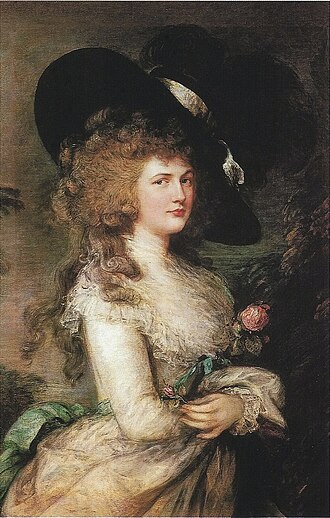 Retrato de Georgiana, duquesa de Devonshire - Thomas Gainsborough (1780s)
%20-%20Google%20Art%20Project.jpg) Retrato de la señora Mary Graham - Thomas Gainsborough (1775)
Retrato de la señora Mary Graham - Thomas Gainsborough (1775)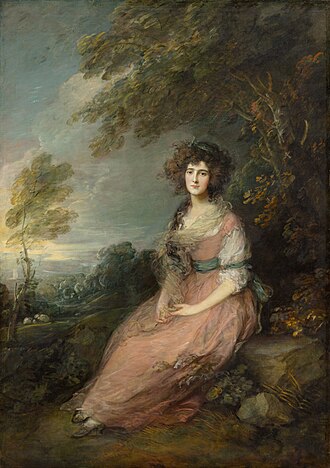 Mrs. Richard Brinsley Sheridan - Thomas Gainsborough (1785)
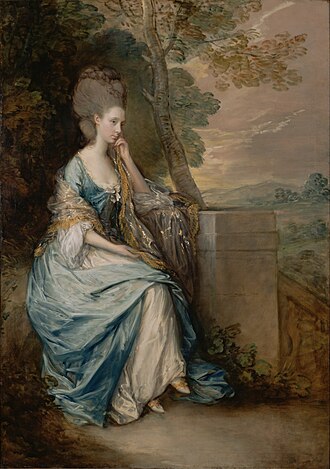 Portrait of Anne, Countess of Chesterfield - Thomas Gainsborough (1770s)
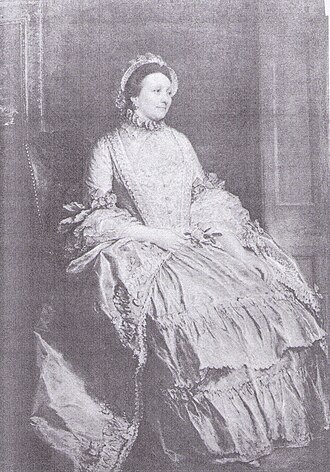 La esposa de William St Quintín - Thomas Gainsborough (1767)
Obras de artistas relacionados
 El tres de mayo de 1808 - Francisco Goya (1814)
.jpg) La Maja desnuda - Francisco Goya (1800)
La Maja desnuda - Francisco Goya (1800) El caminante sobre el mar de nubes - Caspar David Friedrich (c. 1818)
 Abadía en el robledal - Caspar David Friedrich (1800s)
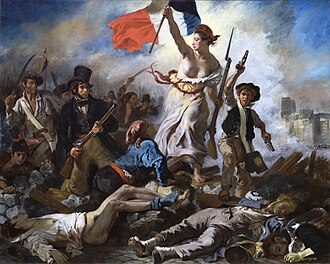 La Libertad guiando al pueblo - Eugène Delacroix (1830)
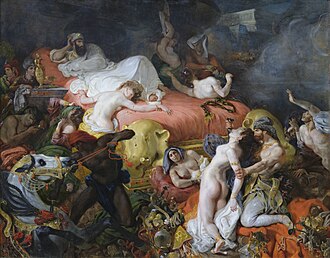 La muerte de Sardanápalo - Eugène Delacroix (1827)
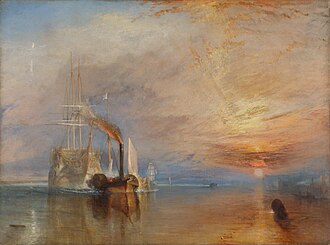 El Temerario remolcado - J. M. W. Turner (1839)
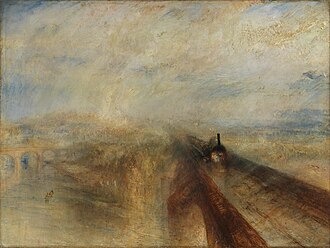 Lluvia, vapor y velocidad. El gran ferrocarril del Oeste - J. M. W. Turner (1844)