Mrs. Richard Brinsley Sheridan
Thomas Gainsborough · 1785
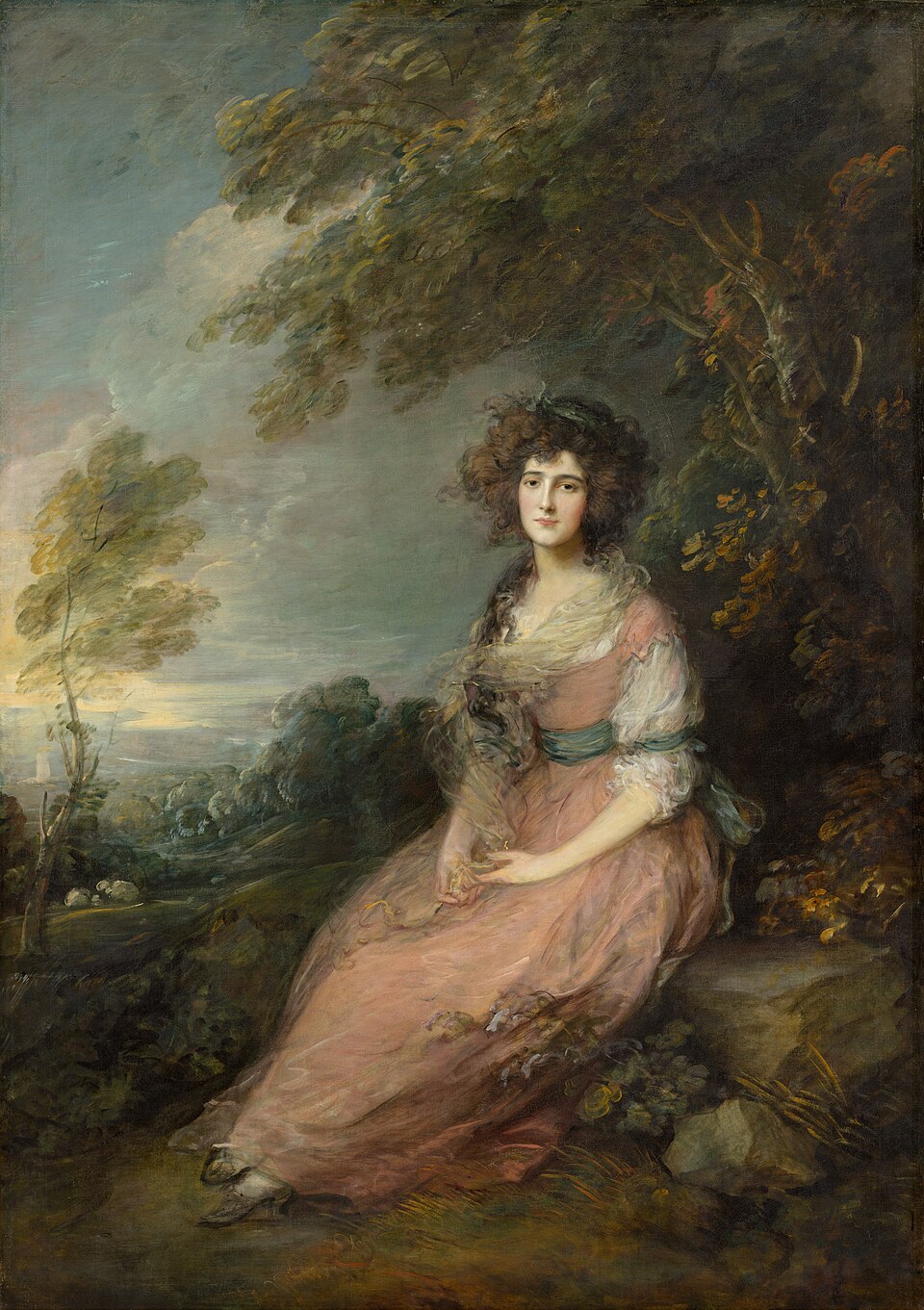
A famous singer who gave up the stage sits alone in a windblown landscape. Gainsborough, a friend of her family, caught a hint of melancholy in her eyes a few years before she died at thirty-eight.
The story behind the painting
Elizabeth Ann Linley was born in Bath in 1754 into a musical family, and probably sang at concerts from the age of nine. Frances Burney called her infinitely superior to all other English singers. She married the playwright Richard Brinsley Sheridan officially on 13 April 1773, and he would not let her perform professionally, feeling it reflected badly on his status as a gentleman. Gainsborough had been a friend of the Linleys since 1759. He painted this portrait between 1785 and 1787 and showed it in his studio at Schomberg House in 1786. Wikidata gives the single year 1785.
What to look for
The canvas is 219.7 by 153.7 cm, a full-length figure seated outdoors in a diagonal, grand-manner composition. Her hair is painted the same way as the leaves and branches behind her, and some of the sunset's pink glaze returns in the colour of her gown. A lonely tree echoes her isolated figure. The scarf in her hand shimmers through long strokes of thin oil. Long zigzag strokes run down the gown to her feet, while her face, with firm chin and heavy brows, is the only calm and solid part of the picture.
Meaning and intent
The National Gallery of Art reads the windblown landscape as a sign of the romantic side of Gainsborough's temperament, and sees romantic melancholy in her slightly indirect gaze. Elizabeth loved the countryside while her husband preferred city life; she once begged him to take her out of the whirl of the world, back to the quiet scenes she was born for. The empty landscape seems to answer that wish. Writers have seen in the figure an abandoned woman, possibly longing for something she cannot reach in her own life.
Legacy
Elizabeth died of tuberculosis on 28 June 1792. According to a diary entry quoted in the source, Sheridan's servant once rescued the portrait from creditors by cutting it from its large frame and passing it over the garden wall to a neighbour, Lady Robert Spencer, and Sheridan never redeemed it. It later passed to the Rothschild family, and in 1937 the A.W. Mellon Educational and Charitable Trust acquired it and gave it to the National Gallery of Art in Washington, where it hangs today.
¿Sabías que…?
- Painted between 1785 and 1787; Wikidata gives 1785.
- Shown at Gainsborough's Schomberg House studio in 1786.
- The sitter, singer Elizabeth Linley, died in 1792 aged thirty-eight.
- In the National Gallery of Art, Washington, since 1937.
Sobre el artista
Thomas Gainsborough (1727-1788)
retrato · Galería Nacional de Arte · Romanticismo · Andrew W. Mellon collection
Más obras de Thomas Gainsborough
.jpg) El joven azul - Thomas Gainsborough (1770)
El joven azul - Thomas Gainsborough (1770).jpg) El Señor y la Señora Andrews - Thomas Gainsborough (1748)
El Señor y la Señora Andrews - Thomas Gainsborough (1748)%20-%20WGA8418.jpg) El señor y la señora Hallett - Thomas Gainsborough (1785)
El señor y la señora Hallett - Thomas Gainsborough (1785) Retrato de Georgiana, duquesa de Devonshire - Thomas Gainsborough (1780s)
%20-%20Google%20Art%20Project.jpg) Retrato de la señora Mary Graham - Thomas Gainsborough (1775)
Retrato de la señora Mary Graham - Thomas Gainsborough (1775) Portrait of Anne, Countess of Chesterfield - Thomas Gainsborough (1770s)
 Mrs Siddons - Thomas Gainsborough (1785)
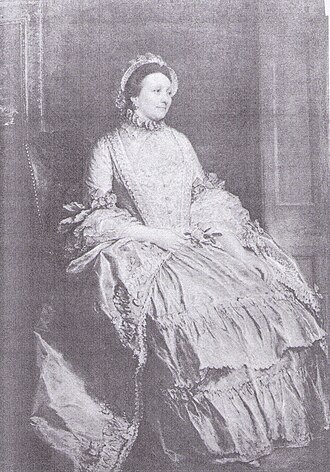 La esposa de William St Quintín - Thomas Gainsborough (1767)
Obras de artistas relacionados
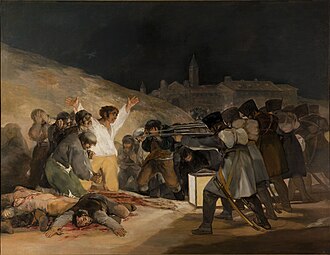 El tres de mayo de 1808 - Francisco Goya (1814)
.jpg) La Maja desnuda - Francisco Goya (1800)
La Maja desnuda - Francisco Goya (1800)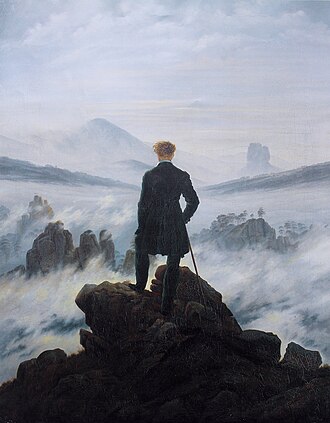 El caminante sobre el mar de nubes - Caspar David Friedrich (c. 1818)
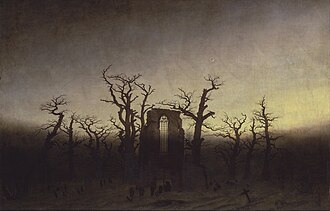 Abadía en el robledal - Caspar David Friedrich (1800s)
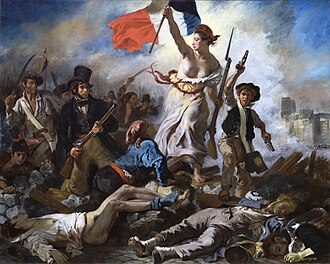 La Libertad guiando al pueblo - Eugène Delacroix (1830)
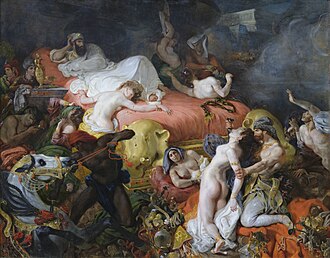 La muerte de Sardanápalo - Eugène Delacroix (1827)
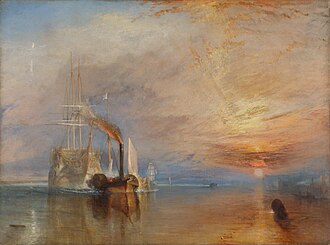 El Temerario remolcado - J. M. W. Turner (1839)
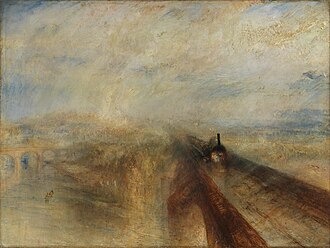 Lluvia, vapor y velocidad. El gran ferrocarril del Oeste - J. M. W. Turner (1844)