Leónidas en las Termópilas
Jacques-Louis David · 1814
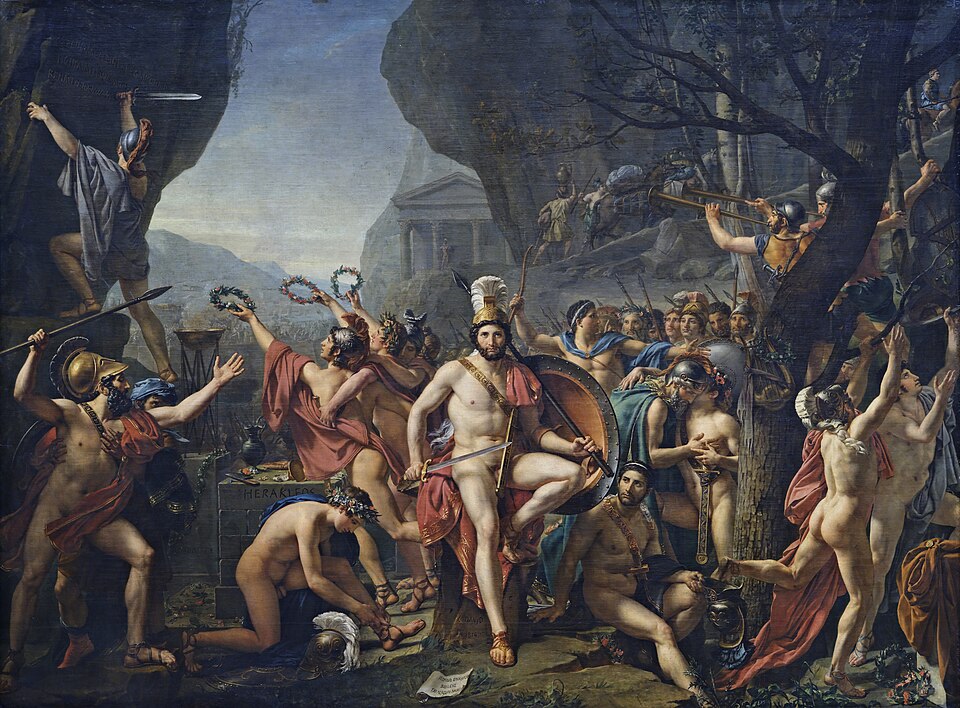
While soldiers move in every direction around him, the Spartan king sits still and lifts his eyes. David took fifteen years to finish this vast scene before a battle everyone knew would be lost.
The story behind the painting
Jacques-Louis David worked on this huge canvas, 3.95 by 5.31 metres, from 1799 to 1803 and again in 1813 and 1814, finishing it fifteen years after he began. His pupil Georges Rouget collaborated on it. The subject is the Spartan king Leonidas just before the Battle of Thermopylae in 480 BCE, when he and his three hundred soldiers held a narrow mountain pass against the far larger Persian army, sacrificing themselves to give the Greeks time to organise their resistance. When David finished the picture, the European powers allied against Napoleon were invading France, and he again found inspiration in Leonidas.
What to look for
The crowded, theatrical scene is set in the mountain pass, with a Greek temple and mountains behind. Around the centre, chaos seems to break out as soldiers move in every direction. Leonidas, in the middle, is bathed in more light than anyone and is almost the only figure at rest. His eyes turn upward, as if toward the gods, and his face shows contemplation, almost defeat, as if he knows the fate of his army. A golden embroidered cape, a fine helmet and a huge shield mark his rank. On the left, a soldier carves in the rock the famous Greek words: Go, passer-by, to Sparta tell, obedient to her law we fell.
Meaning and intent
In 1799 Napoleon criticised the lack of action and the fixed poses of the warriors in David's Sabine Women. That critique pushed David to return to the classical ideals that inspired him and the French Académie. The finished work respects classical ideals of male virtue and beauty, showing Greek warriors in heroic nudity to convey courage. Its meaning is not victory but sacrifice: the men around Leonidas know they will die for their country, and the king's still, inward moment gives the picture its gravity. Figures on the right look up to him, as if they see him as divine.
Legacy
David made many sketches before the final canvas. A compositional study dating to 1814 was done in two parts and looks choppy and overworked; the finished painting removed trees and branches to open up the background, while the classical male figures were there from the start. In November 1819 King Louis XVIII bought the painting together with The Intervention of the Sabine Women. Today the work hangs in the Louvre in Paris, where its scale still makes the viewer feel part of the gathering army.
¿Sabías que…?
- Painted 1799-1803 and 1813-1814; 3.95 x 5.31 m.
- David's pupil Georges Rouget collaborated.
- Bought by Louis XVIII in 1819 with The Sabine Women.
- In the Louvre, Paris.
Sobre el artista
Jacques-Louis David (1748-1825)
Departamento de Pinturas del Museo del Louvre · pintura de historia
Más obras de Jacques-Louis David
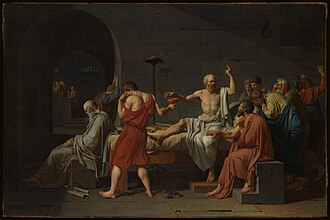 La muerte de Sócrates - Jacques-Louis David (1787)
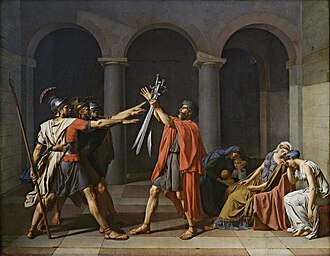 Juramento de los Horacios - Jacques-Louis David (1784)
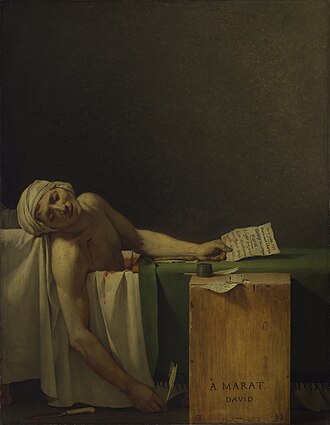 La muerte de Marat - Jacques-Louis David (1793)
 La coronación de Napoleón - Jacques-Louis David (1807)
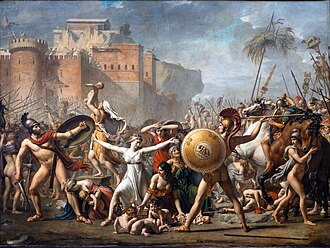 La intervención de las sabinas - Jacques-Louis David (1799)
 Retrato de Napoleón en su gabinete de trabajo - Jacques-Louis David (1812)
 Marte desarmado por Venus y las Gracias - Jacques-Louis David (1824)
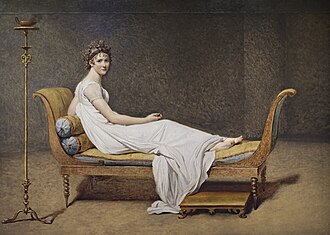 Madame Récamier - Jacques-Louis David (1800)
Obras de artistas relacionados
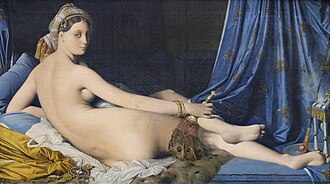 La gran odalisca - Jean-Auguste-Dominique Ingres (1814)
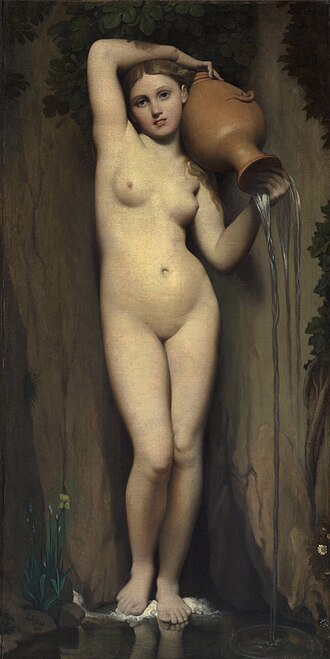 La fuente - Jean-Auguste-Dominique Ingres (1856)
 El tres de mayo de 1808 - Francisco Goya (1814)
 La Maja desnuda - Francisco Goya (1800)