Jacob Blessing the Sons of Joseph
Rembrandt van Rijn · 1656
.jpg)
An old man, nearly blind, lays his right hand on the younger grandson's head instead of the elder's. Rembrandt turns that small, deliberate gesture into a scene both tender and solemn.
The story behind the painting
Rembrandt painted Jacob Blessing the Sons of Joseph in 1656. It was commissioned by the Amsterdam patrician Willem Schrijver, and according to the Rembrandt scholar Gary Schwartz the biblical figures are portraits of his family. Jacob would be Willem's father, the scholar Petrus Scriverius, who had gone blind by 1650; Joseph would be Willem himself, and the boys two of his sons. Joseph's wife Asenath, rarely shown in this subject, would allow a portrait of Willem's wife, Wendela de Graeff. The museum that owns the painting is sceptical, finding the figures too generalised to be portraits, so this remains a disputed reading.
What to look for
The scene comes from Genesis 48. Joseph brings his sons Manasseh and Ephraim to his dying father. By tradition the elder receives the right hand, but Jacob crosses over and places it on Ephraim, the younger. Watch Joseph gently trying to guide the hand back. Then follow the light, which gathers on Jacob, Joseph, the boys and Asenath while the background sinks into shadow. Ephraim seems almost surrounded by a halo. Notice the warm yellows, browns and reds, and Asenath's ornate headdress, which Marieke de Winkel suggests may draw on depictions of women from the Ottoman Empire, perhaps Cairo.
Meaning and intent
In the story, Joseph thinks his father is making a mistake, but Jacob insists that he is blessing the younger son on purpose. Rembrandt slows the moment down so that we feel its weight: a frail hand making a choice that will shape a family. The colours give the painting a mood described as both intimate and sacred, tender and solemn. The surface itself is said to be almost sculptural, with a translucent glaze over paint. If the figures are indeed the Schrijver family, the painting also becomes a quiet act of honour toward a blind, elderly father.
Legacy
After Willem Schrijver died in 1661, Wendela's brother Andries de Graeff, burgomaster of Amsterdam, took over her estate, and the painting remained with the De Graeff family until 1752. The heirs then sold it through the Hamburg dealer Anthony Rutgers to Landgrave William VIII of Hesse-Kassel, who added it to his collection. It is now in the Gemäldegalerie Alte Meister in Kassel. In 2014-2015 it travelled to the major exhibition Late Rembrandt at the Rijksmuseum in Amsterdam, returning briefly to the city where it was first commissioned. Standing before it, visitors can still follow that crossed hand.
¿Sabías que…?
- Painted in 1656; Gemäldegalerie Alte Meister, Kassel (Wikipedia, Wikidata).
- Gary Schwartz identifies the figures as the Schrijver family; the museum is sceptical (Wikipedia).
- Jacob deliberately blesses the younger son Ephraim with his right hand (Wikipedia).
- Shown in Late Rembrandt at the Rijksmuseum, 2014-2015 (Wikipedia).
Sobre el artista
Rembrandt van Rijn (1606-1669)
arte religioso · pintura del Siglo de oro neerlandés
Más obras de Rembrandt van Rijn
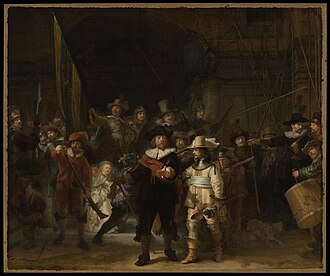 La ronda de noche - Rembrandt van Rijn (1642)
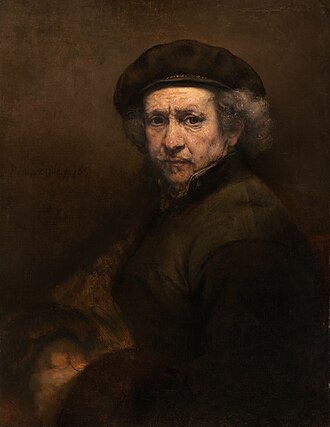 Autorretrato - Rembrandt van Rijn (1659)
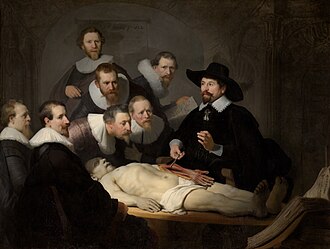 Lección de anatomía del Dr. Nicolaes Tulp - Rembrandt van Rijn (1632)
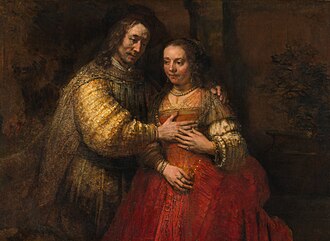 La novia judía - Rembrandt van Rijn (1660s)
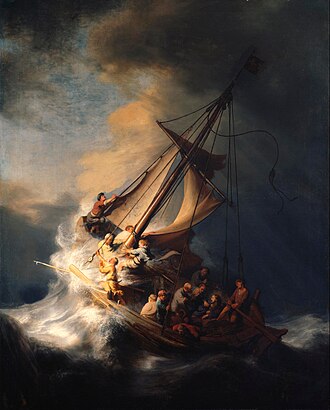 La tormenta en el mar de Galilea - Rembrandt van Rijn (1633)
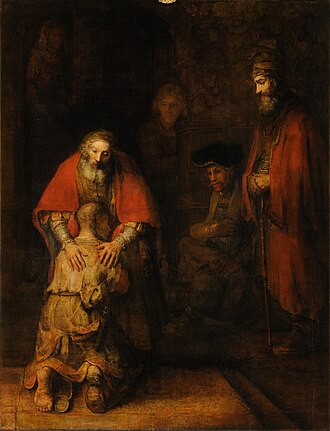 El retorno del hijo pródigo - Rembrandt van Rijn (1668)
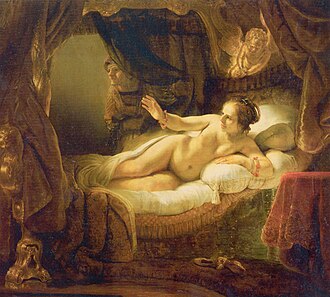 Dánae - Rembrandt van Rijn (1636)
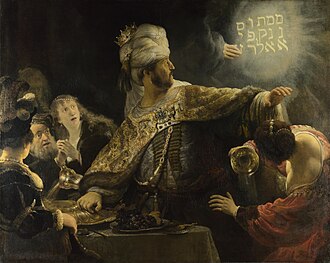 Banquete de Belsasar - Rembrandt van Rijn (1636)
Obras de artistas relacionados
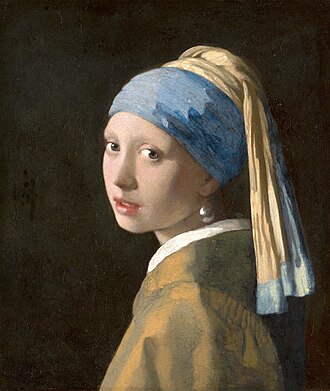 La joven de la perla - Johannes Vermeer (1665)
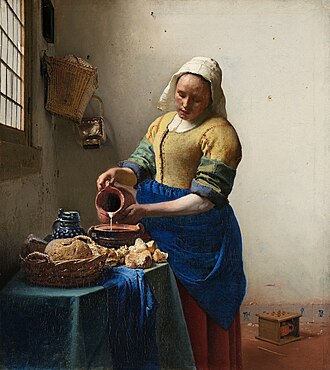 La lechera - Johannes Vermeer (c. 1658)
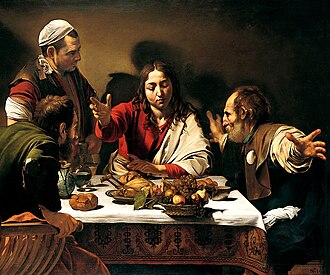 La cena de Emaús - Caravaggio (1601)
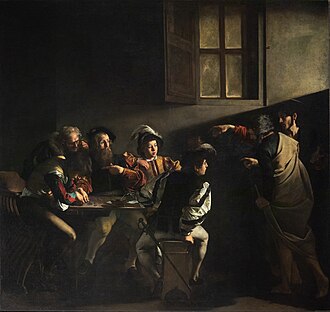 La vocación de San Mateo - Caravaggio (1609)
 Las meninas - Diego Velázquez (1656)
 La rendición de Breda - Diego Velázquez (1635)