Condesa de Haussonville
Jean Auguste Dominique Ingres · 1845
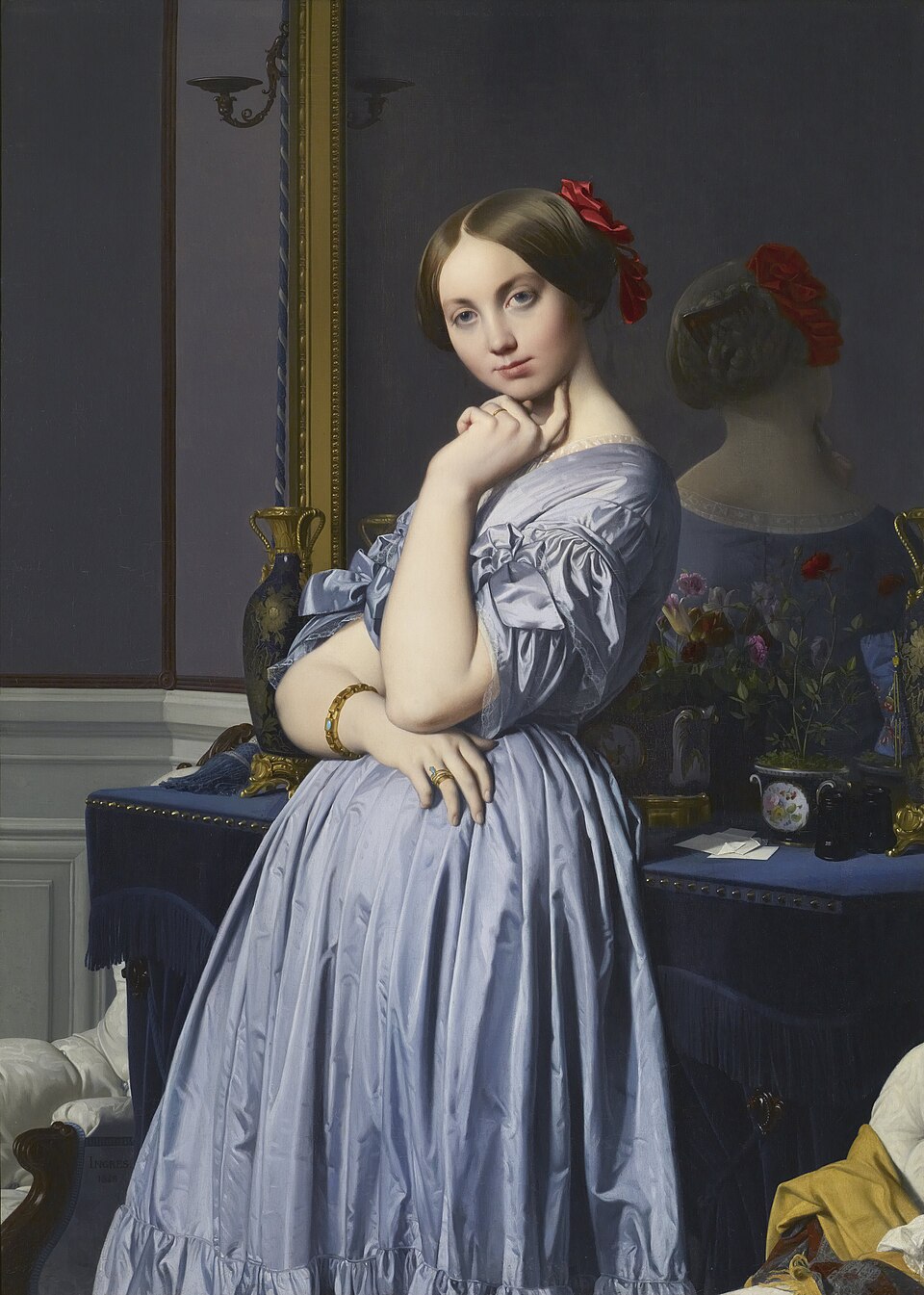
A young countess in grey-blue satin rests one finger by her lips, her back reflected in the mirror behind her. The sittings bored her, Ingres fretted he had missed her charm, and a statesman joked the painter must be in love.
The story behind the painting
The sitter is Louise de Broglie, Countess d'Haussonville, of the wealthy House of Broglie, highly educated and later an essayist, biographer and novelist. She was 27 when the portrait was finished in 1845. Two or three years earlier Ingres had made a black chalk study and begun an oil version with the pose reversed and no mirror. The sittings were long and slow; she complained that for nine days Ingres had been painting one of the hands. When she became pregnant with her third child she could no longer pose, and that first canvas remains unfinished. The final work is signed and dated at lower left.
What to look for
The palette is pale blue, grey, brown, gold and white. She faces us fully, with a demure expression often compared to his later Madame Moitessier. Her heavily folded satin dress is painted the same cold grey-blue as her eyes, and a crimson ribbon sits at the back of her parted hair. Ingres brings back a motif from his 1814 Madame de Senonnes: the figure reflected in a mirror behind her. On the dresser are writing things, pots, flowers and an ornate oriental vase. The key gestures are the raised left index finger by her mouth and the sinuous, unnaturally long right arm.
Meaning and intent
In 1845, at the height of his fame, Ingres committed to only two portraits, this one and Baronne de Rothschild, though he considered portraiture inferior to history painting. Today he is best known for exactly such portraits. Contrary as ever, he said he had not caught all the graces of his charming model, yet her family was delighted. He reported that Adolphe Thiers, visiting with the sitter, kept repeating that Ingres must be in love with her to have painted her that way. Baudelaire praised its voluptuousness and called Ingres the quintessential painter of women.
Legacy
Its first Paris showing, at the Bonne-Nouvelle exhibition of 1846 beside the Grande Odalisque, caused what Ingres called a storm of approval among her family and friends. The painting stayed with the family for some eighty years, shown in 1855, 1867, 1874 and 1910, engraved and photographed. After the death of Paul-Gabriel d'Haussonville in 1924 his heirs sold it to the dealer Georges Wildenstein, and the Frick Collection acquired it in 1927. It has been almost continuously on view in New York since the museum opened in 1935, and unlike works bought by Frick himself, it can be lent.
¿Sabías que…?
- Finished in 1845 after an abandoned first attempt.
- The sitter is reflected in a mirror behind her.
- Praised by Baudelaire at the 1846 exhibition.
- In the Frick Collection, New York, since 1927.
Sobre el artista
Jean Auguste Dominique Ingres (1780-1867)
mujer · retrato · neoclasicismo · vestido · Colección Frick · ceja
Más obras de Jean Auguste Dominique Ingres
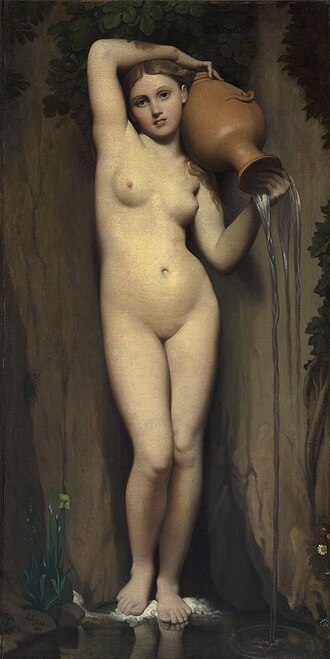 La fuente - Jean-Auguste-Dominique Ingres (1856)
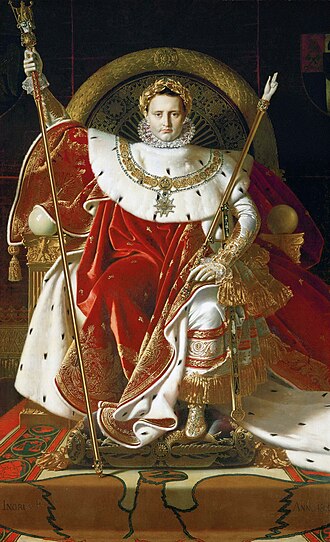 Napoleón en su trono imperial - Jean-Auguste-Dominique Ingres (1806)
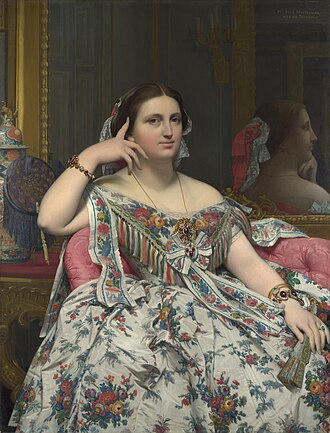 Madame Moitessier - Jean-Auguste-Dominique Ingres (1856)
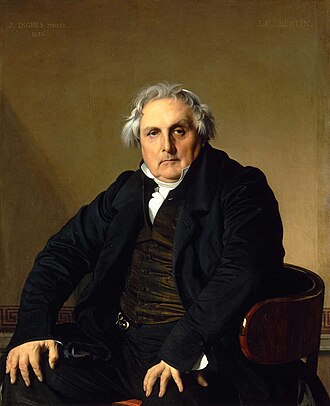 Monsieur Bertin - Jean-Auguste-Dominique Ingres (1832)
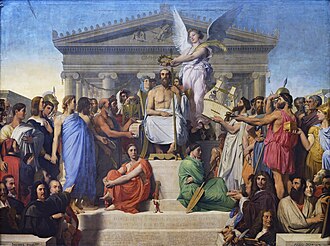 La apoteosis de Homero - Jean-Auguste-Dominique Ingres (1827)
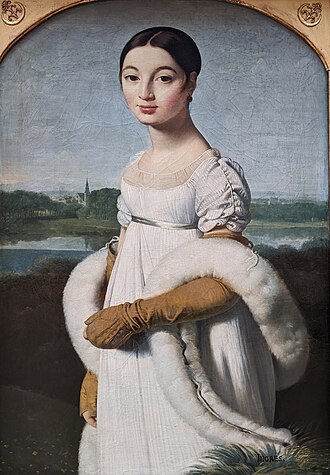 Mademoiselle Caroline Rivière - Jean-Auguste-Dominique Ingres (1806)
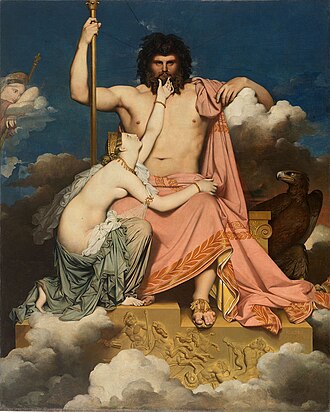 Júpiter y Tetis - Jean-Auguste-Dominique Ingres (1811)
 The Death of Leonardo da Vinci - Jean-Auguste-Dominique Ingres (1818)
Obras de artistas relacionados
 Juramento de los Horacios - Jacques-Louis David (1784)
.jpg) La intervención de las sabinas - Jacques-Louis David (1799)
La intervención de las sabinas - Jacques-Louis David (1799) El tres de mayo de 1808 - Francisco Goya (1814)
.jpg) La Maja desnuda - Francisco Goya (1800)
La Maja desnuda - Francisco Goya (1800)