Bathsheba at Her Bath
Paolo Veronese · 1575
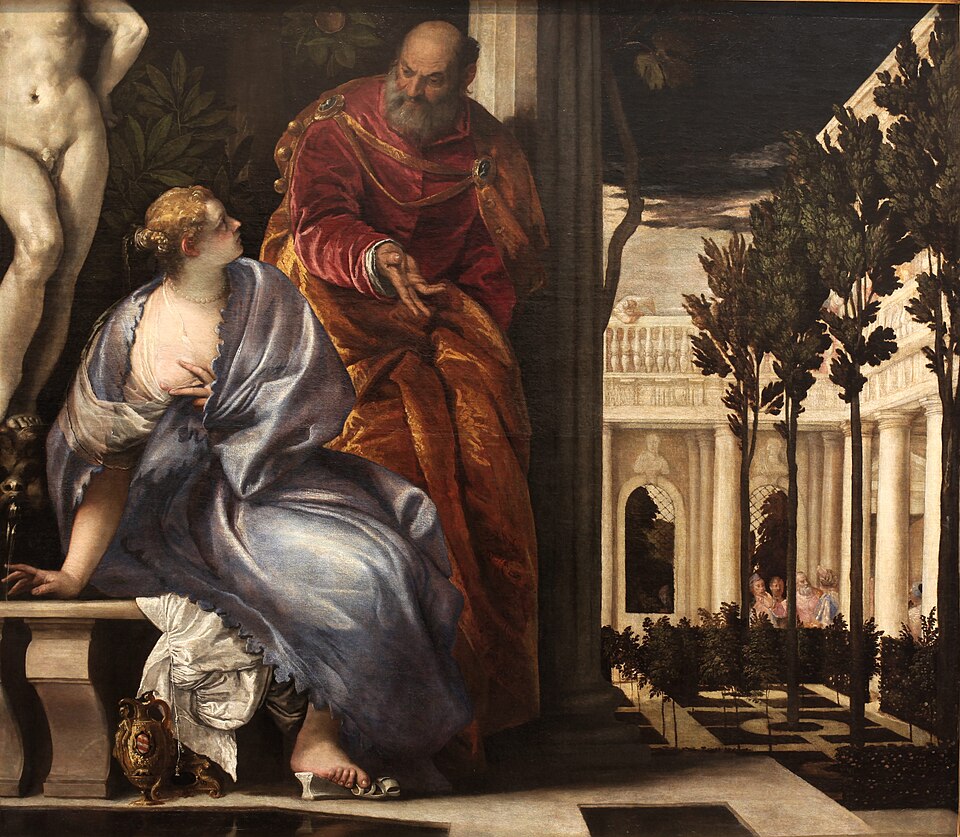
A woman bathes by a fountain while an old man in a gold buttoned cloak leans toward her. Is she Bathsheba, or Susanna? In this Veronese, two biblical stories seem to slip into each other.
The story behind the painting
Veronese painted this oil on canvas around 1575 as a marriage painting for a Venetian client; the coat of arms on the pitcher may celebrate a marriage or an alliance between two powerful Venetian families. In the seventeenth century it entered the French royal collections and was kept at the Palace of Versailles, where it was enlarged at the top and on the left to fit the woodwork. In 1811 the State sent it to Lyon.
What to look for
The canvas measures about 151 by 242 cm. Veronese divided the space vertically into two separate parts, linked by echoes of colour and a powerful chiaroscuro. On one side the woman bathes; on the other stands the old man, wearing the cloak with gold buttons typical of the Doges of Venice. Look at the fountain, at the figures in the arcades in the background, at the man in red in the foreground, and at the arms painted on the pitcher.
Meaning and intent
Most agree the scene is 2 Samuel 11, Bathsheba seen by King David as she bathes. Some sources instead see Susanna and the Elders, where two old men spy on a bathing woman and then falsely accuse her of adultery. Daniel Arasse and Joséphine Le Foll argue the two stories are intertwined: the fountain and an old man suggest Susanna, yet there is only one old man, unless the elders are the figures in the arcades, and the man in red stays unexplained. An old David who comes in person is also unusual, since the Bible has him send a messenger. The shared theme is adultery and justice.
Legacy
From Venice to Versailles to Lyon, the canvas has changed shape as well as home. In 1991 its original format was restored, while the Versailles additions were kept behind the new edges. The painting is now in the Musée des Beaux-Arts de Lyon; Wikidata also lists the Louvre's Department of Paintings, reflecting its origin in the French royal collection. It remains a puzzle picture, a wedding gift that holds a story of desire and judgement.
¿Sabías que…?
- Painted around 1575 as a Venetian marriage painting.
- Enlarged at Versailles; original format restored in 1991.
- Read as Bathsheba, as Susanna, or both.
- In the Musée des Beaux-Arts de Lyon since 1811.
Sobre el artista
Paolo Veronese (1528-1588)
arte religioso · escena de género · Departamento de Pinturas del Museo del Louvre · manierismo · paisaje · jardín · David · baño · Museo de Bellas Artes de Lyon · columna · palacio
Más obras de Paolo Veronese
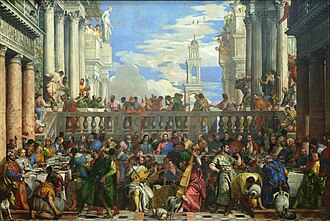 Las bodas de Caná - Paolo Veronese (1560s)
.jpg) Cena en casa de Leví - Paolo Veronese (1573)
Cena en casa de Leví - Paolo Veronese (1573).jpg) Venus y Adonis - Paolo Veronese (1580)
Venus y Adonis - Paolo Veronese (1580)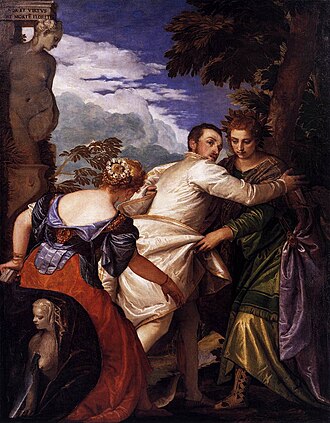 Alegoría de la Virtud y el Vicio - Paolo Veronese (1565)
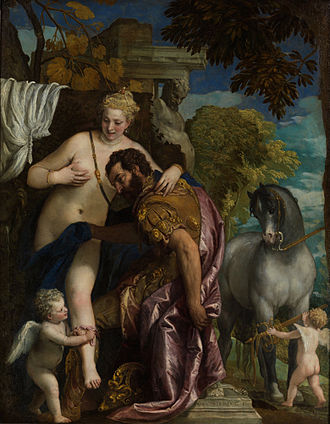 Marte y Venus unidos por Amor - Paolo Veronese (1570s)
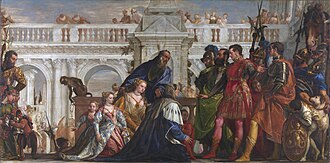 The Family of Darius Before Alexander - Paolo Veronese (1565)
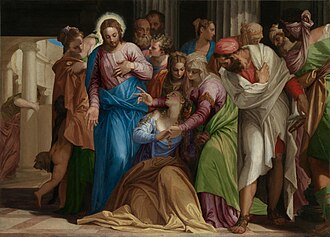 The Conversion of Mary Magdalene - Paolo Veronese (1548)
%20grande.jpg) Jesús entre los doctores - Paolo Veronese (1560)
Jesús entre los doctores - Paolo Veronese (1560)
Obras de artistas relacionados
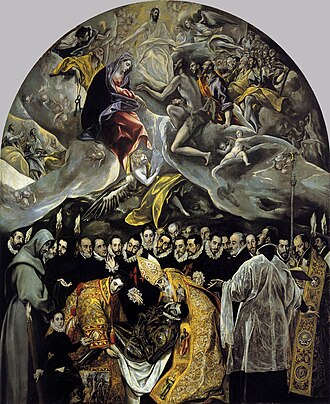 El entierro del Conde de Orgaz - El Greco (1586)
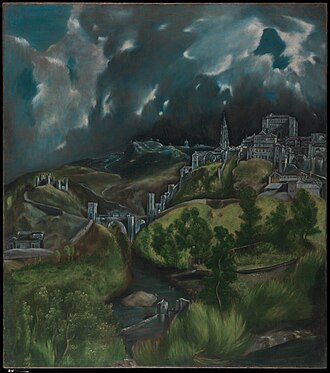 Vista de Toledo - El Greco (1596)
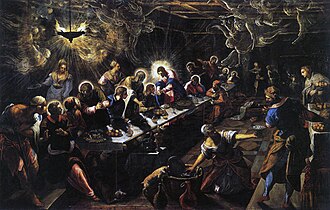 La Última Cena - Jacopo Tintoretto (1563)
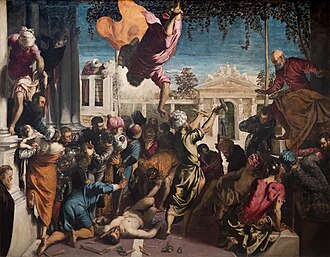 San Marcos liberando al esclavo - Jacopo Tintoretto (1540s)
.jpg) Venus de Urbino - Titian (1538)
Venus de Urbino - Titian (1538)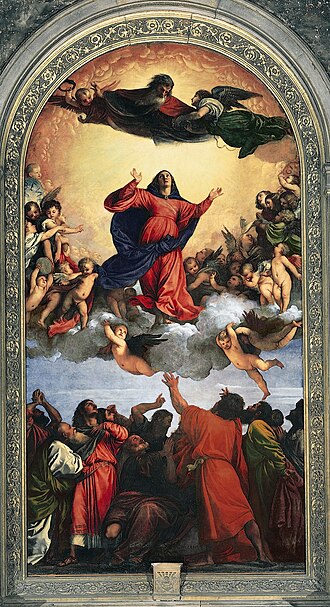 La Asunción de la Virgen - Titian (1510s)
 La cena de Emaús - Caravaggio (1601)
 La vocación de San Mateo - Caravaggio (1609)
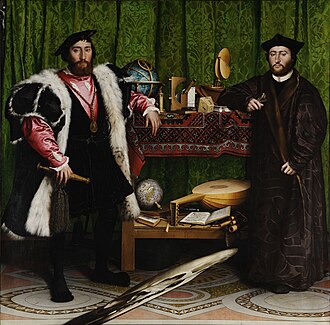 Los embajadores - Hans Holbein the Younger (1533)
 El cuerpo de Cristo en la tumba - Hans Holbein the Younger (1520s)