Virgilio lee la Eneida a Livia, Octavia y Augusto
Jean Auguste Dominique Ingres · 1812
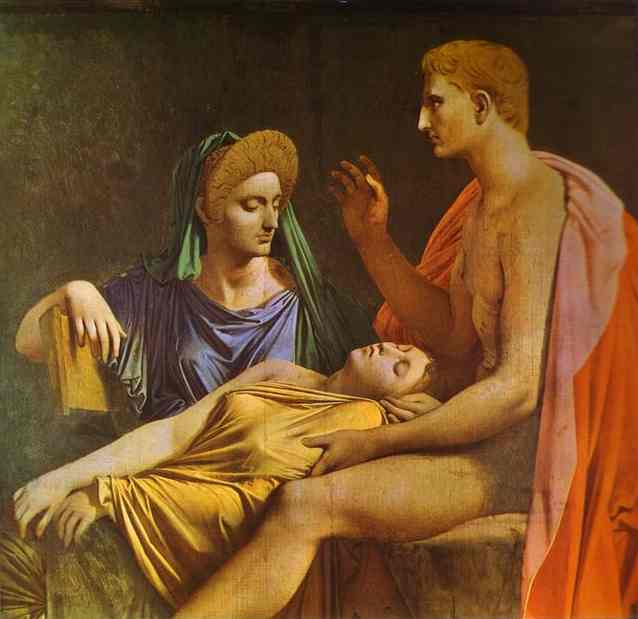
A sister faints into the emperor's lap at a single line of poetry, while the empress beside them holds her face still. This Brussels canvas is Ingres's close-up of that moment.
The story behind the painting
In 1812 General Miollis, the French governor of Rome and a passionate admirer of the Aeneid, commissioned Ingres to paint Virgil reading his poem to the emperor Augustus, his wife Livia and his sister Octavia, for his bedroom at the Villa Aldobrandini. That large canvas, about 302 by 325 cm, is now in the Musée des Augustins in Toulouse. This painting, 138 by 142 cm in Brussels, is a second version centred only on Augustus, Livia and Octavia, and its origin and date are uncertain.
What to look for
Ingres drew on the fourth century commentary on the Aeneid by the grammarian Aelius Donatus. As Virgil read, he reached the passage where Aeneas descends to the underworld and Anchises foretells the death of Marcellus, Octavia's son. At those lines Octavia fainted into Augustus's lap, while Livia had to master her surprise, since she was among those suspected of Marcellus's death, which favoured her own son Tiberius. For the figures Ingres used Roman busts of Augustus and a Girodet illustration for Racine's Phèdre for Octavia; here Livia's headdress follows Canova's statue of Letizia Bonaparte.
Meaning and intent
The scene turns on what each face reveals and hides. Grief overwhelms Octavia completely; Augustus receives her; Livia, the one who may be guilty, must stay composed. By cropping the subject down to these three, the Brussels version removes the poet and the onlookers and keeps only the emotional knot at the centre. Ingres, trained in the studio of Jacques-Louis David and later hailed as a champion of academic painting against Romanticism, here builds drama from stillness and restraint rather than movement.
Legacy
Scholars disagree about what this canvas was. It may be a fragment of a larger work, or the repetition of my Virgil that Ingres announced to Marcotte for the Salon of 1813. Daniel Ternois suggests it could be part of a larger picture planned for the Empress's first salon at the Quirinal Palace, from a commission of 1812 to decorate the palace for Napoleon's arrival in Rome. Amaury-Duval said he saw it in Ingres's studio in 1825. After the artist's death in 1867 it was sold at auction and acquired by the Royal Museums of Fine Arts of Belgium.
¿Sabías que…?
- A second version of Ingres's 1812 Virgil reading the Aeneid.
- Shows only Augustus, Livia and the fainting Octavia.
- Its origin and date are uncertain; it may be a fragment.
- Acquired by the Royal Museums of Fine Arts of Belgium after 1867.
Sobre el artista
Jean Auguste Dominique Ingres (1780-1867)
pintura mitológica · Museos Reales de Bellas Artes de Bélgica · lectura
Más obras de Jean Auguste Dominique Ingres
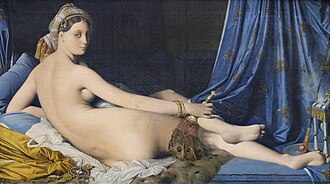 La gran odalisca - Jean-Auguste-Dominique Ingres (1814)
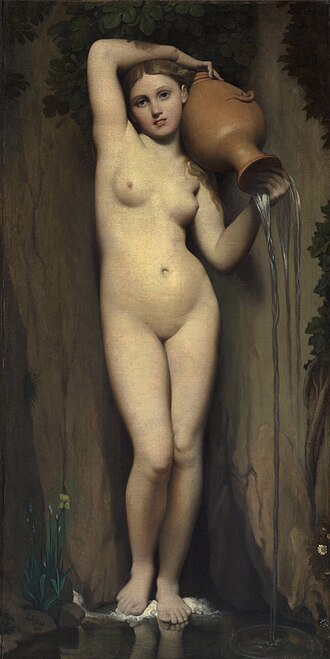 La fuente - Jean-Auguste-Dominique Ingres (1856)
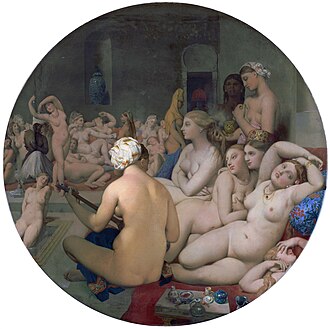 El baño turco - Jean-Auguste-Dominique Ingres (1862)
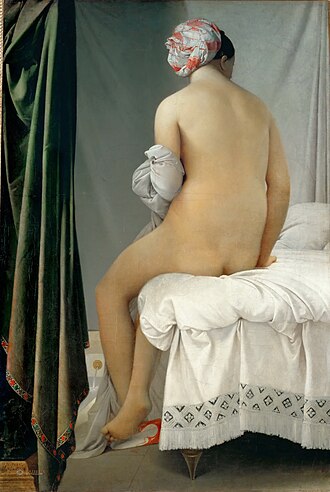 La bañista de Valpinçon - Jean-Auguste-Dominique Ingres (1808)
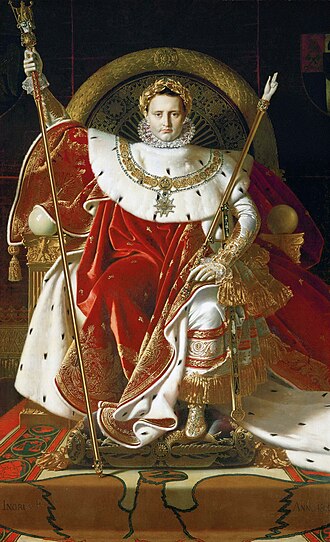 Napoleón en su trono imperial - Jean-Auguste-Dominique Ingres (1806)
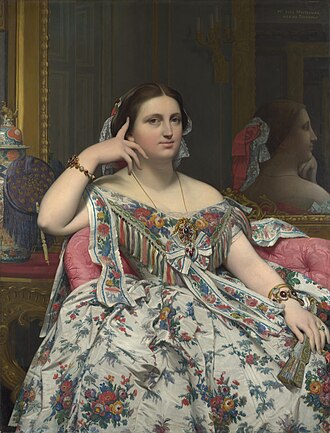 Madame Moitessier - Jean-Auguste-Dominique Ingres (1856)
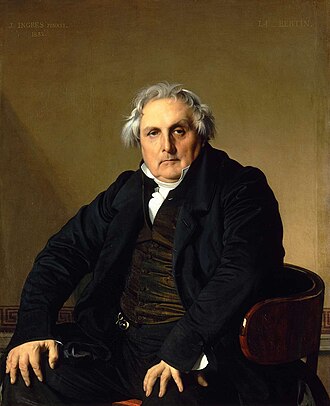 Monsieur Bertin - Jean-Auguste-Dominique Ingres (1832)
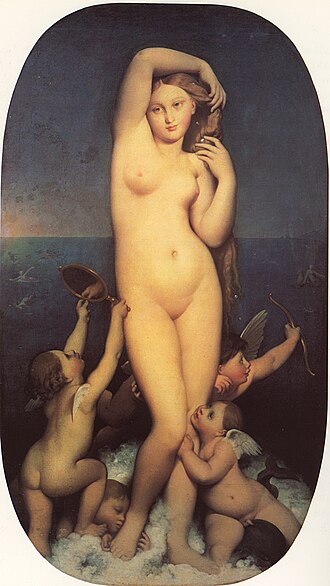 Venus Anadiómena - Jean-Auguste-Dominique Ingres (1808)
Obras de artistas relacionados
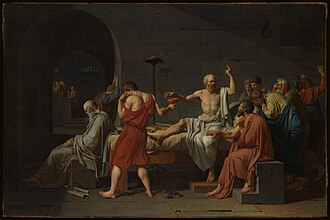 La muerte de Sócrates - Jacques-Louis David (1787)
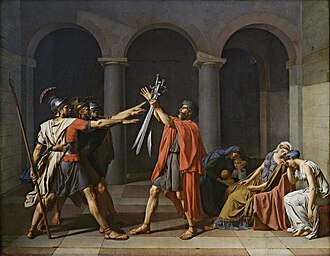 Juramento de los Horacios - Jacques-Louis David (1784)
 El tres de mayo de 1808 - Francisco Goya (1814)
 La Maja desnuda - Francisco Goya (1800)