Venus Verticordia
Dante Gabriel Rossetti · 1860s
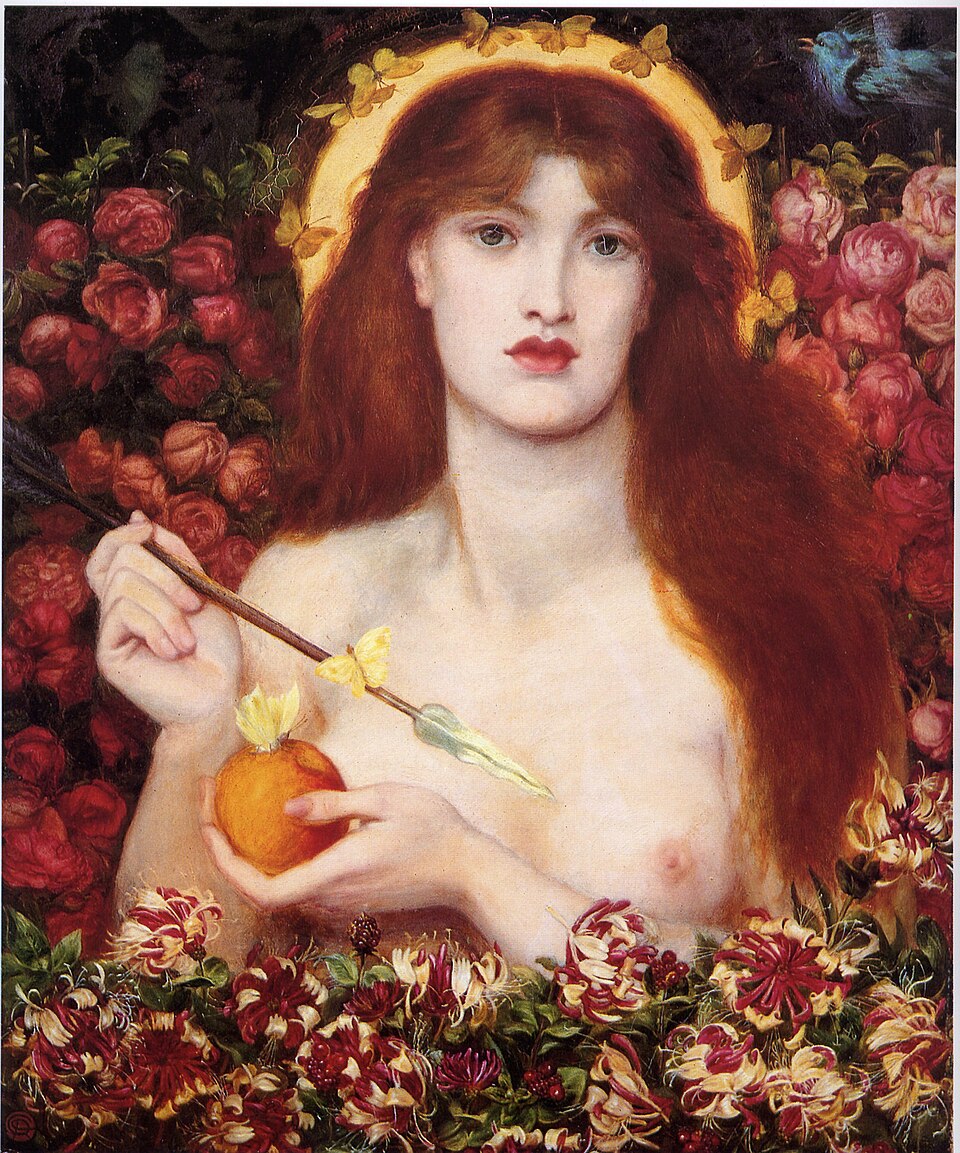
A goddess with a golden halo holds an apple and an arrow pointed at her own heart, yellow butterflies resting on both. Rossetti worked on Venus Verticordia for years, and the painting cost him the approval of his old supporter John Ruskin.
The story behind the painting
John Mitchell of Bradford commissioned the painting from Dante Gabriel Rossetti in 1863, after seeing a chalk drawing of the model whose body was eventually used. She was an unnamed woman, described as a remarkably handsome cook Rossetti had met in the street. Rossetti worked on the picture from 1864 until 1868 and sent it to Mitchell in 1869. In 1867 he changed the face of Venus from the first model's features to those of Alexa Wilding. The poet Algernon Charles Swinburne, writing in 1868, noted that the picture had been largely recast, with a head of diviner beauty.
What to look for
Venus appears as a young woman with a golden halo and flowing auburn hair, half nude among pink flowers in a dark, lush green garden. Her left breast is visible; the right is hidden by the golden apple in her left hand. In her right hand she holds an arrow, its point turned toward her own heart, with a small yellow butterfly resting on it. More butterflies ring her halo, and another sits on the apple. Look for the roses and honeysuckle crowding around her. Swinburne admired the flash of bright green from the upper leaves of the trellis against the sombre green behind.
Meaning and intent
The title is Latin for Venus, changer of the heart, and traditionally refers to Venus turning women's hearts toward virtue. Rossetti's own poem for the picture reads it the other way, as Venus turning hearts from fidelity to desire. The roses and honeysuckle were understood in the Victorian language of flowers as sensual symbols. The arrow is Cupid's, aimed at her heart. The apple recalls the Apple of Discord behind the Judgement of Paris and the Trojan War, and also the forbidden fruit of Eden, at odds with the halo, a sign of holiness. The butterflies may stand for the soul.
Legacy
This was Rossetti's first and only major oil painting of a nude. John Ruskin, a long-time supporter of the Pre-Raphaelites, strongly objected to its sexual tone after seeing it in the studio. In an 1865 letter he called the flowers wonderful in their realism but awful in their coarseness, and the friends drifted apart. Others were captivated: the porcelain dealer Murray Marks said the picture on the easel almost took his breath away. In 1945 it entered the Russell-Cotes Art Gallery and Museum, bought with help from the National Art Collections Fund.
Did you know?
- Commissioned by John Mitchell of Bradford in 1863.
- Painted 1864 to 1868; the face changed to Alexa Wilding in 1867.
- Rossetti's only major oil painting of a nude.
- In the Russell-Cotes Art Gallery and Museum since 1945.
About the artist
Dante Gabriel Rossetti (1828-1882)
mythological painting · Pre-Raphaelite Brotherhood · Venus
More by Dante Gabriel Rossetti
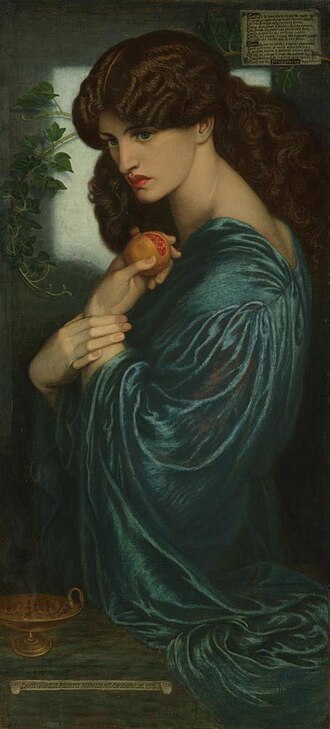 Proserpine - Dante Gabriel Rossetti (1874)
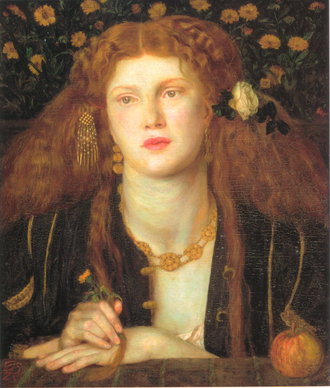 Bocca Baciata - Dante Gabriel Rossetti (1859)
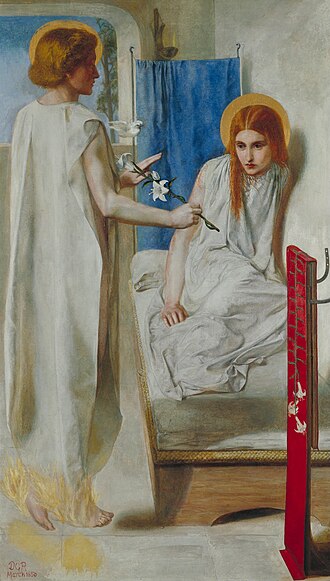 Ecce Ancilla Domini - Dante Gabriel Rossetti (1850)
.jpg) Dante's Dream - Dante Gabriel Rossetti (1871)
Dante's Dream - Dante Gabriel Rossetti (1871)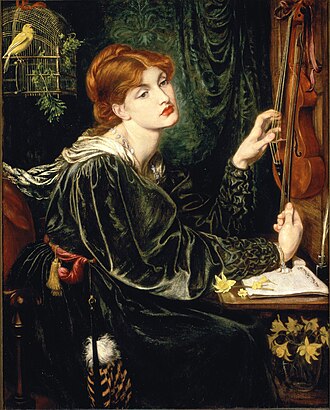 Veronica Veronese - Dante Gabriel Rossetti (1872)
.jpg) Monna Rosa - Dante Gabriel Rossetti (1867)
Monna Rosa - Dante Gabriel Rossetti (1867)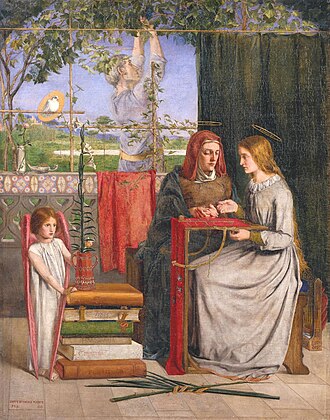 The Girlhood of Mary Virgin - Dante Gabriel Rossetti (1840s)
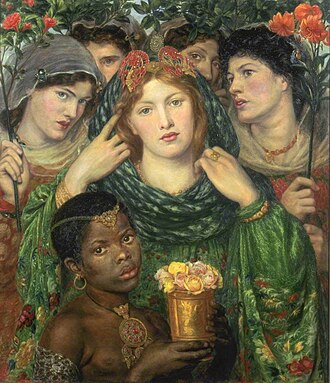 The Beloved - Dante Gabriel Rossetti (1865)
Paintings by related artists
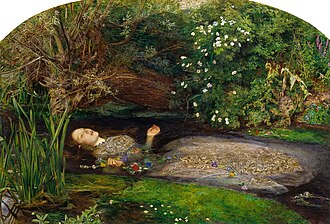 Ophelia - John Everett Millais (1851)
%20-%20Google%20Art%20Project.jpg) Christ in the House of His Parents - John Everett Millais (1849)
Christ in the House of His Parents - John Everett Millais (1849) Hylas and the Nymphs - John William Waterhouse (1896)
.jpg) The Lady of Shalott - John William Waterhouse (1888)
The Lady of Shalott - John William Waterhouse (1888)