Supper at Emmaus
Paolo Veronese · 1559
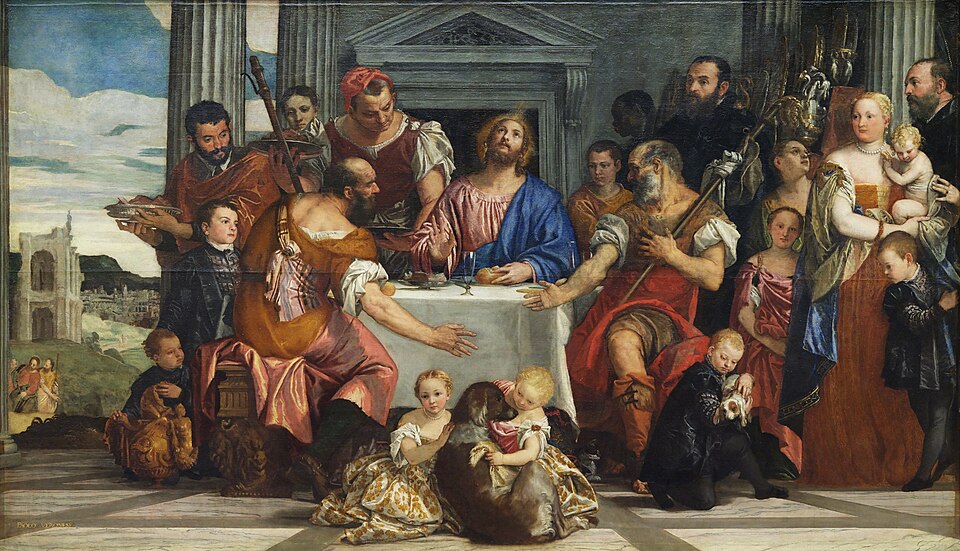
The risen Christ blesses the bread, and around the table a whole Venetian family in 16th century dress carries on, children petting dogs on the floor. Veronese turned a Gospel meal into a palace gathering.
The story behind the painting
Paolo Veronese painted Supper at Emmaus around 1559 or 1560. It retells the Gospel story of the risen Jesus, who walks with two disciples to Emmaus and is recognised only when he blesses the bread at the meal they invited him to as a stranger. Veronese set it as a 16th century Venetian family gathering. The huge canvas, 241 by 415 cm, was probably commissioned for a portego, the grand entrance hall of a Venetian palace. At the Louvre it is known as The Pilgrims of Emmaus.
What to look for
Christ gazes upward as he blesses the bread, a delicate halo around his head. Far left, in the distance, is the journey to Emmaus, including the Septizodium, an ancient Roman building. Around the table stand over a dozen members of an aristocratic Venetian family and their servants. Three children kneel on the floor petting dogs, a mother holds an infant, her husband stands behind, and two other gentlemen may be his brothers. Four large classical columns and a pedimented doorway frame Christ. Apart from the three holy figures and a servant, the mood feels secular rather than devotional.
Meaning and intent
This was the first of Veronese's biblical feasts painted as large, anachronistic group portraits in dramatic architecture, followed by The Wedding at Cana in 1563 and two versions of The Feast in the House of Simon the Pharisee. Michel Favre-Félix of ARIPA argued that the mother is central to the meaning: with her meditative look and golden-haired baby she evokes the Virgin and Child and the Madonna of Mercy, while her husband stands humbly behind like Joseph.
Legacy
By 1635 the painting belonged to Victor Amadeus I, Duke of Savoy, in Turin. It passed to Marshal Charles de Blanchefort, then to Cardinal Richelieu, who bequeathed it to Louis XIII, and it hung in Fontainebleau, the Tuileries and Versailles before the Louvre. Restorations in 2003 to 2004 and 2009 drew sharp criticism from conservationists in France, the UK and the US, who said the mother's face, nose and mouth had been altered. Two copies of the children with the dogs are in Dijon, and Veronese's later, much smaller Supper at Emmaus is in Rotterdam.
Did you know?
- Painted around 1559 or 1560; 241 by 415 cm.
- Veronese's first biblical feast staged as a Venetian group portrait.
- Owned by the Duke of Savoy, Richelieu and Louis XIII before the Louvre.
- Its 2004 and 2009 restorations were sharply criticised.
About the artist
Paolo Veronese (1528-1588)
religious art · Department of Paintings of the Louvre · Jesus Christ
More by Paolo Veronese
 The Wedding at Cana - Paolo Veronese (1560s)
 The Feast in the House of Levi - Paolo Veronese (1573)
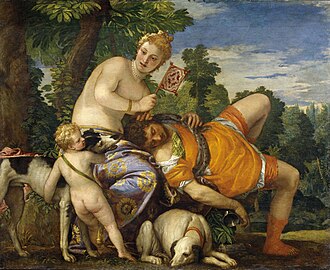 Venus and Adonis - Paolo Veronese (1580)
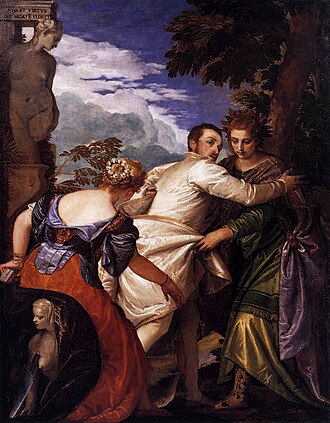 Allegory of Virtue and Vice - Paolo Veronese (1565)
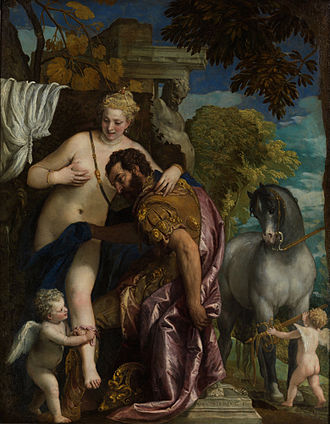 Venus and Mars - Paolo Veronese (1570s)
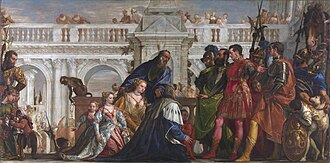 The Family of Darius Before Alexander - Paolo Veronese (1565)
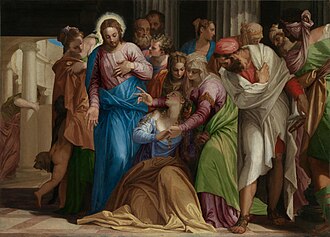 The Conversion of Mary Magdalene - Paolo Veronese (1548)
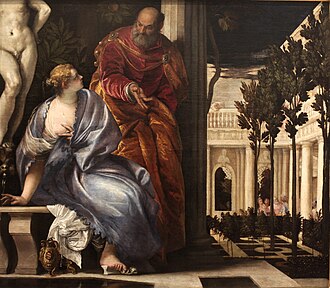 Bathsheba at Her Bath - Paolo Veronese (1575)
Paintings by related artists
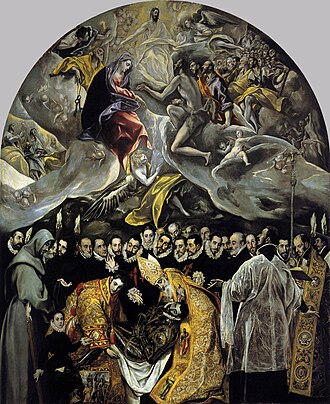 The Burial of the Count of Orgaz - El Greco (1586)
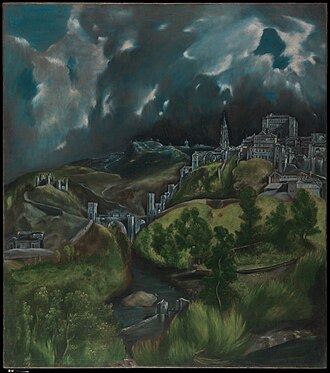 View of Toledo - El Greco (1596)
 Last Supper - Jacopo Tintoretto (1563)
 Miracle of the Slave - Jacopo Tintoretto (1540s)
 Venus of Urbino - Titian (1538)
 Assumption of the Virgin - Titian (1510s)
 Supper at Emmaus - Caravaggio (1601)
 The Calling of Saint Matthew - Caravaggio (1609)
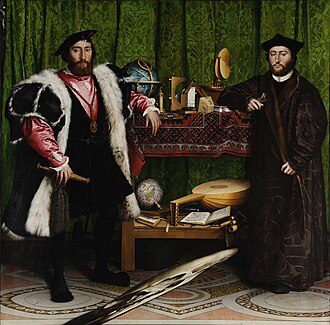 The Ambassadors - Hans Holbein the Younger (1533)
 The Body of the Dead Christ in the Tomb - Hans Holbein the Younger (1520s)